You sit at your desk, stare at the same screen, and wonder if this is it for the next ten years. The work gets done, the bills are paid, but something feels slightly off, like you missed a turn somewhere and just kept going anyway.
Access to knowledge should not depend on a person’s location wealth or physical ability. E-libraries have stepped into that gap offering digital collections that reach across borders and beyond barriers. With a stable internet connection students educators and lifelong learners can find the materials they need without stepping foot into a traditional library.
In recent years the shift to digital access has become more than just a convenience. For those with disabilities or living in underserved areas online libraries provide a vital educational lifeline. Many people include Z-library in their daily reading habits not just for its convenience but for the scope of materials it offers across subjects and languages. These platforms act as bridges helping people continue their education no matter their circumstances.
Have you ever considered turning your knowledge into an income stream? If you’re an expert in any field, creating an online course can be a great way to share your insights while earning money.
Many professionals, business owners, and freelancers have successfully launched courses that help others while providing financial stability. Online learning is growing rapidly, and people are willing to invest in courses that help them acquire new skills, advance their careers, or solve problems.
Are you considering online learning as a path for college? New Jersey is home to some of the nation’s top colleges, providing students with a wealth of educational opportunities. Now, with the rise of online learning, students in New Jersey have even more flexibility to pursue their goals. Virtual education lets students take advantage of high-quality programs without needing to commute or relocate, allowing them to access these resources from anywhere.
Elearning is where students take their sessions online. Learning materials are also provided electronically in such formats as videos, ebooks, and web links. The method is a swift departure from the traditional approach where students would spend most of their time in class. Elearning utilizes such gadgets as phones, laptops, and tablets.
Ridgewood NJ, JerseyCAN, a nonprofit advocating for high-quality schools for all New Jersey students, released today the most comprehensive statewide review of New Jersey public school parents’ concerns and priorities in the wake of the COVID-19 pandemic. JerseyCAN partnered with the organization Parent Impact on this poll. Conducted by the Global Strategy Group, the poll is the latest in a series of efforts developed by JerseyCAN’s statewide NJ KIDS CAN’T WAIT parent initiative, which launched last fall to provide New Jersey families with needed information, guidance, and tools to address students’ needs. Since the campaign’s launch, JerseyCAN has invested in extensive statewide media, created a one-stop-shopping online resource for parents, and partnered with local teachers to drive meaningful engagement with parents across the state.
Trenton NJ, Senator Holly Schepisi today called for the Legislature to act swiftly in lame duck and pass a bill that would require the Commissioner of Education to prepare a report on learning loss and the operation of public schools during the COVID-19 public health emergency.
Ridgewood NJ, Wednesday September 1st was back to school for the Ridgewood School district and nationwide it’s the first day of school in many states. The Ridgewood bog rarely agree even a little bit with the New York Times, but the recent editorial “The School Kids Are Not Alright,” has some bullseye observations about the worm in the apple of our schools.
Ridgewood NJ, around this time each year, students, faculty, parents, and guardians across New Jersey prepare for the beginning of a new academic school year. Similar to last year, the 2021-2022 school year will be unlike those prior to the COVID-19 pandemic. While remote learning may not be as integral in all school districts this year, the continued use of technology in school and at home still present significant cybersecurity challenges. The education sector continues to be one of the most targeted sectors by cyber threat actors who take advantage of the distracted or unaware user base, potentially unpatched systems and applications, and vulnerable networks in order to collect sensitive data, deliver malware, pilfer monetary funds, and launch ransomware attacks. It is vital for students, teachers, parents, and guardians to maintain an awareness of current cyber threats and employ best practices to increase their resiliency and prevent victimization. Educational institutions are also highly encouraged to review the “Achieving Cyber Resilience: Free Resources for K-12 Schools” document and corresponding webinar recording for information on cybersecurity best practices and featured presentations from the NJCCIC, CISA, MS-ISAC, and FBI on the free resources available via their respective organizations.
Washington DC, the big Biden “infrastructure” proposal contains $100 billion for the teacher unions, er, sorry…for “education.” This is on top of the $112 billion for the teacher unions tucked in the 2020 COVID relief bills, and on top of another $170 billion in the $1.9 trillion Biden “stimulus” bill that passed in March.
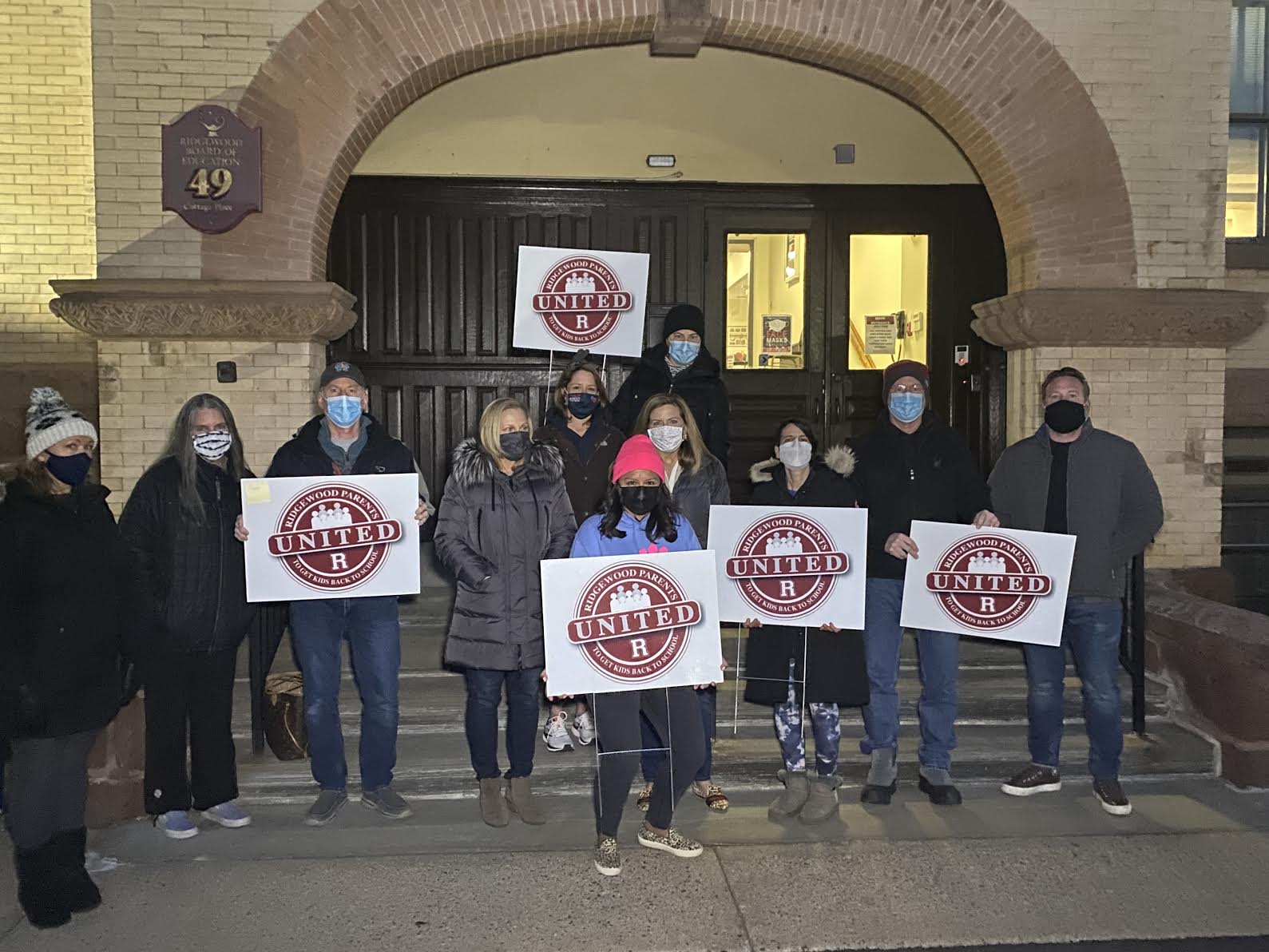
Ridgewood NJ, Ridgewood Schools implemented the K-1 model on March 29 . Phase II of the reopening plan begins on April 19. The number of remote students for Phase II (10% at the elementary level to 25% at the high school level) is consistent with where they were in September. We still need parents and students to be vigilant and to assist us in keeping schools open by not hosting large gatherings of students where COVID is easily spread. To help combat the spread of the virus, remember to follow the 3W’s – watch your distance, wear a mask, and wash your hands.
April 6th, 2021
Dear Glen Rock High School Staff, Parents and Guardians:
This letter is to inform you that since our return from Spring Break we had fourteen (14) high school students test positive for COVID-19. Though several of these results occurred over
break, we did receive notice today of an additional ten (10) students with positive tests. With these additional positive cases, Glen Rock High School will transition to remote instruction from
April 7th – April 9th, 2021. The High School will return to in person instruction via the previously
announced three (3) cohort schedule on Monday, April 12th, 2021.
Ridgewood NJ, in the Ridgewood Superintendent’s report Dr. Gorman commented on Ridgewood Schools transition to Phase II for students in grades 2-12 on April 19.
“Over the prior two weeks, we have seen a 3.5% increase in the number of students returning to in-person instruction. Kindergarten and first-grade students began an expanded in-person instructional model yesterday, March 22, and it was very exciting to see the students from both cohorts together in the classroom. The District will transition to Phase II for students in grades 2-12 on April 19. This date is still tentative, as it is dependent upon the COVID positivity rate not increasing. Families will continue to have the option to choose the fully remote model for the remainder of the school year. Visit the Reopening Our Schools site to view the Phase II communications, the COVID Dashboard, and related resources.”
Ridgewood NJ, At Mondays Ridgewood Board of Education meeting , according to the New Jersey COVID-19 Activity Reports, our region is still at the high (orange) level. Bergen County saw an uptick in cases last week. Within the district, we had 14 positive cases last week, and another 16 cases the week before. Over the prior week, we saw a 1.3% increase of students returning to school from remote learning with the largest gains at Orchard, Travell, Willard, Benjamin Franklin Middle School, and George Washington Middle School.