Ridgewood Nj, Jersey Born and Bred Gubernatorial candidate Joseph R. Rullo has put together a few ideas to solve the state’s massive pension crisis. Most of the ideas are relatively painless for employees and taxpayers and unlike other grand schemes easily doable .
Rullo starts with investing basics by looking to eliminate $700 million in pension fees to NYC politically connected brokerage houses and replace with licensed brokers in the state investors division to pay savings towards pension payment. The pension fees went from 125M to 700M per year in the last 7 years.
Let’s face it according to the all the town hall protesters New Jersey loves Obamacare so Rullo says :
*Open up state employee health insurance bids across America to create competition to lower premiums and get better coverage for employees.
Rullo get creative with the next one;
* Dedicate a portion of recreational marijuana revenues to pay towards pension payment.
Was first reported by The Star-Ledger’s Editorial Page Editor Tom Moran in a Sunday column arguing passionately for legalization. Joseph Rudy Rullo, a declared Republican candidate for New Jersey governor in 2017, also supports marijuana legalization.
And finally something that long over do in the state of New Jersey . We can start with the pensions and work our way through every state agency .
* Open up a formal investigation and audit the pension fund for the last several decades to hold politicians in both parties accountable for their actions.
Ridgewood NJ, the New Jersey pension crisis in 60 seconds . Reader says ,” the unions rule NJ and the politicians are at their beck and call. They’re bankrupting the state and municipalities, and taxpayers get screwed at every turn. Benefits should be diminished big time, but the unions get the vote out to keep the good times rolling. You keep voting in theives and you’re gonna get robbed. Any time the unions want something, assume it’s bad for state and local tax payers”
Newark NJ, in a statement from the Partnership for Educational Justice comments on the New Jersey Supreme Court’s denial of State motion to re-open Abbott v. Burke.
The New Jersey Supreme Court today denied the State’s September 2016 motion to re-open the decades-old school funding lawsuit, Abbott v. Burke. As part of their broad motion, the State had asked the court to grant the State Commissioner of Education – a political appointee – the authority to waive enforcement of the State’s “last in, first out” (LIFO) teacher layoff law, among other education laws and negotiated policies.
In response to the State’s motion, six Newark parents also filed a motion with the Supreme Court against the State’s legal tactics to address LIFO. These same parents instead are fighting the LIFO statute on its own in the trial court. Their case, HG v. Harrington, asserts that New Jersey’s quality-blind LIFO law violates students’ constitutional right to a “thorough and efficient” education by allowing ineffective teachers to remain in classrooms while effective teachers are let go. The plaintiff families have asked the court to declare LIFO unconstitutional and render it unenforceable in Newark and similar districts.
The Supreme Court’s denial of the State’s motion today means that the lawsuit filed in November by six Newark parents is the only case pending to address New Jersey’s outdated LIFO statute.
The following is a statement by Ralia Polechronis, Executive Director of Partnership for Educational Justice:
“This ruling is a big win for New Jersey parents and schoolchildren. The Supreme Court has echoed the position of a group of Newark parents, who argued to this court that the state’s unjust quality-blind teacher layoff law must be evaluated on its own, and not in connection with a decades-old school funding lawsuit. Concerned about looming school budget cuts, these same parents – the plaintiffs in HG v. Harrington – will continue their fight in the state’s trial court to invalidate the “last in, first out” law that prevents the retention of Newark’s best teachers during funding crises. These brave parents are leading the charge for students’ rights in New Jersey, and they will not back down until the harmful impact of this law is revealed and deemed unconstitutional.”
To learn more about HG v. Harrington, the parent-led lawsuit challenging New Jersey’s “last in, first out” teacher layoff law, please go to edjustice.org/nj. To read all legal filings related to HG v. Harrington, click here.
Ridgewood NJ, so who’s Afraid of Betsy DeVos? “Mrs. Devos’s Most Important Qualification is that She Has the Courage of Her Convictions”, in an editorial the Wall Street Journal attempts to answer the critics and make the case to provide poor children with better educational opportunities. We know the unions don’t like it and neither do Democrat, lawmakers looking to stifle their constituents keeping them fat, dumb and happy. Who’s Afraid of Betsy DeVos?
The Wall Street Journal
Wall Street Journal Opinion
January 14th, 2017 Click Here to Read
Democrats are searching for a cabinet nominee to defeat, and it’s telling that progressive enemy number one is Betsy DeVos. Donald Trump’s choice to run the Education Department has committed the unpardonable sin of devoting much of her fortune to helping poor kids escape failing public schools.
Mrs. DeVos’s most important qualification is that she has the courage of her convictions.
The DeVoses have donated tens of millions of dollars to charity including a children’s hospital in Michigan and an international art competition in Grand Rapids. They’ve also given to Christian organizations, which the left cites as evidence of concealed bigotry. Yet education has been their main philanthropic cause.
During the 1990s, they patronized a private-school scholarship fund for low-income families and championed Michigan’s first charter school law. In 2000 they helped bankroll a voucher initiative, which was defeated by a union blitz. The DeVoses then turned to expanding charters, which have become Exhibit A in the progressive campaign against her.
Two studies from Stanford’s Center for Research on Education Outcomes (2013, 2015) found that students attending Michigan charters gained on average an additional two months of learning every year over their traditional school counterparts. Charter school students in Detroit gained three months.
The real reason unions fear Mrs. DeVos is that she’s a rare reformer who has defeated them politically. Prior to being tapped by Mr. Trump, she chaired the American Federation for Children (AFC), which has helped elect hundreds of legislators across the country who support private school choice.
AFC has built a broad coalition that includes black and Latino Democrats, undercutting the union conceit that vouchers are a GOP plot to destroy public schools. In 2000 four states had private-school choice programs with 29,000 kids. Today, 25 states have vouchers, tax-credit scholarships or education-savings accounts benefitting more than 400,000 students.
You know progressives have lost their moral bearings when they save their most ferocious assault for a woman who wants to provide poor children with the education they need to succeed in America.
State and local governments have promised an estimated $5.6 trillion in pension benefits that they cannot afford to pay. (Photo: iStock Photos)
COMMENTARY BY
Rachel Greszler
Rachel Greszler is a senior policy analyst in economics and entitlements at The Heritage Foundation’s Center for Data Analysis. Read her research.
Pensions are a huge part of public employees’ compensation, often providing a quarter to a third of their total compensation. A new report from the American Legislative Exchange Council shows how politicians play politics with public pensions, threatening public employees and taxpayers alike.
State and local governments across the U.S. hold about $3.8 trillion in public employee pension assets. Unfortunately, the politicians and pension officials who manage these assets often sacrifice higher returns for personal and political gain.
Pension plan officials are supposed to look out for the best interests of pension beneficiaries, but the American Legislative Exchange Council report, “Keeping the Promise: Getting Politics Out of Pensions,” tells a different story:
Rather than investing to earn the best return for workers, [lawmakers and pension plan officials] use pension funds in a misguided attempt to boost their local economies, provide kickbacks to their political supporters, reward industries they like, punish those they don’t, and bully corporations into silence and behaving as they see fit.
The report shows three ways that pension officials play politics with public worker pensions:
1. Economically targeted investments. These are a way for public pension plans to buoy local projects at the cost of receiving significantly lower returns. These subpar investments strip pensions of billions of dollars in returns. Alabama is the biggest offender, with over 16 percent of its pension assets invested in them.
One particularly egregious example is Alabama’s pension fund investment in the troubled oil repair and shipbuilding firm Signal International. Alabama invested $21 million and later loaned $73 million to Signal (despite three years of it providing 11 percent losses).
Shortly thereafter, Signal was forced to pay $21 million to settle what was called “one of the largest cases of labor trafficking in modern times.” Signal later entered bankruptcy and was purchased by one of Alabama’s pension funds.
2. Political kickbacks. These allow private individuals and companies to buy access to public pension investments by making political contributions to certain local politicians, and by lobbying pension funds to invest in them. Investments based on politics instead of performance costs the average pension fund over $200 million a year.
The California Public Employees’ Retirement System, known as CalPERS, suffered massive losses from political investments, largely at the helm of board member and union leader Charles Valdes.
Despite having no investment experience and twice filing for personal bankruptcy, Valdes spent 25 years as a CalPERS board member where he added significantly to pension deficits by granting investment contracts to political donors and engaging in suspect behavior with other board members.
During his 13 years as the investment committee chair, CalPERS experienced one of the worst investment performances of any public pension plan in the nation.
3. Political crusades. These are a way for politicians and pension officials to use pension investments to advance political views or causes. The most common example of late is pension funds divesting from energy companies.
Since divestment is based on political agendas instead of returns, it should come as no surprise that it results in significantly lower returns. A hypothetical portfolio showed divestment from energy products resulted in a 23 percent loss over five years, compared to no divestment.
There are also significant administrative and frictional costs (the impact of selling large quantities at once). Administrative costs for large college endowments were 12 times higher than socially conscious funds, and frictional costs were estimated to reduce the value of a fund by 2 to 12 percent over 20 years.
Moreover, political crusades have extended from certain sectors of the economy to personal objections.
For example, the American Federation of Teachers union has used its influence over an estimated $1 trillion in pension assets to “blacklist” about three dozen individual hedge fund managers who donated to causes and organizations that the union doesn’t like. Consequently, pension funds in at least seven states divested their pensions from these hedge fund managers to some degree.
One of the main reasons state and local pensions can get away with politically motivated pension fund management is that they lack adequate regulations and enforcement. State and local pensions are not subject to the federal Employee Retirement Income Security Act of 1974, but rather are regulated by states themselves.
The easiest way for states to eliminate the negative influence of politics in pensions is to shift to defined contribution plans. This would require governments to pay their workers’ retirement benefits immediately and would prevent politicians from having any role in workers’ personal investment decisions. Moreover, taxpayers would no longer be on the hook for unfunded promises.
Short of a complete shift to defined contribution plans, however, states need to strengthen fiduciary responsibilities to ensure pension officials are acting in the exclusive interests of participants, require greater oversight and transparency of public pension operations, and diversify pension boards.
State and local governments have already promised an estimated $5.6 trillion in pension benefits that they can’t afford to pay. Governments cannot afford to continue sacrificing valuable investment returns for the sake of short-term political and personal gains.
Ridgewood NJ, New Jersey has among the smallest reserve funds of any state. According to analysis by the Pew Charitable Trusts, New Jersey would be able to operate just eight full days with its budget reserves alone, less than a third of the average across all states. New Jersey also has just 42.5% of the assets it needs to meet its future pension obligations, nearly the smallest share of any state. Credit ratings agency S&P recently downgraded New Jersey’s bonds from A to A-, nearly the worst rating in the country. The agency cited the underfunded pension as one of the main reasons for the downgrade as well as the recently announced tax cut.
The “tax cuts”, which will amount to an estimated $1.4 billion in lost revenue a year by 2021, have been criticized as politically expedient and financially irresponsible as New Jersey struggles to balance its budget. New Jersey’s credit rating has been downgraded 10 times under Gov. Chris Christie, more than any other governor in U.S. history.
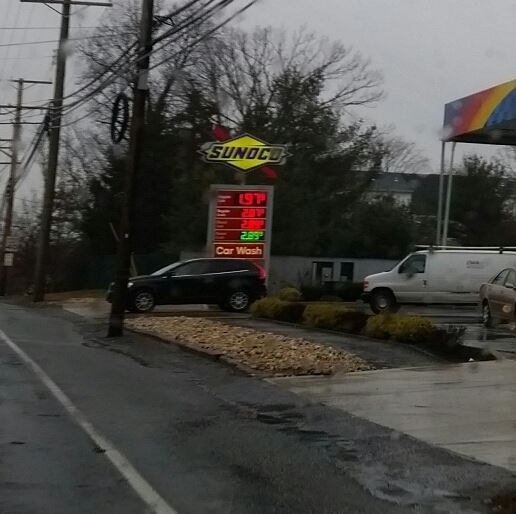
While most residents will not see a deal to raise New Jersey’s gas tax by 23 cents a gallon, to 37.5 cents as a “tax cut” or in reality , despite Governor Christies war with the media most people realize that the nails have long been driven into New Jersey’s economic coffin. The Massive flight of personal assets as well as businesses, running from the state’s high tax anti-business climate has significantly eroded the tax base over years making a major financial shake-up in the state a foregone conclusion.
The Dallas Police and Fire Pension System’s Board of Trustees suspended lump-sum withdrawals from the pension fund Thursday, staving off a possible restraining order and stopping $154 million in withdrawal requests.
The system was set to pay out the weekly requests Friday. Pension officials said allowing the withdrawals would leave them without the liquid reserves required to sustain the $2.1 billion fund.
“Our situation is currently critical, and we took action,” board chairman Sam Friar said.
Pension officials and many police and firefighters have blamed Dallas Mayor Mike Rawlings for forcing the latest run on the bank. Dozens of retirees rushed to request withdrawals after Rawlings filed a lawsuit Monday to stop the withdrawals.
By then, more than $500 million had already gushed from the fund since the board proposed benefit cuts in August.
Last week, former firefighter Bill Brennan made headlines for his appearance in court as he attempted to get a Bergen County judge to appoint a special prosecutor to investigate an official misconduct complaint filed against New Jersey Governor Chris Christie for his role in the Bridgegate lane closures. While the judge denied the request, Brennan appeared in Wayne on Monday to claim he will continue to pursue to effort and to make the unexpected announcement that he will run for governor in 2017.
Brennan has never held office before and considers himself a citizen activist. He will be running for the state house as a Democrat. Brennan will now join former Ambassador to Germany Phil Murphy and Assemblyman John Wisniewski in the June Democratic primary.
Modal TriggerPATH employees sleep on the job in the locker room at the rail system’s consolidated shop in Jersey City.
PATH workers are snoozing away huge chunks of their regular shifts, using nap time to rack up big overtime pay, The Post has learned.
“Everybody sleeps,” an insider said. “Guys make big overtime by doing work for 40 minutes or an hour, then billing the Port Authority for four or five. That’s been going on for years.”
The workers’ on-the-job dozing is under investigation by the PA inspector general, an agency spokesman said.
The PA, which operates the rail system, prohibits PATH workers from sleeping on the job — but the rule is routinely ignored, eyewitnesses said.
Ridgewood NJ, Locally Bergen County Republicans were united in OPPOSITION to the new 23 cent a gallon gasoline tax hike (plus annual increases). But Bergen’s Democrats SUPPORTED the TAX HIKE just as unanimously!
And the only way to stop similar ripoffs here in Bergen County is to support the Republican Taxpayer Watchdogs: DeNicola, Driscoll and DiDio for Freeholder, Alfonso for Sheriff, Olmo for Clerk and Avery for Surrogate.
Support your Column One Republican Taxpayer Team when you go to the polls and vote.
By Samantha Marcus | NJ Advance Media for NJ.com
on November 02, 2016 at 11:30 AM, updated November 02, 2016 at 4:23 PM
TRENTON — Now that New Jersey’s new 23-cent gas tax increase is on the books, a ballot question asking voters to dedicate the billions of dollars in new revenue to transportation projects is suddenly getting lots of attention.
The once-virtually uncontested question that passed the Legislature with just one “no” vote has become a flashpoint in the fight over the new tax, which hit gas stations Tuesday.
Now supporters of the ballot question are worried voters angry over the higher gas tax will reject the measure.
ATLANTIC CITY, N.J. (AP) – The New Jersey Senate approved a measure Thursday that would punish billionaire Carl Icahn for shutting down the Trump Taj Mahal casino by prohibiting him from holding a casino license for it for five years.
The bill would only apply to Icahn at this time, even though four other Atlantic City casinos have shut down since 2014.
Icahn’s Atlantic City management team says the bill is unfair and unconstitutional, making it virtually impossible to reopen the Taj Mahal should they decide to do so.
The bill has not yet been voted on in the state Assembly. If passed by the full Legislature, it is likely to be vetoed by Republican Gov. Chris Christie, who has made criticism of some labor unions a key part of his political agenda.
file photo by Boyd Loving
JOHN REITMEYER | OCTOBER 4, 2016
Christie’s executive order idled some 3,000 construction workers during the warm weather. Can it be lifted in time to make a dent in outstanding projects?
With the political impasse over transportation funding that has gripped Trenton for the past three months now settled, New Jersey lawmakers are scheduled to vote tomorrow on the legislation that will hike the state’s gas tax by 23 cents. The proposed increase already has Gov. Chris Christie’s endorsement and is expected to pass with bipartisan support.
But still uncertain is exactly when Christie will be willing to lift a hold on state-funded road, bridge, and rail projects that’s been in effect since July and how much that shutdown, which sidelined an estimated 3,000 construction workers, has impacted New Jersey’s economy and its residents. In some places, local officials simply ignored the construction freeze since the state money had already been promised, but others were concerned about possible fines and are now anxious to see the road crews return to work.
Christie, a Republican, announced on Friday that he is ready to sign off on the gas-tax increase needed to renew the state Transportation Trust Fund since Democrats who control the Legislature say they will authorize more than $1 billion in new tax cuts. If approved and signed into law this week, the gas tax increase isn’t expected to go into effect immediately, but officials say it would likely be in place by the beginning of November at the latest.
Still, the construction freeze remains in effect and Christie’s office offered no clear idea yesterday of when it will be rescinded.
Ridgewood NJ, late Friday while all eyes were on the Hoboken Train tragedy and the National Transportation Safety Board (NTSB) Governor Christie, Senate President Sweeney and Speaker Prieto reached a tentative agreement to finance the Transportation Trust Fund (TTF).A special legislative session will be called next week to ratify this agreement so it is subject to change.
The following are some of the details that have emerged :
0.23-cent gasoline tax increase…bringing total to 37.5 cent/gallon tax on gasoline
Sales tax cut: On 1/1/17, the sales tax will go from 7% to 6.875% and in 2018 to 6.625%.
Increase the Earned Income Tax Credit for the working poor to 35 percent of the federal benefit amount beginning in tax year 2016
Tax Savings for Retirees: Increase the New Jersey gross income tax exclusion on pension and retirement income over four years to $100,000 for joint filers, $75,000 for individuals and $50,000 for married/filing separately
Eliminate the Estate Tax: Phase out the estate tax over the next 15 months, replacing the current $675,000 threshold with a $2 million exclusion after January 1, 2017 and eliminating the estate tax altogether as of January 1, 2018
Tax Savings for Veterans: Provide a personal exemption on state income taxes for all New Jersey veterans honorably discharged from active service in the military or the National Guard.
Vetoes Legislation That Would Impede Economic Gains and Hinder Garden State Businesses
August 30, 2016
the Staff of the Ridgewood blog
Trenton, NJ , Taking action to protect New Jersey’s economic future, Governor Chris Christie today vetoed Assembly Bill No. 15, which would have raised the minimum wage to $15 per hour by the year 2021. Three years ago, New Jersey residents voted to raise the minimum wage to $8.25, along with annual adjustments based on the Consumer Price Index (CPI). This bill would have made New Jersey only the third state to adopt a $15 minimum wage.
“Despite having a constitutional mandate in place, the legislature now wants to increase the minimum wage by almost 80 percent just three years later,” said Governor Christie. “While this bill’s proposed increase surely is responsive to demands from Democrat legislators’ political patrons, it fails to consider the capacity of businesses, especially small businesses, to absorb the substantially increased labor costs it will impose, killing jobs and erasing gains of more than 275,000 private sector jobs since 2010. I cannot support a bill that undermines the positive results we have achieved in New Jersey and I am returning A-15 to the legislature with an Absolute Veto.”
Business owners would face added expenses from this substantial wage hike through increased payrolls, taxes and supply costs, leaving them with these undesirable options: laying off workers; reducing employee hours; raising prices; leaving New Jersey; or closing altogether. Other states and cities ramping up to a $15 minimum wage – California, Seattle and Washington, D.C., for example – are already seeing those negative economic impacts, from fewer jobs to increased costs for goods and services on college campuses, in restaurants and in the manufacturing sector.
Similar outcomes in New Jersey would be a significant step backward on the road to economic recovery and an affront to all of the accomplishments of our private-sector businesses over the past six-and-a-half years.
From offering $380 million in unemployment insurance tax relief to merging the State’s economic development incentive programs through the Economic Opportunity Act, Governor Christie has fought to make New Jersey more competitive and to encourage businesses not only to move to the Garden State, but also to stay here, and to expand their operations and hire new employees.
Governor Christie continues to focus on creating better paying, middle-class jobs in innovative sectors and through small business growth while continuing to build on New Jersey’s economic momentum.