
the staff of the Ridgewood blog
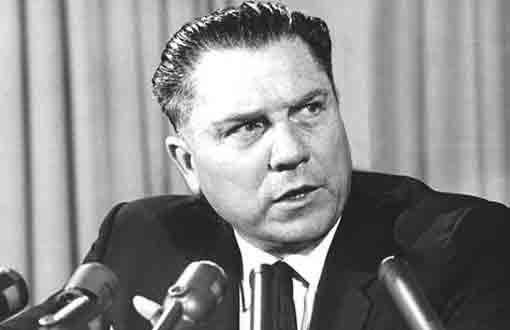
EAST RUTHERFORD, NJ — On July 30, 1975, former Teamsters President Jimmy Hoffa vanished from a Detroit-area parking lot. Now, nearly 50 years later, the mystery remains—and New Jersey continues to play a central role in the search for the truth.
Though Hoffa was last seen over 600 miles away, some of the most enduring and high-profile FBI leads have pointed investigators to New Jersey, including East Rutherford, Jersey City, and beneath the now-demolished Giants Stadium.
???? Hoffa’s Final Hours
According to FBI case files, Hoffa was 62 years old when he left his home near Lake Orion, Michigan, on July 30, 1975. He drove to the Machus Red Fox restaurant outside Detroit for a planned meeting with two known mob-affiliated Teamsters—Anthony “Tony Pro” Provenzano of Union City, NJ, and Anthony “Tony Jack” Giacalone of Detroit.
At 2:15 p.m., Hoffa reportedly called his wife from a payphone, frustrated that no one had shown up. He was never seen again.
????️♂️ A Half-Century of Dead Ends and Theories
Hoffa’s disappearance triggered a federal grand jury investigation and a massive FBI operation. By the 1980s, agents had compiled over 70 volumes of files and had followed leads across Michigan, Florida, and New Jersey.
But despite decades of digging—literally and figuratively—no one has ever been charged, and his body has never been found. The case remains open and active, according to the FBI Detroit Field Office.
“We continue to encourage anyone with information to submit a tip,” the agency said ahead of the 50th anniversary.
???? New Jersey’s Deep Ties to the Hoffa Case
The Garden State has been central to Hoffa theories for decades:
-
Tony Provenzano, a former Teamsters Local 560 VP, lived in Hudson County and had a bitter falling out with Hoffa before the disappearance.
-
In 1975, an informant told the FBI that Hoffa was stuffed into a 55-gallon drum and driven to New Jersey, allegedly on Provenzano’s orders.
-
In 1989, a hitman claimed Hoffa was buried under Giants Stadium in East Rutherford. The FBI found no evidence, but the rumor persisted, even after the stadium’s demolition in 2010.
-
Richard “The Iceman” Kuklinski, a New Jersey contract killer, claimed in a 2006 memoir that he killed Hoffa and shipped his compacted body to Japan. His account was never verified.
???? The Pulaski Skyway Search: New Jersey’s Most Credible Lead?
In late 2021, federal agents armed with ground-penetrating radar searched a dirt lot beneath the Pulaski Skyway in Jersey City, near the infamous PJP Landfill—once a dumping ground for illegal waste and the setting for “The Sopranos” opening credits.
The lead came from Frank Cappola, whose father allegedly confessed to burying Hoffa in a steel drum at the site in 1975. The story aligned with earlier tips from mobster Phillip Moscato and years of investigative reporting by journalist Dan Moldea.
Yet once again, the FBI found nothing.
⚖️ Hoffa’s Legacy in Labor—and American Lore
Hoffa was declared legally dead in 1982, but his influence endures. Born in Indiana in 1913, Hoffa rose through union ranks to become Teamsters president (1957–1971). Under his leadership, the Teamsters grew to 2 million members, negotiated the historic National Master Freight Agreement, and ended segregated locals, pushing for worker equality.
But his ambition and mob ties led to prison time for bribery and jury tampering—and later, a desperate attempt to reclaim power, a move many believe sealed his fate.
???? A Mystery That Won’t Die
From mob informants and murderers to landfills and stadiums, the Jimmy Hoffa mystery continues to captivate. And in the most compelling versions of the story, the trail leads right through New Jersey.
As the 50th anniversary of Hoffa’s disappearance passes, one thing is certain: New Jersey remains at the heart of one of America’s most enduring unsolved cases.








No one cares…he had it coming to him.