
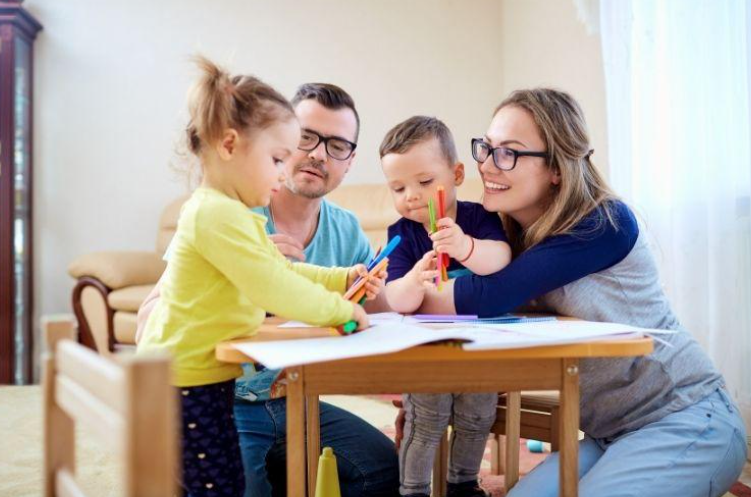
[Photo by studioroman on Canva.]
For decades, many parents viewed education as something that primarily happened at school. Teachers taught, administrators managed the system, and families supported learning from the sidelines.
That dynamic is changing. Across the United States, parents are taking a more active role in their children’s education. Some volunteer more frequently in schools. Others supplement classroom learning at home. Many are paying closer attention to curriculum, academic performance, and the skills their children need for the future.
This isn’t necessarily a rejection of traditional education. Instead, it reflects a growing belief that parents play a critical role in shaping how children learn, think, and prepare for adulthood.
Why Parent Involvement Matters
Research and federal survey data have shown that parental involvement can have a positive impact on student achievement. According to the National Education Association, decades of research demonstrate that family engagement is foundational to child development and academic success. Students tend to perform better when parents take an active interest in their education, communicate with teachers, and create supportive learning environments at home.
The benefits extend beyond grades. Studies have linked parental involvement to stronger attendance, improved behavior, greater confidence, and better long-term educational outcomes.
In other words, education works best when schools and families operate as partners rather than separate institutions.
The Pandemic Changed Expectations
The COVID-19 pandemic accelerated a trend that was already beginning to emerge. When schools shifted to remote learning, millions of parents gained a front-row seat to their children’s education. They observed teaching methods, curriculum materials, learning challenges, and classroom expectations in ways that had rarely been possible before.
For many families, the experience initiated new questions:
- How is my child actually learning?
- Are they developing practical skills?
- Is the curriculum meeting their needs?
- What can I do to support their growth outside the classroom?
Even after schools returned to normal operations, those questions remained. Parents who became more engaged during the pandemic often stayed involved, creating a lasting shift in how many families approach education today.
Learning Doesn’t Stop When School Ends
One of the biggest changes in recent years is the growing recognition that education extends far beyond the classroom.
Children learn through conversations, experiences, books, hobbies, travel, volunteer work, and everyday family life. Parents increasingly understand that some of the most important lessons cannot be measured by standardized tests.
Financial literacy offers a good example. Many adults reach their twenties or thirties wishing they had learned more about budgeting, investing, taxes, entrepreneurship, and economic decision-making while growing up. Because these often receive limited classroom attention, many parents are looking for ways to introduce them at home.
Resources from The Tuttle Twins provide families with age-appropriate materials that help children explore concepts like economics, entrepreneurship, critical thinking, and personal responsibility. These kinds of resources can complement what students are already learning and encourage discussions that continue around the dinner table.
The broader lesson is simple: parents don’t need teaching credentials to help their children become lifelong learners.
The Rise of Educational Choice
Another factor driving greater parental involvement is the expansion of educational options.
Families today have more choices than previous generations, including public schools, private schools, charter schools, online learning programs, hybrid models, homeschooling, and microschools.
Recent data from the National Center for Education Statistics found that approximately 3.4% of K-12 students were homeschooled during the 2022–23 school year, up from 2.8% before the pandemic. Broader measures that include virtual instruction show even higher levels of home-based learning.
While homeschooling remains a minority choice, its continued growth reflects a larger trend: parents increasingly want educational experiences tailored to their children’s unique needs.
Not every family will choose alternative education models. However, the growth of educational choice has encouraged more parents to think carefully about what kind of learning environment works best for their children.
Critical Thinking Has Become a Priority
Modern students have access to more information than any previous generation. The challenge isn’t finding information. It’s learning how to evaluate it.
Parents are increasingly focused on helping children develop critical thinking skills, including how to:
- Assess sources of information
- Recognize bias
- Ask thoughtful questions
- Analyze arguments
- Distinguish facts from opinions
These skills matter regardless of political beliefs or educational philosophy. In an age of social media, artificial intelligence, and constant digital content, children need the ability to think independently and make informed decisions. Many parents see this as one of their most important responsibilities.
Character Development Starts at Home
Education is often discussed in terms of academics, but many families are equally concerned with character development. Qualities such as perseverance, responsibility, honesty, respect, and resilience are difficult to teach through textbooks alone.
Parents influence these traits every day through example, expectations, and family culture. Children learn responsibility when they are given meaningful tasks. They learn perseverance when adults encourage them through challenges. They learn respect by observing how parents treat others.
Schools can reinforce these values, but families remain the primary source of character formation. That reality helps explain why many parents are becoming more intentional about their role in education as a whole.
Building Stronger Partnerships With Schools
Greater parental involvement doesn’t have to create conflict between families and educators. In many cases, it produces the opposite result.
Teachers often benefit when parents communicate regularly, reinforce learning at home, and stay informed about their children’s progress. Likewise, parents gain valuable insight from educators who understand classroom expectations and academic development.
The most successful educational environments typically involve collaboration rather than competition. When schools and families work together, students receive consistent support from the adults who have the greatest influence on their lives.
Conclusion
Parents are reclaiming a bigger role in their children’s education because they recognize a simple truth: learning is too important to leave entirely to any single institution.
Schools remain essential. Teachers continue to play a vital role. Yet education has always been most effective when families are actively engaged in the process.
Whether through helping with homework, discussing current events, teaching financial literacy, encouraging critical thinking, or exploring educational resources outside the classroom, parents have an opportunity to shape their children’s development in meaningful ways.
As educational options continue to evolve, one lesson remains clear: when parents take an active interest in learning, children are more likely to thrive.
References
- National Education Association. “Advocating for Parent Involvement in Education.”
- National Center for Education Statistics. “Parent and Family Involvement in Education: 2023.”
- Pew Research Center. “A Look at Homeschooling in the U.S.”
- National Center for Education Statistics. Homeschooling Data and NHES Reports.





