
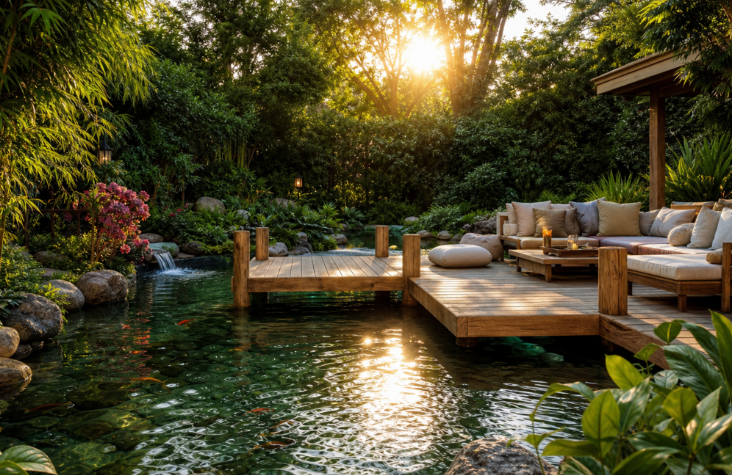
Well-maintained water features increase property value by signaling comprehensive land stewardship, enhancing waterfront curb appeal, and distinguishing large-lot estates in competitive markets. Buyers interpret a clear, aerated pond as evidence of meticulous overall property care, while stagnant water reads as an immediate, expensive maintenance liability.
A late spring morning on an equestrian property in Saddle River or Franklin Lakes often reveals exactly which side of that line a water feature sits. A homeowner standing at the water’s edge might find a green-gray algae film spreading across the surface of a neglected basin.
Cattails encroach aggressively from the northeast bank, while a faint sulfur odor rises as the morning air warms. The still water reflects a dull sky rather than the surrounding landscape, creating a visible problem instead of the tranquil amenity envisioned during the closing.
Just one street over, a neighbor’s pond occupying a similar naturally formed basin presents a different narrative. Clear water reveals koi swimming a foot below the surface, while a gentle aerating fountain arcs in the morning light to frame the driveway approach.
In Bergen County’s estate market, where buyers in Ridgewood and Franklin Lakes evaluate outdoor spaces with heavy scrutiny, the water feature functions as either a compelling asset or a conspicuous liability. Restoring this amenity requires addressing the underlying water chemistry before updating the surrounding landscape.
1. The Foundation of Aeration and Water Movement
Still water constantly struggles to maintain ecological balance. Moving water actively draws oxygen from the surface and distributes it deeply through the water column. This oxygen-rich environment supports fish populations and suppresses the anaerobic bacteria that produce common sulfur odors.
Proper circulation prevents algae from establishing the surface dominance required to bloom, because aeration works by oxygenating the water and forcing the precipitation of phosphorus, making it unavailable for plant growth.
Estate properties frequently feature ponds spanning half an acre or larger, making small decorative pumps mechanically insufficient. Equipment must match both the total water volume and the maximum depth of the basin, because undersized aeration creates the illusion of active management without delivering the deep circulation the pond actually needs.
Stagnation leads to heavy muck accumulation, forcing owners into costly dredging programs or intensive chemical treatment cycles.
For estate-sized ponds, the right equipment handles both mechanical circulation and visual presentation at once. An aerating fountain oxygenates the water column while producing the dynamic display that defines a well-appointed outdoor space.
Property owners exploring this approach will find that Everblue Pond’s high-performance pond fountain lineup is designed specifically for larger water features. These options scale precisely to different basin sizes and aesthetic preferences. Properly scaled equipment functions as a practical investment that pays for itself through reduced treatment costs and improved property presentation.
Clear water emerges, algae coverage visibly reduces within weeks, sulfur odors dissipate, and fish activity returns near the surface. These are the specific metrics a Bergen County homeowner will notice upon walking the grounds. A balanced water feature supports a complete aquatic ecosystem, which signals diligent overall property maintenance to prospective buyers.
| Important: Undersized aeration is a costly mistake; it gives the illusion of care but fails to circulate deep water, leading to muck buildup that demands expensive dredging or chemical treatments. |
2. Healthy Ecosystems Signal Diligent Stewardship
High-end property showings rely on environmental cues to establish value. A thriving pond ecosystem featuring clear water, visible aquatic life, and intentional native plantings like blue flag iris or marsh marigold communicates active stewardship to buyers.
An algae-covered basin emitting a sulfur odor reads as undeniable evidence of general neglect. Buyers consciously or subconsciously infer that an owner who deferred large pond care likely skipped maintenance on less visible systems, including the roof, perimeter drainage, and HVAC units.
A pond operates as an active living system requiring deliberate input. Without active management, seasonal organic matter like dropped oak leaves, grass clippings, and fish waste settles on the bottom to form a dense muck layer.
This muck consumes oxygen as it breaks down, simultaneously feeding the nutrient load that algae exploits, which creates a self-reinforcing cycle that degrades water clarity rapidly and forms a visible problem noticeable from twenty feet away.
Wooded properties across Franklin Lakes frequently incorporate natural ponds formed from historical retention basins or stream-fed depressions. These basins hold the potential to become self-sustaining focal points, but they easily turn into persistent water quality problems without intervention.
Since the determining factor relies entirely on consistent management rather than baseline geography, strategic plantings along the riparian edge filter runoff before it enters the basin to add a secondary layer of protection against nutrient loading.
Professional pond maintenance in NJ increasingly involves a complete care approach that pairs mechanical aeration with seasonal muck reduction treatments. Biological pond treatments actively consume the bottom sediment that feeds algae cycles, effectively reinforcing the aeration work happening higher up in the water column.
Owners now budget for this ecosystem care the same way they allocate funds for weekly lawn service or seasonal gutter cleaning.
3. First Impressions Drive Real Estate Valuation
Bergen County remains one of the most fiercely competitive real estate markets in New Jersey. Properties located in Ridgewood, Saddle River, and Franklin Lakes routinely attract buyers who evaluate dozens of high-end homes and arrive with heavily calibrated expectations.
A well-presented water feature moves beyond mere decoration to become a primary differentiator that signals elite property quality at first glance. For large-lot estates, a clear pond or active fountain visible from the entrance establishes an immediate sense of arrival.
Professional outdoor amenities consistently drive measurable returns. Research indicates that proximity to well-managed water creates a substantial premium on real estate.
Whether a beach, pond, or stream, proximity to water raises the value of a home by up to 28 percent. Furthermore, when all else is equal, the price of a home located within 300 feet of a body of water increases by up to 27.8 percent. Buyers evaluating a luxury property in Saddle River expect the exterior spaces to perfectly match the massive interior investment.
Listing agents specifically stage patio furniture and schedule photography to capture the fountain’s spray catching the light, since these specific staging decisions rely on the underlying water quality remaining pristine.
A clear, active water feature completes that upscale picture in a way that a vast lawn cannot duplicate. A stagnant, algae-filled pond undermines that same picture, sometimes decisively ending a buyer’s interest before they reach the front door.
This dynamic applies equally to homeowners with no immediate plans to list their property. Waterfront curb appeal shapes neighborhood perception, influences homeowner association standing, and dictates the owner’s daily experience of their own land.
| Key Insight: Well-managed water features can boost perceived property value by 10 to 15%, per national real estate and landscaping research, making them a tangible ROI differentiator in competitive markets. |
4. A Premium Lifestyle Selling Point
Buyers entering Bergen County’s upper real estate tier purchase a specific way of living rather than just a collection of square footage. Families who entertain, prioritize outdoor privacy, and want their acreage to feel intentional recognize a well-maintained pond as a premium lifestyle asset.
The value materializes in concrete daily experiences, like enjoying morning coffee on a bluestone terrace while a fountain operates audibly in the background. On summer evenings, the steady sound of moving water actively masks distant road noise drifting from the Route 17 or Route 4 corridors.
Children spend afternoons watching koi from a low wooden dock, creating the exact idyllic moments buyers attempt to purchase. When two comparable properties sit available in the same Bergen County price range, the listing featuring a thriving water feature routinely wins the emotional battle.
Even if the homes share the same school district, similar interior square footage, and equivalent build quality, the active pond creates a lasting memory.
Photographs captured during the listing process highlight a dynamic landscape feature that buyers clearly remember after walking through a dozen other showings that same weekend.
Real estate professionals operating in Franklin Lakes consistently note these estate water features as a recurring request from buyers relocating from Manhattan. The combination of open space and private water features delivers a specific suburban ideal that drives premium offers.
With proper mechanical and biological care, a pond never goes dormant. It transforms into a striking winter landscape feature under light snowfall, signals early spring the moment the surface ice clears, and serves as a summer centerpiece for evening outdoor living.
Winterizing involves removing decorative fountain heads, storing pumps safely, and deploying winter de-icers to keep a vent hole open in the ice for gas exchange.
5. Integrating Pond Care into Property Maintenance
Bergen County homeowners consistently invest significant capital into custom hardscaping, routine exterior painting, and professional lawn care programs. The pond located at the back or side of the property often receives just a fraction of that annual maintenance budget, despite carrying a disproportionate visual impact on market perception.
Correcting this imbalance requires a straightforward, systematic approach, because integrating a properly scaled aerating fountain alongside biological treatments and muck management reverses the decline of water quality.
Pond care requires a steady seasonal rhythm similar to routine lawn maintenance. Spring protocols involve activating aeration systems and introducing beneficial bacteria to consume the organic matter that accumulated over the winter.
Summer maintenance focuses on ensuring the mechanical fountains continue operating efficiently to maintain dissolved oxygen during the hottest months, while autumn requires physical debris management, using skimmer nets to catch falling leaves before they sink and decompose into the muck layer.
The transition from a neglected basin to a thriving ecosystem proves highly manageable when owners adopt this structured calendar.
Properly scaled aeration equipment, a dedicated biological treatment schedule, and consistent visual monitoring transform a pond’s condition within a single growing season. Owners measure this success in restored water clarity, complete odor elimination, and increased fish activity long before the autumn leaves turn.
The Bottom Line
A well-managed pond on an estate lot remains one of the most photographable, value-affirming features a property can offer. Implementing a specialized aerating fountain establishes the oxygen circulation necessary to suppress algae and eliminate sulfur odors.
Following up with seasonal biological treatments addresses the underlying muck and organic decay that drag down water clarity.
The necessary equipment and scheduled maintenance require far less effort than most imagine, yielding returns in daily enjoyment, neighborhood presence, and ultimate market position. This baseline care protects the structural integrity of the basin and ensures the property commands its maximum value when it finally reaches the real estate market.
| Author Profile: Everblue Pond offers a broad selection of large pond, commercial lake, and water-feature equipment for landowners, farmers, acreage owners, ranch owners, large property owners, golf course managers, pond managers, and property managers who want cleaner water, healthier ecosystems, and dependable year-round operation. |





