
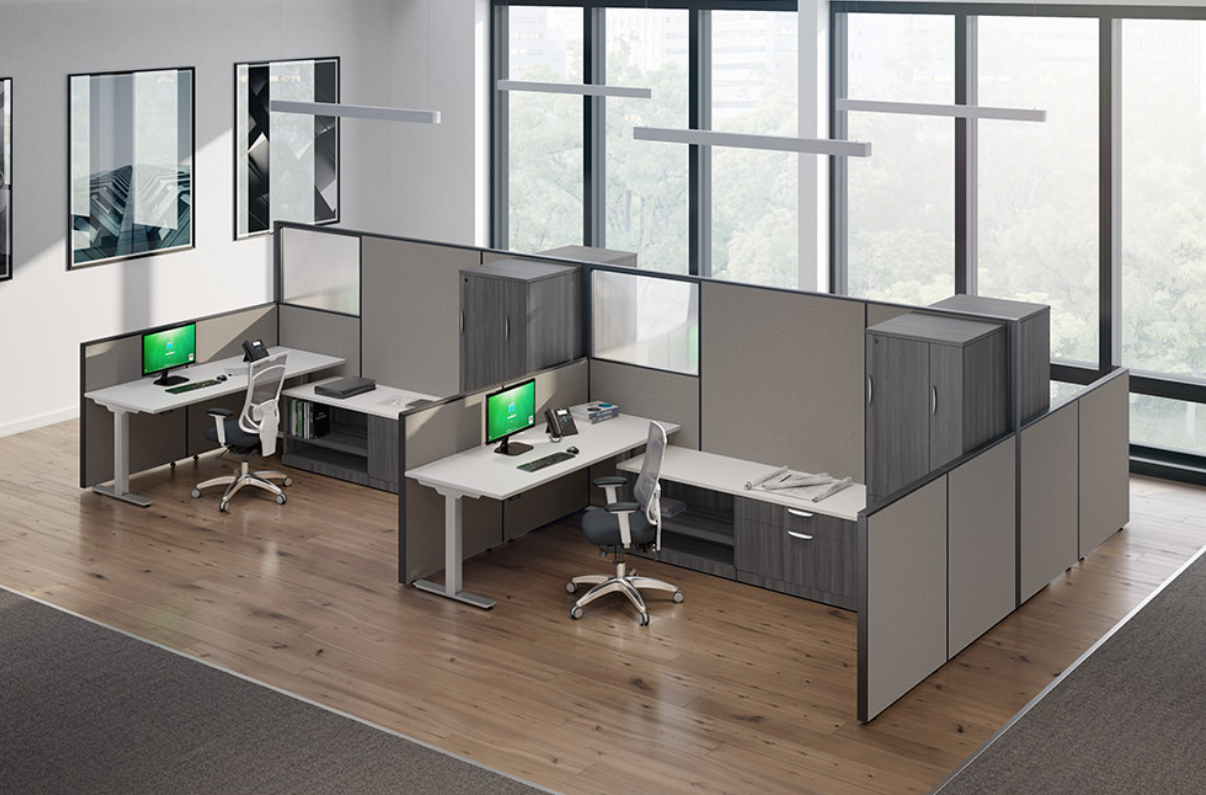
A commercial workstation should simplify routine tasks, keep essential materials accessible, and present a polished image to visitors. Random storage additions can consume valuable space without improving the way employees work. A practical setup begins with furniture that supports the role, room dimensions, and volume of materials handled each day.
Industrial finishes bring character to a workplace, yet appearance should never replace function. Reclaimed wood surfaces, metal accents, spacious desktops, and coordinated storage create a professional setting with a distinctive identity. Please read this article to know more.
Choose an L-Shaped Desk for Defined Work Zones
Well-planned commercial office furniture can separate computer work, paperwork, and client-facing activities within one efficient footprint. An L-shaped desk provides a primary surface for monitors and a return for files, forms, printers, or meeting materials. Models with curved barrel fronts can give reception areas a finished exterior while concealing the active side of the desk. Select the return direction according to doorways, electrical access, and walking routes. Place frequently used equipment near the inner corner to limit excessive reaching and preserve open space for focused tasks.
Add a Hutch and Mobile File Pedestal
A desktop hutch expands storage upward, preserving the main surface for current assignments. A mobile file pedestal keeps records nearby and can shift whenever the office layout or employee responsibilities change.
- Reserve upper hutch compartments for binders, manuals, and supplies used each week.
- Place active project folders inside the pedestal instead of stacking them across the desktop.
- Assign one drawer to personal belongings so visible areas remain professional.
- Label closed compartments to support faster restocking and smoother employee handovers.
Pair the Desk With a Coordinated Credenza
A credenza can serve as a secondary work surface, equipment station, or concealed storage area behind an executive desk. It provides a practical home for printers, samples, presentation materials, and archived documents that would otherwise crowd the primary surface. A compact model can even function as an additional desk in offices that require several activity zones. Match the credenza’s depth and height to the surrounding layout rather than selecting it solely for visual similarity. Adequate clearance between both pieces allows drawers and doors to open without restricting movement.
Use Bookcases to Organize Visible Resources
Industrial bookcases and corner shelving make productive use of wall areas that might otherwise remain empty. Open storage suits attractive materials and resources that employees need to recognize quickly.
- Group books and binders according to department, project, or frequency of use.
- Position heavier objects on lower shelves for easier access and improved stability.
- Add coordinated boxes for cables, product samples, and small supplies.
- Keep upper shelves lightly arranged to prevent the workstation from appearing crowded.
Select Flexible Furniture for Changing Needs
Desks on casters and single-or-double workstations support offices that require occasional layout adjustments. Locking wheels help maintain stability during routine use, while adaptable configurations can accommodate individual concentration or paired collaboration. Reclaimed wood panels and metal frames also preserve a consistent industrial style as teams expand.
Each investment in commercial office furniture should reflect real workflow rather than a fixed showroom arrangement. The Occupational Safety and Health Administration states that ergonomics can lessen muscle fatigue, increase productivity, and reduce the number and severity of work-related musculoskeletal disorders. This guidance supports careful placement of desks, monitors, chairs, and storage components.
A better-organized workstation begins with purposeful zones, accessible storage, and furniture suited to the available space. Hutches, credenzas, mobile files, and vertical shelving reduce clutter without sacrificing professional character. Thoughtful selections create a workplace that remains efficient, adaptable, and welcoming.





