
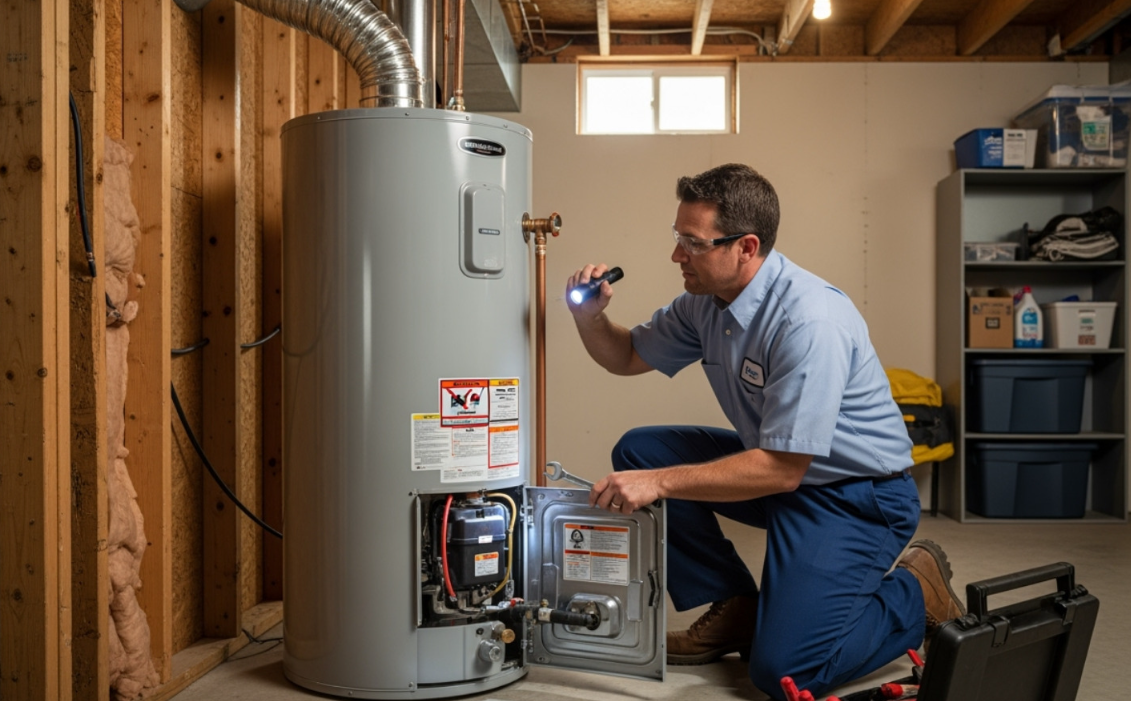
Your water heater is the quiet workhorse of your home, and most people never think about it until the pilot light won’t stay lit on a Tuesday morning. Here is the short answer: a standard tank unit lasts 8 to 12 years, a tankless system can push past 20, and the moment you hit year nine, you are living on borrowed time. This guide walks you through the real lifespan math, the warning signs that mean replacement instead of repair, and the exact steps to stretch every last year out of the tank you already own.
What Actually Determines How Long Your Tank Lasts
Manufacturers rate most residential tanks for somewhere between 8 and 12 years, but that number assumes ideal conditions. Your water, your habits, and your local climate all shift the timeline. The U.S. Department of Energy notes in its water heater guidance that regular maintenance like flushing the tank can extend the life of your system, and skipping it is the fastest way to shave years off the expected span.
Here is what eats a tank from the inside out:
- Sediment buildup. Hard water drops calcium and magnesium that settle on the bottom of the tank. That layer insulates the water from the burner, so the unit runs hotter and longer to heat the same amount, which cooks the metal faster.
- Sacrificial anode rod depletion. This rod is designed to corrode instead of your tank walls. Once it dissolves completely, typically after 5 to 7 years, the tank itself starts rusting from the inside.
- Temperature setting. Running the thermostat above 130 degrees accelerates corrosion and scale formation.
- Water pressure. Home pressure above 80 psi stresses the tank and its valves, and the EPA’s WaterSense program recommends checking your pressure because high pressure leads to wasteful leaks and premature equipment failure.
Ask yourself one honest question: when did you last drain your tank? If you cannot remember, or you have never done it, assume sediment has been building for years. That single habit is the difference between a tank that dies at year nine and one that limps to fourteen.
The Warning Signs That Say Replace, Not Repair
Every water heater eventually fails, and the smart move is catching it before the tank splits open and floods your garage. Some problems are cheap fixes, but a handful of symptoms mean the unit is structurally done.
- Rust colored water. A little rust at the tap usually points to your pipes, but rust straight from the hot water side means the tank interior is corroding. Once the steel walls start oxidizing, there is no sealing that up. You are on a countdown to a leak.
- Rumbling or popping sounds. That noise is steam bubbles trapped under thick sediment layers. The burner is trying to heat water through a crust of minerals, and each pop is a tiny explosion under the scale. Draining may quiet it temporarily, but if the noise returns within months, the sediment has fused to the tank bottom.
- A visible pool of water. Small drips around valves are one thing, but a puddle under the tank that keeps coming back after you dry it means the tank itself is weeping. At that point, repair is throwing money at a shell that is already compromised.
- Age plus any symptom. A tank at year ten with a minor pilot light issue might tempt you toward a cheap repair, but here is the thing: you would be paying a service call to extend the life of a unit that is statistically at the end of its road anyway. The next failure, and there will be a next failure, probably will not be so minor.
When a Repair Still Makes Sense
Not every trip to the water heater ends in replacement. If your unit is under eight years old and the problem is isolated, fixing it is the financially sane choice. Common repairable issues include a failed thermocouple, a bad gas valve, a broken thermostat, or a pressure relief valve that has started leaking. These are parts, not structural failures, and they cost a fraction of a new installation.
But here is the line I would draw: if the repair estimate crosses 50 percent of what a new unit would cost, and your tank is past the eight year mark, replace it. You are paying half price for a machine with maybe two years left. That is a bad trade no matter how you run the numbers.
If you live in the San Francisco area and your tank has finally given up, your best move is calling a licensed local plumber who can inspect the system and give you an honest verdict. Water heater services San Franciso teams handle everything from urgent leak repairs to full replacements, and a professional opinion beats guessing whether that rumbling sound is normal. Most companies offer free estimates, so there is no reason to gamble on a dying tank when a quick inspection settles it.
The Replacement Decision, Step by Step
When the time comes, work through this checklist so you do not get talked into the wrong unit or overpay on installation:
- Measure your actual hot water usage. Count the people in your home, the showers running at peak morning hours, and whether the dishwasher and washing machine ever run simultaneously. A 40 gallon tank serves a family of four in most cases, but two teenagers who take 20 minute showers will blow through it.
- Decide between tank and tankless. A tankless system costs more upfront but lasts roughly twice as long and eliminates standby energy losses. If you plan to stay in the house for a decade or more, the math often favors tankless.
- Check the energy factor rating. Higher efficiency units cost more at the register but save on every monthly gas or electric bill. Compare the warranty length too, a 6 year warranty and a 12 year warranty usually signal very different internal build quality.
- Get three quotes. Pricing varies wildly between companies for the exact same tank model. The cheapest bid is not always the best, but the most expensive rarely buys you anything extra either. Look for a flat rate that includes removal of the old unit and haul away.
- Schedule it before it fails. Emergency replacements on a Sunday evening carry premium rates and limited choices. Replacing a working tank on your own timeline means you pick the unit you want, not whatever the truck has in stock.
I would add one more personal rule: never buy the cheapest tank at the big box store unless you plan to move within a few years. The extra hundred dollars for a mid tier unit with a longer anode rod and better insulation pays for itself in reduced service calls alone.
The Maintenance Routine That Adds Years
Most homeowners do zero maintenance on their water heater, which is exactly why the average tank dies so close to its minimum rated life. A small annual routine changes that trajectory. I have seen well maintained tanks run past fifteen years without a single breakdown, and the effort takes about an hour a year.
- Drain a few gallons every three months. Attach a garden hose to the drain valve at the bottom, open it, and let water run until it clears. You do not need to empty the whole tank, just enough to flush loose sediment. This is the single highest impact habit you can adopt.
- Check the anode rod every two years. Look for the hex head fitting on top of the tank, usually behind a small access panel. If the rod is covered in deep pits or has corroded down to a thin wire, replace it. This rod costs about thirty dollars and is the difference between a tank that rusts through and one that does not.
- Test the pressure relief valve yearly. Lift the lever on the side of the tank and let it snap back. You should hear a gurgle of water and see a brief trickle. If nothing comes out, the valve is seized and needs replacement, because a stuck relief valve turns your tank into a pressure bomb.
- Keep the area clear. Your tank needs airflow for combustion and ventilation. Boxes stacked against it, paint cans stored beside it, and dust covering the burner access panel all shorten its life and create a fire hazard in gas models.
The quiet secret of water heater longevity is that it does not require special skills. Draining a tank is easier than changing your oil, and the payoff is measured in extra years of reliable hot water.
Know Your Number
Grab a marker and write the installation date on the side of your tank, right next to the serial number plate, so you never have to guess again. If that date is more than ten years in the past, start budgeting for a replacement now rather than waiting for the flood. And the next time someone tells you water heaters just die randomly, remember that most of them die from neglect, not from bad luck.
When was the last time you drained your tank?





