Ridgewood NJ, New Jersey residents could soon be able to legally light fireworks in their backyards. Currently, only New Jersey, Delaware and Massachusetts have a blanket ban on the sale of fireworks.
In a 35-1 vote, state senators agreed that outlawing fireworks doesn’t mean people don’t buy them. Many just travel across state lines to purchase their products, leaving thousands of dollars of tax revenue behind.
Lawmakers have sent a bill to Gov. Chris Christie’s office to legalize the sale of certain types of fireworks for people 16 and older.The bill would only allow the purchase of fireworks that are “non-exploding”, “non-aerial fireworks”, like sparklers and glow worms.
Republican Measures Would Address Nearly $2 Billion Property Tax Liability
June 22, 2017
the Ridgewood blog
Ridgewood NJ, Democrats in the New Jersey Senate blocked the consideration of sick leave reforms sponsored by Senator Jennifer Beck (R-11) and Senator Michael Doherty (R-23) that would address a nearly $2 billion liability for property taxpayers.
Senate Democrats tabled Sen. Jennifer Beck’s sick leave reform effort during the Senate session on June 22, 2017. (SenateNJ.com)
Senators Beck and Doherty made motions to relieve S-2947 and S-572 from the committee process for consideration by the full New Jersey Senate.
“We’ve tried repeatedly to put an end to the outrageous six-figure payouts that drive up property tax bills statewide,” said Beck. “Democrats, however, continue to block our reforms that would end this abusive practice and make New Jersey more affordable. To be clear, this is more than a billion dollars of property tax relief that New Jersey Democrats have denied.”
In one recent example of abuse, the retiring police chief of Jersey City was paid $512,620 for 450 unused days.
“No public employee should get a half-million dollar check at taxpayer expense simply because they were blessed with health,” said Doherty. “It’s inexplicable that New Jersey Democrats continue to defend this blatant abuse of property taxpayers.”
Senator Doherty’s S-572 would end the practice known as “terminal leave” when a public employee, in anticipation of retirement, is permitted to use up accumulated days of sick leave. The bill requires a verified medical necessity to use six of more consecutive accumulated sick days in the 12 months prior to retirement.
Senate Democrats blocked consideration of sick leave reform legislation sponsored by Sen. Mike Doherty on June 22, 2017. (SenateNJ.com)
Senator Beck’s S-2947 would limit payouts at retirement to $10,000 for accumulated unused sick leave for all public employees, and limit the carrying forward of vacation leave for one year only.
Previous Senate Republican efforts to move sick leave reform legislation were blocked on February 13th and March 13th.
Glen Rock NJ, Glen Rock FD and Hawthorne Fire Department Engine Company #4 personnel were dispatched to 84 Rutland Road, Glen Rock on Friday afternoon, 06/23, in response to a 911 telephone call reporting a possible hazardous materials spill near a storm drain. The spilled liquid was identified as latex paint and was washed off the roadway into the storm drain (which was subsequently flushed with HFD E4’s tank water) based on directions from the County of Bergen HazMat Unit provided via telephone. No injuries were reported in the incident. Glen Rock Police also responded.
Former U.S. Solicitor General Paul Clement Leads Battle Against Christie Administration
June 23,2017
the staff of the Ridgewood blog
Ridgewood NJ, A class action lawsuit has been filed in the United States District Court for the District of New Jersey. The case of Holland v. Porrino, et al concerns a Dallas Cowboys football fan involved in a bar fight, who claims he was denied his constitutional right to bail by a New Jersey judge.
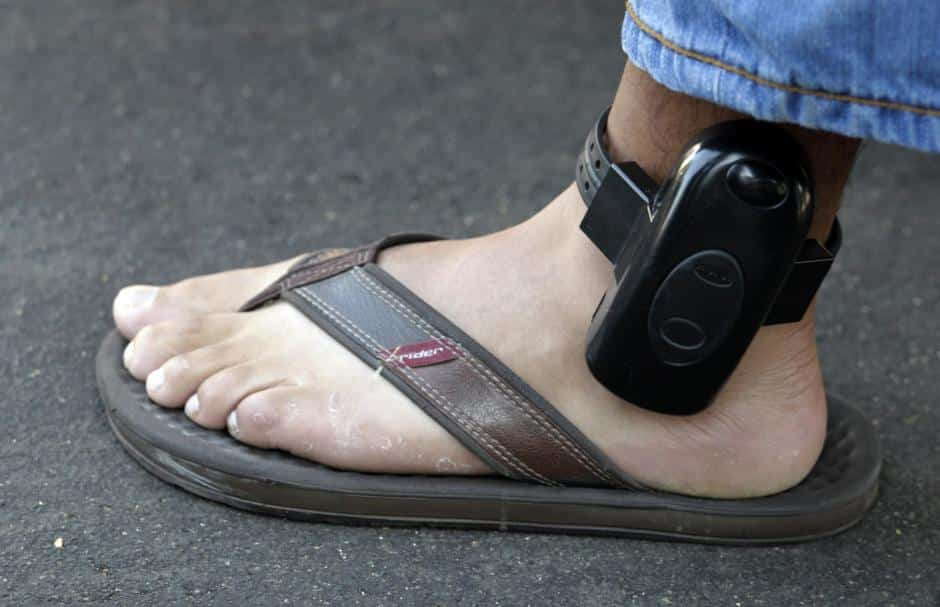
32-year-old Brittan Holland was arrested and charged following an argument and fight with a Philadelphia Eagles fan in Winslow Township. He was subsequently ordered to be released wearing a GPS ankle monitor pending his trial. However, the suit contends that this action reflects the unlawfulness of New Jersey’s bail reform laws, which took effect on January 1. Intended to make things more fair for defendants who lack the financial resources to be bailed out, the new system calls for judges to utilize a risk assessment tool to determine whether to hold defendants in jail or release them on a simple promise to appear.
Filed by former U.S. Solicitor General Paul Clement on behalf of Holland and Lexington National Insurance Corporation, which represents others in Holland’s situation, the suit maintains that New Jersey’s current bail reform laws are illegal. Clement, widely regarded as one of the greatest constitutional litigators of our time, contends that bail is guaranteed in the Eighth Amendment of the Constitution.
The defense is led by Attorney General Christopher Porrino, representing Governor Chris Christie’s administration, to which he reports. Christie was strongly behind the push for New Jersey bail reform when it passed in 2014.
By ordering Holland’s release on the condition that he wear an ankle monitor, Clement’s suit states that he was thus denied the option of bail, to which he should have been legally entitled.
Since taking effect, the state’s new bail laws have been highly controversial, with both law enforcement and victims groups criticizing it as creating a threat to public safety. Under the former system, which used money bail to create accountability, potentially dangerous defendants were carefully monitored by bail agents after being released. With the new system, there is little incentive for a person who has been freed from jail to show up for court.
As for Brittan Holland, Clement’s suit claims that under the previous law, he would have very likely “paid a nonexcessive amount of bail to secure his future appearance, likely with the help of a surety company like Plaintiff Lexington National. He then would have enjoyed his full pre-trial liberty, just like any other presumptively innocent member of society.” However, because the court never had the option to set bail, Holland’s release was secured through non-monetary conditions, which included the use of an ankle monitor, through which his “liberty is sharply curtailed.” The suit adds, “he cannot shop for food or basic necessities and cannot take his son to baseball practice”
The plaintiff in this case is bringing three claims against New Jersey bail reform: (1) deprivation of his Eighth Amendment and Fourteenth Amendment right to bail by denying his right to bail as an option in the first instance; (2) deprivation of his rights of due process; (3) violation of his Fourth Amendment rights to be free from unreasonable searches and seizures, as a result of being required to be placed on GPS and other monitoring.
A preliminary injunction motion has been filed, with the court being asked to hear the matter by July 17 – and rule on it in an expedited fashion. Practically speaking, New Jersey’s bail reform laws could face a court injunction within the next four weeks. If that occurs, it would entirely derail the new laws and once again, restore monetary bail, within the discretion of a judge, as a required consideration as a first option when it comes to setting bail.
About the American Bail Coalition
The American Bail Coalition is dedicated protecting the Constitutional right to bail and the promotion, protection and advancement of the surety bail profession in the United States. Comprised of the nation’s largest surety insurance companies, ABC works with local communities, law enforcement, legislators and other criminal justice stakeholders to utilizes its expertise and knowledge of the surety bail industry to develop more effective and efficient criminal justice solutions.
Updated June 20, 2017
Posted June 20, 2017
By Samantha Marcus | NJ Advance Media for NJ.com
Property taxes are consistently one of New Jerseyans’ top concerns, with good reason. At $8,549, they’re the highest in the country. No surprise they’re also a hot topic on the gubernatorial campaign trail.
Republican nominee Kim Guadagno has said she wouldn’t run for re-election in 2021 if she doesn’t deliver property tax relief. Democratic nominee Phil Murphy also thinks he can bring relief.
It’s an especially big problem for many because Jersey’s sky high real estate taxes can claim a good chunk of a homeowners’ income.
The property tax burden hits some towns much harder than others. Here are the 30 towns that feel the most pain from property taxes, based on what their residents earn.
(Some of the state’s 565 municipalities were excluded from our analysis, as the median income margin of error in small towns was too high because of the American Community Survey’s small sample size.)
Ridgewood NJ, The Fair Share Housing Center expected the Mercer County Superior Court to affirm it’s projected affordable housing obligations; but are now saying those numbers are a lie after Assemblywoman Holly Schepisi used them to paint a picture of over-development.
Fair Share, which has taken towns to court to enforce its calculations, said in April that the state needed 146,000 units to cover a 16-year gap period when the state failed to calculate obligations, and another 140,000 to fulfill housing quotas from 2015 to 2025.
The group submitted those figures to Mercer County Superior Court to help determine the housing obligations of five municipalities that have not reached settlements. Its executive director Kevin Walsh said at the time, “We expect the courts to affirm this study.”
However, contrary to positions taken before the courts, Walsh reversed course and called Fair Share’s housing numbers a lie in his letter to Schepisi.
In a letter Thursday, Walsh wrote, “our organization is not taking the position that municipalities must develop hundreds of thousands of new affordable homes by 2025.” He further argued that any claim “that municipalities are being required to provide 280,000 affordable homes is a lie.”
For decades state courts have relied upon Fair Share’s methodology to establish municipal obligations under the Mount Laurel doctrine. Cases involving more than 350 municipalities are either currently before the courts or have been settled. Most of the disputes between municipalities and Fair Share have been over the size of prospective need.
“Their deceptive practices are similar to certain retail clothing stores that used to raise their prices by 40 percent immediately before a 30 percent sale,” Schepisi (R-Bergen) said. “Towns I represent in Bergen and Passaic counties have spent hundreds of thousands of dollars on professional fees just trying to comply with Fair Share’s mandates that they now admit should be significantly less.”
The center is seeking a court order blocking Edgewater from issuing occupancy certificates for non-affordable housing units, as well as a mandate that any construction related to non-affordable housing cease until it completes building 75 promised affordable housing units.
Econsult Solutions, a Philadelphia consulting firm hired by more than 200 municipalities, issued a report in 2016 setting the current need statewide at 33,140, with a prospective need for the next decade of 36,494.
Cliffside Park NJ, Bergen County Prosecutor Gurbir S. Grewal announced the arrests of SHANE TURNER (DOB: 11/21/1983; single; and unemployed) of Cliffside Park, New Jersey and NINA WALSH (DOB: 3/17/1985; single; and employed as a receptionist) of Hawthorne, New Jersey on charges of Terroristic Threats and False Public Alarm. Their arrests are the result of an investigation led by members of the Bergen County Prosecutor’s Office Cyber Crimes Unit under the direction of Chief Robert Anzilotti.
On June 22, 2016, a telephone caller using technology to anonymize caller ID information placed a bomb threat phone call to a commercial establishment in Edgewater, New Jersey, triggering a response from the Edgewater Police Department and the Edgewater Fire Department, as well as assets from the Bergen County Sheriff’s Department. First responders subsequently determined that the bomb threat was a hoax.
Subsequent investigation into the anonymized phone call was led by members of the Bergen County Prosecutor’s Office Cyber Crimes Unit and revealed that Shane TURNER and Nina WALSH placed the phone call to cause an evacuation of the affected area. Both TURNER and WALSH surrendered to detectives from the Bergen County Prosecutor’s Office on Monday, June 19, 2017.
TURNER and WALSH were each charged with one count of Terroristic Threats, in violation of N.J.S.A. 2C:12-3(a), a third-degree crime, and one count of making a False Public Alarm, in violation of N.J.S.A. 2C:33-3(a), a third-degree crime. After being processed, both TURNER and WALSH were released pending a first appearance at the Bergen County Central Judicial Processing Court on Monday, July 5, 2017, at 9:00 a.m.
Prosecutor Grewal states that these charges are merely accusations and that the defendants are presumed innocent until and unless proven guilty beyond a reasonable doubt.
Cities in New Jersey that do not use resources to enforce federal immigration laws regarding undocumented immigrants —known as sanctuary cities— may soon be able to apply for state grants aimed at replacing federal funding that is withheld due to sanctuary jurisdiction.
On Monday, a bill requiring the state to establish a program to replace those federal funding losses (A-4590/S3700) was advanced by the Assembly Budget Committee. The bill was also scheduled to be put up for a vote in the state Senate but was held by Sen. President Steve Sweeney (D-Gloucester) due to the absence of some Democratic members. It will likely be voted on by both houses of the Legislature before the end of the legislative session in June.
“It’s critical for the state to support its local government entities in this dispute,” said Assemblyman Raj Mukherji (D-Hudson), one of the sponsors in the Assembly. “New Jersey is home to Ellis Island, the Gateway to America, and has played a pivotal role in welcoming immigrants to this nation. The state is one of the most diverse in the nation, and its communities and history have unquestionably been enriched and strengthened by welcoming and encouraging this diversity. We must protect this legacy.”
Although a topic in Trenton for three years, the campaign to legalize marijuana in New Jersey officially begins Monday when a Senate committee will discuss how the potentially billion-dollar industry should be regulated.
So what will it take for you to be able to legally buy recreational pot in New Jersey?
Gov. Chris Christie is vehemently opposed to legalizing marijuana and he has six months left on his final term. And the election for governor will matter for supporters of legalizing pot: Democratic candidate Phil Murphy supports legalization but Republican candidate Kim Guadagno does not.
Sen. Nicholas Scutari (D-Union), the bill’s sponsor, said he wants to begin the discussion now to build support among his colleagues in the legislature and across the state.
“Now is the time to begin shaping New Jersey’s recreational marijuana program,” Scutari said. “We will have a new governor next year and we should be prepared to move forward with a program that ends the prohibition on marijuana and that treats our residents fairly and humanely.”
Here’s what you need to know about the road to legal pot in New Jersey.
Here’s what the legal pot bill would do
Scutari’s bill, (S3195) based on visits to Colorado’s thriving recreational program would:
Decriminalize marijuana possession of up to 50 grams “immediately” and allow people who have been arrested for pot possession to expunge their records;
Establish a Division of Marijuana Enforcement in the state Attorney General’s Office which would create the rules used to govern the legal market of growers and sellers;
Allow people to possess up to one ounce of dried marijuana, 16 ounces of edible products infused with cannabis, 72 ounces in liquid form and seven grams of marijuana “concentrate;
Impose a sales tax on recreational sales beginning at 7 percent in the first year, climbing to 10 percent in the second year and jumping five percent more each year until it reaches 25 percent. Taxes on medical marijuana would be abolished.
Give the five existing medical marijuana dispensary nonprofit groups first crack at selling recreational pot.
Mahwah NJ, on Monday a judge vacated a temporary restraining order filed by Mahwah Township against the Ramapough Lenape Indians.
The restraining order was imposed on a 14-acre prayer ground the Ramapoughs at the edge of a housing development.
Mahwah officials claimed that the Ramapoughs are in voilation of zoning laws because of tents, teepees and other structures they erected on the site, which is within a conservation zone and flood plain.
In an opinion issued by Superior Court Judge Charles E. Powers, “the township has not demonstrated that the temporary restraints are required to prevent imminent and irreparable harm,” .
Hawthorne NJ, Hawthorne Police and Fire department personnel responded to a reported “tree into a house” at 43 Kingston Avenue, Hawthorne during a series of violent thunderstorms on Monday afternoon, 06/19. No injuries were reported in the incident.
Ridgewood NJ, Assemblywomen Holly Schepisi represents 23 municipalities located in Bergen and Passaic counties, all of which have spent hundreds of thousands of dollars on professional fees as a result of the failure and inaction of our State to provide guidance on how to comply with Court decisions on affordable housing.
The largest drivers of cost result from third party “intervenors” appearing and demanding to build large numbers of market rate units in exchange for providing a small number of affordable units. One of these intervenors is a non-profit organization Fair Share Housing. This non-profit has been granted enormous power in our State and has been dictating settlement terms for almost all of our municipalities.
Their deceptive practices are similar to certain retail clothing stores that used to raise their prices by 40 percent immediately before a “30 percent sale”. Indeed, Fair Share put forth a report that is being relied upon by our Courts which states, among other things, that NJ needs 280,000 units of affordable housing.
page 2
Many community leaders have reached out seeking help and guidance on how to handle this issue. In an effort to start dialogue on this topic Assemblywomen Holly Schepisi decided to host a bipartisan group of hearings. Schepisi invited Fair Share so that their point of view could be heard. Rather than attend or call or meet with me they choose to personally attack and bully Assemblywomen Holly Schepisi . A copy of their extremely unprofessional letter is attached. If you ever wonder why the large issues in NJ never get addressed, it is because of nonsense like this. I urge every municipality fighting their numbers to use a copy of this letter as one of their exhibits.
Teaneck NJ, NJTPC Special Guest Speaker James Foytlin of the Ridgewood blog , 650 American Legion Drive, Teaneck NJ – Jine 20, 7PM (Don’t forget to bring a pantry item for the American Legion food drive-support our veterans’ good works) We are pleased to have as our guest speaker, James Foytlin of “the Ridgewood blog” www.theridgewoodblog.net
You will learn the story of how the blog transformed, and:
What is a blog How to set up and run a blog How to survive as a conservative blogger How and where to source info…. How to get paid $$$
The Ridgewood blog https://theridgewoodblog.blogspot.com was founded in March of 2006 by James J Foytlin aka PJ Blogger . Mr. Foytlin was born and raised in Ridgewood ,New Jersey.
After many years living in New York City, Mr. Foytlin returned to Ridgewood after the tragic events of 9/11. Once he settled in he noticed a lack of sufficient news coverage of local events. How could this be? Ridgewood is a picturesque upper middle class village of around 25,000 located in Bergen county in northern New Jersey. Founded by Dutch settlers before it became an English colony. The town or village as its called is steeped in rich history and tradition .Known for a large amount of Victorian era housing , a quality school system and a family friendly atmosphere.
In 2004 the Village of Ridgewood had finally completed it’s much anticipated and long delayed renovation of the Village hall which had been flooded out due to Hurricane Floyd. The renovation was marred by huge cost over runs and lengthy delays. In 2005 it opened with great fan fare, was once again flooded with the very first rain . Mr. Foytlin was more shocked by the abject lack of responsibility taken by elected officials than the fact that the $9 million dollar renovation had to some extent been a failure . That was the breaking point and Mr. Foytlin had had enough so he decided to give citizen journalism a go and created the Ridgewood blog in March of 2006.
If you have a message to be heard…..come and find out how…do you want to have your voice be heard with a blog? Maybe you want to do the same but need to understand more. Come and learn that ‘more’. Everything begins with that first step…………
USS Ling for Veterans Day with Dave Campbell RHS Grad 1970 photos by ArtChick
June 18,2017
the staff of the Ridgewood blog
Hackensack NJ, USS Ling (SS-297) is the last of the fleet boats that patrolled American shores during World War II in response to U-Boat attacks off the coast of the United States. Ling made one Atlantic patrol before the war ended. Decommissioned in 1946, Ling became part of the Atlantic Reserve Fleet until reactivation as a submarine training vessel in 1960.
Ling was donated to the Submarine Memorial Association in 1971, and arrived at her present home in New Jersey in January 1973. The boat is now displayed in the Hackensack River, and is the official state naval museum for New Jersey.
Until a just a few years ago the Ling was the centerpiece exhibit of the New Jersey Naval Museum, which was located on the property adjacent to the ship’s berth. The submarine was closed to the public after the walkway leading to it from shore was swept away by superstorm Sandy in 2012, leaving no access to the foundered ship. The museum subsequently closed in 2015.
In 2016, the museum’s lease was terminated by the former publisher of The Record, Stephen Borg, whose grandfather negotiated the original deal to lease land to the museum for $1 a year. Last year, the Hackensack Planning Board voted to subdivide the 20-acre parcel of land into four lots for a redevelopment project, which would include a hotel and 700 residences.
The fate of the Ling is ultimately connected to the ability for it to be moved from its location .The LIng sits stranded in muck and mire ,perhaps even silted in, imprisoned by steel barriers, and rusting away; a sorry fate for the the once swift and proud naval warship.
Paramus NJ, Assemblywomen Holly Schepisi hosted a meeting on June 15th at Bergen Community College to talk about OVERDEVELOPMENT, affordable housing and the biggest issues affecting Bergen County local communities.
The event was packed with legislators, mayors, engineers, planners, environmental experts, school superintendents, non-profit housing groups and others who joined Assemblywoman Holly Schepisi at the Thursday night legislative hearing to address New Jersey’s affordable housing crisis.
The hearing will provided the first significant legislative discussion addressing New Jersey’s affordable housing crisis in 5 years.
The meeting was very well attended given how little publicity from New Jersey main stream press .Senator Gerald Cardinale, Assemblymen Robert Auth and Kevin J. Rooney and the several hundred people took time to talk about overdevelopment and affordable housing.
The Speakers included Mayors and former Mayors from Closter, Haworth, Demarest, Dumont, Upper Saddle River and Montvale. Council members from Park Ridge, Ramsey and Dumont. Elected officials and representatives were also present from communities including Westwood, Mahwah, New Milford, Old Tappan, Emerson, Paramus, Allendale, Mountain Lakes, Montville, Hillsdale and Woodcliff Lake. Tom Toronto and Lynn Bartlett, the heads of non-profit affordable housing agencies United Way and the Bergen County Housing Authority, along with Bruce Young, the President of the Bergen County School Boards all provided great testimony.
Captain Bill Sheehan from Hackensack Riverkeepers for discussing environmental concerns. I was disappointed that none of our other Bergen County legislators chose to attend. This is an issue that every municipality is struggling with regardless of political party lines. We must work together to assist the communities we represent.
Joanne Minichetti, mayor of Upper Saddle River, told Assemblywoman Holly Schepisi and other state officials that the analysis leading to the obligations was “ridiculous” and “stupid.” The obligations were created by the Cherry Hill-based Fair Share Housing Center.
Derek Michalski also from Upper Saddle River recounted to the Ridgewood blog ,” in the case of USR two developers father and son “forced” rezoning Apple Ridge property on USR mayor and Council and after obtaining the “rezoning signature” re-sold the same property to Toll Brothers for $20-30milion quick gain. if the town did this deal for its own benefit(residents) we wouldn’t have to raise taxes for decades to come. Thus such chaos is creating enormous benefit to developers and leaving communities in fear.”
Schepisi has recently introduced two bills to freeze municipal affordable housing obligations through the end of the year, and establish a commission to study the issue and determine each town’s obligations. Over fifty municipalities throughout the state of New Jersey have passed a resolution urging action on Schepisi’s bills.
However NJ Housing and Development Chairman Jerry Green (D) is not going to release those two bill to the floor for vote (IMHO). They will die waiting…..in the meantime the town in fear of loosing this issue in court are marketing (horrible deals with developers). For instance in the case of USR two developers father and son “forced” rezoning Apple Ridge property on USR mayor and Council and after obtaining the “rezoning signature” re-sold the same property to Toll Brothers for $20-30milion quick gain. if the town did this deal for its own benefit(residents) we wouldn’t have to raise taxes for decades to come. Thus such chaos is creating enormous benefit to developers and leaving communities in fear.
And you guessed it Green is a major fund raiser for Murphy (he told me that himself in his office) so this issue is almoeast a dead issue.