Posted on 1 Comment

Valentine’s day not what it used to be…….

st valentines

the staff of the Ridgewood blog

Ridgewood NJ, February 14 is Valentine’s Day. Although it is celebrated as a lovers’ holiday today, with the giving of candy, Valentine flowers, or other gifts between couples in love, it originated in 5th Century Rome as a tribute to St. Valentine, a Catholic bishop.

Continue reading Valentine’s day not what it used to be…….

Posted on Leave a comment

The Dark Origins Of Valentine’s Day

st valentines

February 13, 20118:36 AM ET
ARNIE SEIPEL

Valentine’s Day is a time to celebrate romance and love and kissy-face fealty. But the origins of this festival of candy and cupids are actually dark, bloody — and a bit muddled.

A drawing depicts the death of St. Valentine — one of them, anyway. The Romans executed two men by that name on Feb. 14 of different years in the 3rd century A.D.

Though no one has pinpointed the exact origin of the holiday, one good place to start is ancient Rome, where men hit on women by, well, hitting them.

Those Wild And Crazy Romans

From Feb. 13 to 15, the Romans celebrated the feast of Lupercalia. The men sacrificed a goat and a dog, then whipped women with the hides of the animals they had just slain.

The Roman romantics “were drunk. They were naked,” says Noel Lenski, a historian at the University of Colorado at Boulder. Young women would actually line up for the men to hit them, Lenski says. They believed this would make them fertile.

The brutal fete included a matchmaking lottery, in which young men drew the names of women from a jar. The couple would then be, um, coupled up for the duration of the festival — or longer, if the match was right.

https://www.npr.org/2011/02/14/133693152/the-dark-origins-of-valentines-day

Posted on Leave a comment

7 St. Patrick’s Day traditions explained

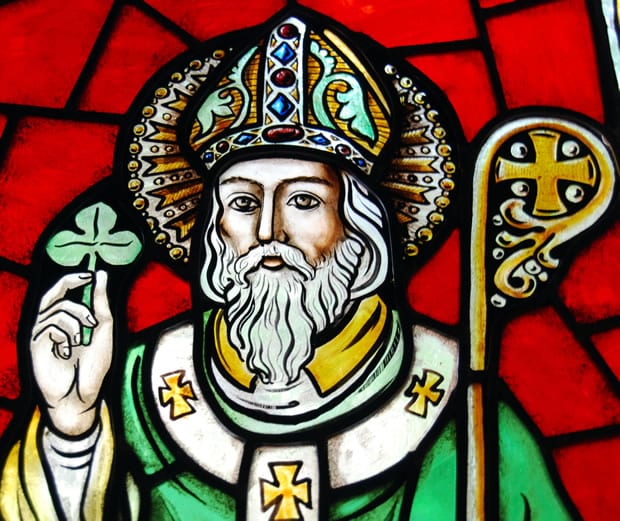
St Patrick Shamrock Image

USA TODAY NETWORKJolie Lee, for USA TODAY NETWORK

et out your green! It’s St. Patrick’s Day. USA TODAY Network explains the origins of some of the Irish holiday’s traditions.

1. Who was St. Patrick?

St. Patrick — brace yourself — was not actually Irish. Patrick was a nobleman born in about 400 A.D. in Britain and kidnapped by Irish pirates at the age of 16, said Philip Freeman, author of St. Patrick of Ireland: A Biography.

Patrick was born into a religious family, but was an atheist early in his life. However, he rediscovered his faith while enslaved in Ireland, Freeman told USA TODAY Network.

After 17 years as a slave, St. Patrick escaped Ireland and found his way home, but returned to Ireland as a missionary.

“He said he was ready to die in Ireland in order to make his mission successful,” Freeman said.

It’s unclear if St. Patrick did in fact die in Ireland, but March 17 is widely believed to be the day of his death, according to Freeman.

2. Green River in Chicago is a family affair:

Another unique tradition that has grown in popularity every year is the annual dyeing of the Chicago River for St. Patrick’s Day.

https://www.usatoday.com/story/news/nation-now/2016/03/17/st-patricks-day-traditions-green-holiday/81868808/

Posted on Leave a comment

April Fools’ Day: Origin and History

schleich_court_jester

April Fools’ Day: Origin and History
The uncertain origins of a foolish day
by David Johnson and Shmuel Ross

April Fools’ Day, sometimes called All Fools’ Day, is one of the most light-hearted days of the year. Its origins are uncertain. Some see it as a celebration related to the turn of the seasons, while others believe it stems from the adoption of a new calendar.

New Year’s Day Moves

Ancient cultures, including those of the Romans and Hindus, celebrated New Year’s Day on or around April 1. It closely follows the vernal equinox (March 20th or March 21st.) In medieval times, much of Europe celebrated March 25, the Feast of Annunciation, as the beginning of the new year.

In 1582, Pope Gregory XIII ordered a new calendar (the Gregorian Calendar) to replace the old Julian Calendar. The new calendar called for New Year’s Day to be celebrated Jan. 1. That year, France adopted the reformed calendar and shifted New Year’s day to Jan. 1. According to a popular explanation, many people either refused to accept the new date, or did not learn about it, and continued to celebrate New Year’s Day on April 1. Other people began to make fun of these traditionalists, sending them on “fool’s errands” or trying to trick them into believing something false. Eventually, the practice spread throughout Europe.

Problems With This Explanation

There are at least two difficulties with this explanation. The first is that it doesn’t fully account for the spread of April Fools’ Day to other European countries. The Gregorian calendar was not adopted by England until 1752, for example, but April Fools’ Day was already well established there by that point. The second is that we have no direct historical evidence for this explanation, only conjecture, and that conjecture appears to have been made more recently.

Another explanation of the origins of April Fools’ Day was provided by Joseph Boskin, a professor of history at Boston University. He explained that the practice began during the reign of Constantine, when a group of court jesters and fools told the Roman emperor that they could do a better job of running the empire. Constantine, amused, allowed a jester named Kugel to be king for one day. Kugel passed an edict calling for absurdity on that day, and the custom became an annual event.

“In a way,” explained Prof. Boskin, “it was a very serious day. In those times fools were really wise men. It was the role of jesters to put things in perspective with humor.”

This explanation was brought to the public’s attention in an Associated Press article printed by many newspapers in 1983. There was only one catch: Boskin made the whole thing up. It took a couple of weeks for the AP to realize that they’d been victims of an April Fools’ joke themselves.

Spring Fever

It is worth noting that many different cultures have had days of foolishness around the start of April, give or take a couple of weeks. The Romans had a festival named Hilaria on March 25, rejoicing in the resurrection of Attis. The Hindu calendar has Holi, and the Jewish calendar has Purim. Perhaps there’s something about the time of year, with its turn from winter to spring, that lends itself to lighthearted celebration

Read more: April Fools’ Day: Origin and History | Infoplease.com https://www.infoplease.com/spot/aprilfools1.html#ixzz2xdOWNNeA

Posted on Leave a comment

The Legend of St. Valentine

Cupid

The Legend of St. Valentine

The history of Valentine’s Day–and the story of its patron saint–is shrouded in mystery. We do know that February has long been celebrated as a month of romance, and that St. Valentine’s Day, as we know it today, contains vestiges of both Christian and ancient Roman tradition. But who was Saint Valentine, and how did he become associated with this ancient rite?

The Catholic Church recognizes at least three different saints named Valentine or Valentinus, all of whom were martyred. One legend contends that Valentine was a priest who served during the third century in Rome. When Emperor Claudius II decided that single men made better soldiers than those with wives and families, he outlawed marriage for young men. Valentine, realizing the injustice of the decree, defied Claudius and continued to perform marriages for young lovers in secret. When Valentine’s actions were discovered, Claudius ordered that he be put to death.

Other stories suggest that Valentine may have been killed for attempting to help Christians escape harsh Roman prisons, where they were often beaten and tortured. According to one legend, an imprisoned Valentine actually sent the first “valentine” greeting himself after he fell in love with a young girl–possibly his jailor’s daughter–who visited him during his confinement. Before his death, it is alleged that he wrote her a letter signed “From your Valentine,” an expression that is still in use today. Although the truth behind the Valentine legends is murky, the stories all emphasize his appeal as a sympathetic, heroic and–most importantly–romantic figure. By the Middle Ages, perhaps thanks to this reputation, Valentine would become one of the most popular saints in England and France.

https://www.history.com/topics/valentines-day

Posted on Leave a comment

The Legend of St. Valentine

>

ValentinesbyArtChick theridgewoodblog.net

photo by ArtChick.biz


The Legend of St. Valentine
https://www.history.com/topics/valentines-day

The history of Valentine’s Day–and the story of its patron saint–is shrouded in mystery. We do know that February has long been celebrated as a month of romance, and that St. Valentine’s Day, as we know it today, contains vestiges of both Christian and ancient Roman tradition. But who was Saint Valentine, and how did he become associated with this ancient rite?

The Catholic Church recognizes at least three different saints named Valentine or Valentinus, all of whom were martyred. One legend contends that Valentine was a priest who served during the third century in Rome. When Emperor Claudius II decided that single men made better soldiers than those with wives and families, he outlawed marriage for young men. Valentine, realizing the injustice of the decree, defied Claudius and continued to perform marriages for young lovers in secret. When Valentine’s actions were discovered, Claudius ordered that he be put to death.

Other stories suggest that Valentine may have been killed for attempting to help Christians escape harsh Roman prisons, where they were often beaten and tortured. According to one legend, an imprisoned Valentine actually sent the first “valentine” greeting himself after he fell in love with a young girl–possibly his jailor’s daughter–who visited him during his confinement. Before his death, it is alleged that he wrote her a letter signed “From your Valentine,” an expression that is still in use today. Although the truth behind the Valentine legends is murky, the stories all emphasize his appeal as a sympathetic, heroic and–most importantly–romantic figure. By the Middle Ages, perhaps thanks to this reputation, Valentine would become one of the most popular saints in England and France.

Origins of Valentine’s Day: A Pagan Festival in February
While some believe that Valentine’s Day is celebrated in the middle of February to commemorate the anniversary of Valentine’s death or burial–which probably occurred around A.D. 270–others claim that the Christian church may have decided to place St. Valentine’s feast day in the middle of February in an effort to “Christianize” the pagan celebration of Lupercalia. Celebrated at the ides of February, or February 15, Lupercalia was a fertility festival dedicated to Faunus, the Roman god of agriculture, as well as to the Roman founders Romulus and Remus.

To begin the festival, members of the Luperci, an order of Roman priests, would gather at a sacred cave where the infants Romulus and Remus, the founders of Rome, were believed to have been cared for by a she-wolf or lupa. The priests would sacrifice a goat, for fertility, and a dog, for purification. They would then strip the goat’s hide into strips, dip them into the sacrificial blood and take to the streets, gently slapping both women and crop fields with the goat hide. Far from being fearful, Roman women welcomed the touch of the hides because it was believed to make them more fertile in the coming year. Later in the day, according to legend, all the young women in the city would place their names in a big urn. The city’s bachelors would each choose a name and become paired for the year with his chosen woman. These matches often ended in marriage.

Valentine’s Day: A Day of Romance
Lupercalia survived the initial rise of Christianity and but was outlawed—as it was deemed “un-Christian”–at the end of the 5th century, when Pope Gelasius declared February 14 St. Valentine’s Day. It was not until much later, however, that the day became definitively associated with love. During the Middle Ages, it was commonly believed in France and England that February 14 was the beginning of birds’ mating season, which added to the idea that the middle of Valentine’s Day should be a day for romance.

Valentine greetings were popular as far back as the Middle Ages, though written Valentine’s didn’t begin to appear until after 1400. The oldest known valentine still in existence today was a poem written in 1415 by Charles, Duke of Orleans, to his wife while he was imprisoned in the Tower of London following his capture at the Battle of Agincourt. (The greeting is now part of the manuscript collection of the British Library in London, England.) Several years later, it is believed that King Henry V hired a writer named John Lydgate to compose a valentine note to Catherine of Valois.

https://www.history.com/topics/valentines-day