
The CMBS Delinquency Surge: Why the Office Sector is Hitting Record Highs
the staff of the Ridgewood blog
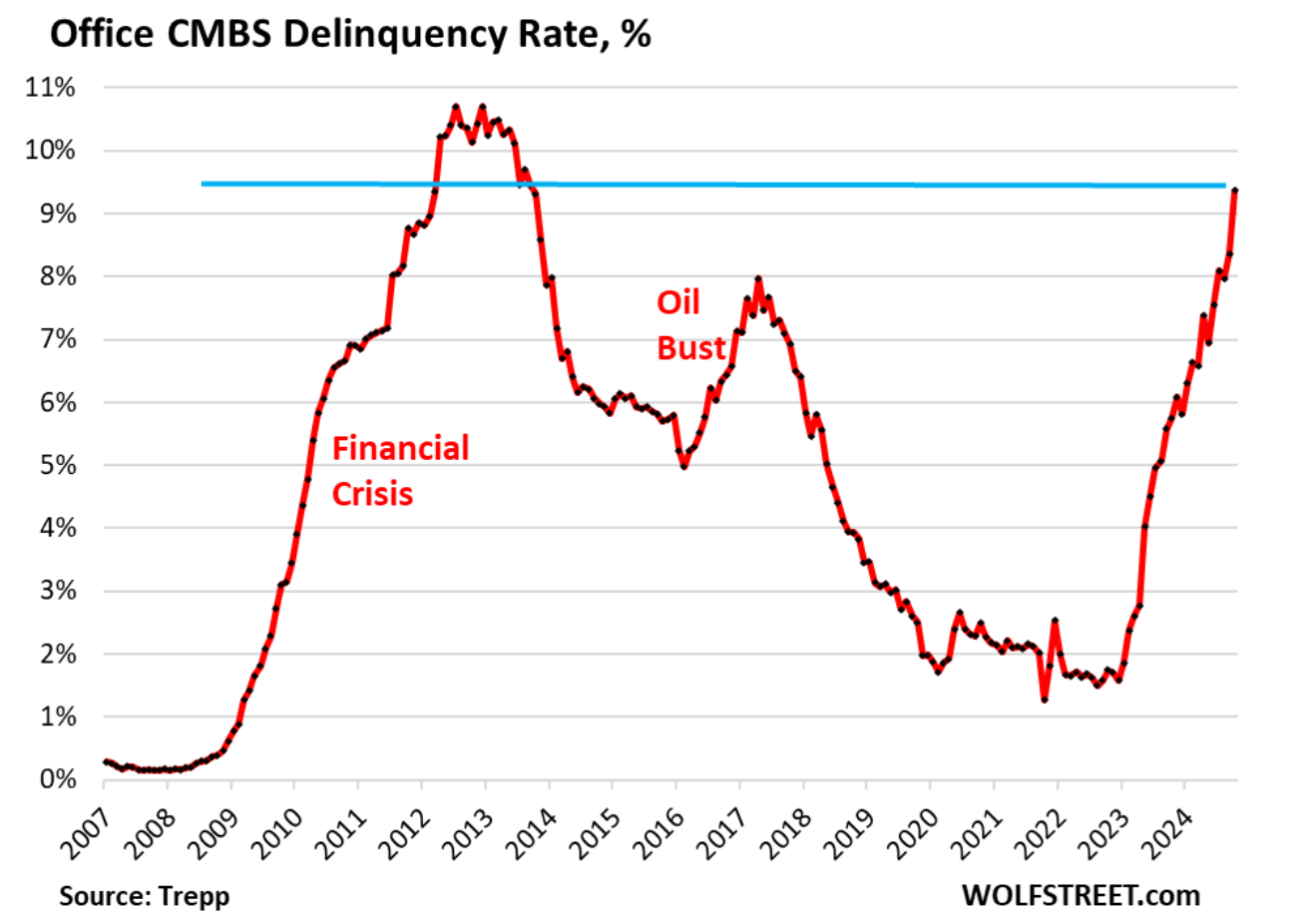
Ridgewood NJ, Commercial real estate is facing a significant test as CMBS delinquency rates continue to climb, with the office sector recently smashing through a troubling new record. While the backbone of property financing is feeling the pressure, a closer look at the data reveals a market in a complex transitional phase rather than a total collapse.
The Office Sector’s Record-Breaking Milestone
The headlines are currently dominated by a dramatic surge in office market delinquencies. Properties that were once considered rock-solid investments are now struggling to meet debt service requirements, particularly as loans face refinancing in a high-interest-rate environment.
Key drivers of the office sector’s distress include:
-
Maturity Defaults: Many loans simply cannot be refinanced at today’s elevated rates.
-
Persistent Vacancies: The permanent shift toward remote and hybrid work continues to squeeze net operating income, especially for older Class B and C buildings.
-
Concentrated Pain: A handful of massive properties in major urban centers have accounted for a large portion of the recent statistical spike.
Not All Doom and Gloom: A Divergent Market
Despite the records being set in the office space, the broader Commercial Mortgage-Backed Securities (CMBS) landscape is far from a monolith. While sectors like multifamily and retail have seen modest upticks in distress, other areas are showing remarkable resilience.
Current Delinquency Trends by Sector:
-
Industrial: Improving, thanks to the ongoing strength of e-commerce.
-
Lodging: Trending downward as travel demand remains steady.
-
Retail: Showing a choppy but manageable pattern, well below previous cycle peaks.
Why This Isn’t 2008: The Foundation of Resilience
It is important for investors to distinguish current market stress from the Global Financial Crisis. Today’s distressed loans benefit from tighter underwriting standards, more conservative loan-to-value ratios, and disciplined securitization structures.
Furthermore, many borrowers are opting to inject fresh capital to extend loan terms rather than walking away—a sign that owners still see long-term value in these assets.
Investor Strategy: Finding Opportunity in the Noise
For those with exposure to commercial property, the current environment demands a long-term perspective. History shows that market distress often creates unique buying opportunities for patient capital.
Strategies for Navigating the Transitional Phase:
-
Focus on Quality: Class A “trophy” buildings in premium locations are already seeing a quiet improvement in fundamentals.
-
Monitor Conversions: Adaptive reuse, such as turning offices into residential or life sciences spaces, is a growing trend in major cities.
-
Diversify: Offsetting office exposure with industrial or lodging assets can help balance a portfolio against current sector-specific headwinds.
The Road Ahead: Peak Distress or Prolonged Grind?
Many industry analysts believe the market may be approaching “peak delinquency” for offices this year. If vacancy trends stabilize and interest rates ease, the path to recovery could accelerate through proactive loan resolutions and creative repositioning.
While the “creaking” of the real estate backbone is real, it represents a tough chapter of navigation rather than an end-of-story crisis.
Take the Wall Street Walking Tour https://www.facebook.com/unofficialwallstreet #WallStreetTours,#FinancialDistrictExploration, #ExploreWallStreet, #FinancialHistoryTour, #StockMarketExperience, #FinancialDistrictDiscovery, #NYCFinanceTour,#WallStreetAdventure
Tags: #CMBS #CommercialRealEstate #OfficeMarket #Investing #FinanceNews #RealEstateTrends #MarketAnalysis #EconomicOutlook








Remain Calm, All is Well.
Animal House 1978
Class B and Class C need to be converted to housing. Remote work is never going away and when AI really hits the white-collar workforce in a few years, look out below.
Due to high taxes and state regulations, many corporations will relocate rather than renew the lease.
A few local employees can work remotely
It will be too late when the morons in Trenton realize they chased all the $$$ out of the state.
🎯