
Power Play or Environmental Risk? America’s Largest Floating Solar Farm Greenlit for NJ Reservoir
the staff of the Ridgewood blog
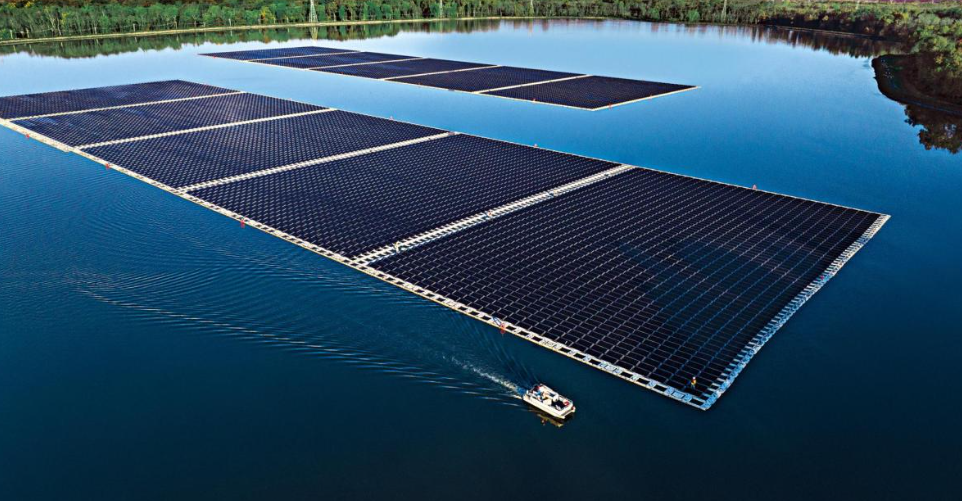
Wanaque Reservoir, New Jersey is taking a massive—and controversial—step toward its clean energy future. State regulators have officially greenlit a 10-megawatt floating solar project on the Wanaque Reservoir, a move that could create the largest installation of its kind in the United States.
After a stinging rejection in 2024 due to environmental concerns, the New Jersey Board of Public Utilities (BPU) has reversed course, selecting the project for a new round of high-stakes energy incentives. Here is what this “water-to-wire” breakthrough means for North Jersey residents, the environment, and your electric bill.
The Plan: 20 Acres of Solar “Islands”
The project, a partnership between the North Jersey District Water Supply Commission and Nexamp Solar, involves two massive arrays of solar panels mounted on floating platforms.
The Numbers Behind the Project:
-
Energy Output: A combined 15 megawatts of clean power.
-
Local Impact: One array will power the water treatment plant (offsetting 90% of the commission’s energy use), while a second 5-megawatt “community solar” array will provide electricity for up to 1,000 local households.
-
Equity: At least 51% of the community solar subscriptions are reserved for low- to moderate-income families.
Why Floating Solar? (The “Floatovoltaic” Advantage)
In a densely populated state like New Jersey, finding land for massive solar farms is difficult. Placing panels on man-made reservoirs offers several “win-win” benefits:
-
Land Conservation: It avoids building on precious farmland or preserved open space.
-
Higher Efficiency: The water underneath the panels acts as a natural coolant. Because solar panels lose efficiency as they get hot, the reservoir helps them produce more power than land-based systems.
-
Water Preservation: The shade from the panels can reduce evaporation and help limit algae growth—a major plus for a reservoir that supplies drinking water to 3.5 million people.
The Controversy: The Highlands Preservation Area
The Wanaque Reservoir isn’t just any body of water; it sits within the Highlands Preservation Area, one of the most strictly regulated environmental zones in the state.
In January 2024, the BPU initially blocked the project, citing “unanswered environmental questions.” Critics worried about the impact on local ecosystems and water quality. However, after a year of additional documentation and new safeguards, the DEP and the Highlands Council issued updated recommendations to move forward.
“Solar and battery storage are the fastest and most cost-effective ways to build new electricity generation,” said BPU President Christine Guhl-Sadovy.
What’s Next for New Jersey Solar?
The Wanaque project is part of a broader state goal to add 3,750 megawatts of solar capacity by 2026. Other recently approved projects include:
-
Deptford Township: A 4.1-megawatt installation at the Court at Deptford.
-
Landfill Solar: A 10-megawatt project planned for the Deptford Township landfill.
As construction begins, all eyes will be on Wanaque to see if this “David vs. Goliath” energy project can balance the need for a green grid with the protection of New Jersey’s most vital natural resources.
SEO & Metadata
Google Discover Optimized Headlines:
-
Main: America’s Largest Floating Solar Farm is Coming to This New Jersey Reservoir
-
Alternative: Energy Boost or Ecological Risk? The Truth Behind NJ’s Massive New Floating Solar Project
Keywords: Wanaque Reservoir solar project, floating solar New Jersey, Nexamp Solar NJ, NJ Board of Public Utilities, community solar NJ, Highlands Preservation Area, renewable energy New Jersey, largest floating solar US.
Tags: #NewJersey #CleanEnergy #SolarPower #Wanaque #Environment #Sustainability #NJPolitics #GreenTech








And how much will the water temperature rise? You’ll be able to catch precooked fish.
“At least 51% of the community solar subscriptions are reserved for low- to moderate-income families”
That’s all you need to know……………………………………………………………………
It would logically seem to me that as opposed to heating any water below the floating solar panels, the shading that they would provide would keep the reservoir water cooler, reduce evaporation losses and reduce algae production thus providing us better quality water