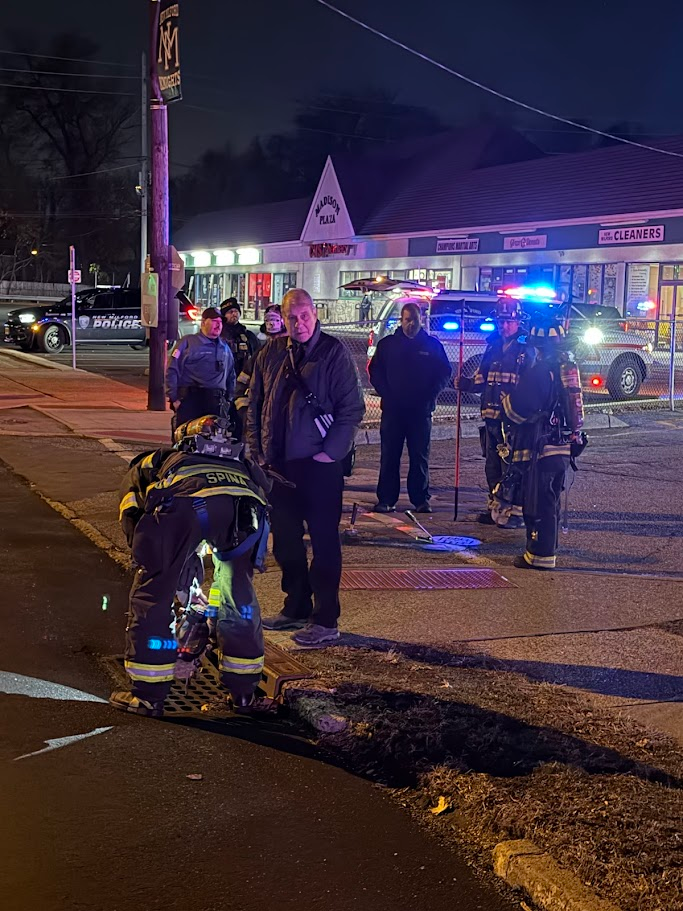
New Milford Firefighters Confirm and Contain Gas Leak on River Road
photos courtesy of the New Milford Fire Department
the staff of the Ridge4wood blog
New Milford NJ, last night, just after 9:30 PM, the New Milford Volunteer Fire Department (NMVFD) demonstrated its rapid-response capabilities by effectively handling a confirmed gas leak near a high-traffic area.
The Department was dispatched to River Road, directly in front of the local high school, following reports of a strong odor of gas. The quick deployment and strategic actions of the volunteer team were key to ensuring community safety.
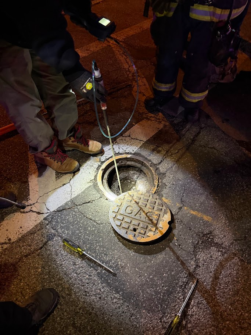
On-Scene Confirmation and Safety Protocol
Upon arrival, Chief 30 and Chief 302 immediately confirmed the strong odor and escalated the response, requesting Public Service Electric & Gas (PSEG) crews to the scene.
Engine 34 and Truck 31 quickly followed, deploying specialized multi-gas meters. These essential tools confirmed a small gas leak originating from the street area.
Critical Safety Measures Taken:
-
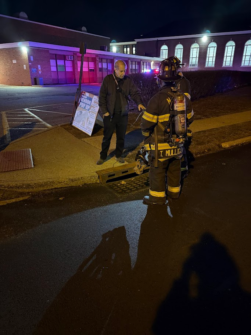
Structure Sweep: Firefighters meticulously checked the High School and all surrounding structures to guarantee there was no migration of gas, preventing potential leaks into buildings.
-
Leak Containment: The gas levels detected were low, confined entirely to the street area, and did not pose a serious immediate concern to the public.
-
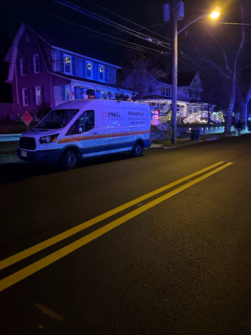
Utility Coordination: The NMVFD maintained a presence for approximately 45 minutes until PSEG arrived, assessed the situation, and secured the area, officially clearing the Fire Department to return to service.
This incident highlights the vital role the New Milford Volunteer Fire Department plays in local emergency response, using specialized equipment and training to keep residents safe from utility hazards.
Why Multi-Gas Meters Are Essential
In scenarios like this, the NMVFD relies on sophisticated multi-gas meters (often known as 4-gas meters) to quickly identify and quantify atmospheric threats. These devices are critical for:
-
Detection: Identifying the presence of dangerous gases (like methane, carbon monoxide, or hydrogen sulfide).
-
Confirmation: Pinpointing the source of the leak (street vs. structure).
-
Safety Assessment: Determining if gas concentration levels are high enough to require evacuation or immediate hazardous materials protocols.
Tell your story #TheRidgewoodblog , #Indpendentnews, #information, #advertise, #guestpost, #affiliatemarketing,#NorthJersey, #NJ , #News, #localnews, #bergencounty, #sponsoredpost, #SponsoredContent, #contentplacement , #linkplacement, Email: [email protected]