The Great Unfollow: Global Study Suggests We’ve Hit ‘Peak Social Media’—Why Gen Z Is Logging Off
the staff of the Ridgewood blog
Ridgewood NJ – After two decades of explosive growth, is the social media boom finally slowing down? A new global study suggests that the answer is yes, particularly when looking at how much time users are spending on major platforms.
A massive survey of 250,000 people for the Financial Times found that global social media use declined in 2023 and 2024. While the overall user base continues to grow, the crucial metric of engagement—the time people spend scrolling—has likely peaked, offering a glimmer of hope to experts concerned about the negative effects of social media addiction on youth development.
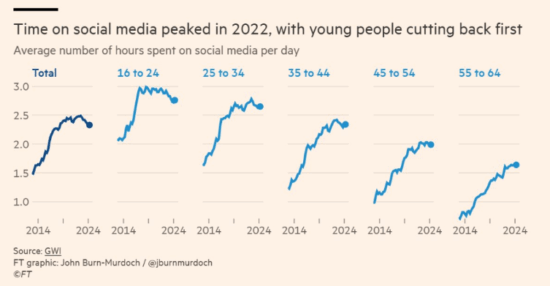
The Peak Was 2022: The Steady Global Decline
Data confirms a turning point in our digital habits:
- Peak Engagement: Time spent on social media peaked globally in 2022. A steady decline has occurred throughout 2023 and 2024.
- Declining User Time: By the end of 2024, adults in developed markets were spending about 10% less time on social media compared to the 2022 peak. This brings the average daily time spent down to approximately 2 hours and 20 minutes.
- Youth Leading the Shift: The largest decrease in usage was observed in the youngest age groups, suggesting that the next generation may be the first to actively step back from these platforms.
Why Are Users Logging Off? Shifting Behaviors
The decline in time spent isn’t just a simple fatigue; it points to a fundamental shift in how people are using the internet:
- From Socializing to Consumption: The “social” aspect of these platforms is diminishing. Users are now more likely to simply consume content generated by creators and driven by algorithms (like AI-generated content) rather than actively interacting with posts from friends and family.
- The Shift to Private Channels: Users are migrating from public feeds to more private, secure channels. Services like Snapchat, direct messages, and group chats are capturing time that was once spent on public newsfeeds.
- The AI Content Factor: The rise of AI-generated content may be replacing real-life, human-driven content, leading some users to find the platforms less authentic and engaging.
The Diverging U.S. Trend
It’s important to note that the global decline does not yet apply universally:
- U.S. Time Still Rising: While most of the world is logging off, time spent on social media is still rising in the United States.
- Future Peak: However, this trend is expected to be short-lived, with U.S. social media time projected to peak in 2025 before following the global downward trajectory.
Despite the drop in engagement time, the overall number of social media users is still on the rise, projected to grow to nearly six billion by 2027. This suggests that while more people are creating accounts, they are simply using those accounts less often and for shorter periods.
This shift provides an opportunity to reflect on the negative effects documented by numerous studies regarding social and intellectual development. As global engagement dips, we may be witnessing a collective realization of the cost of constant connectivity.
Follow the Ridgewood blog has a brand-new new X account, we tweet good sh$t
https://twitter.com/TRBNJNews
https://truthsocial.com/@theridgewoodblog
https://mewe.com/jamesfoytlin.74/posts
#news #follow #media #trending #viral #newsupdate #currentaffairs #BergenCountyNews #NJBreakingNews #NJHeadlines #NJTopStories