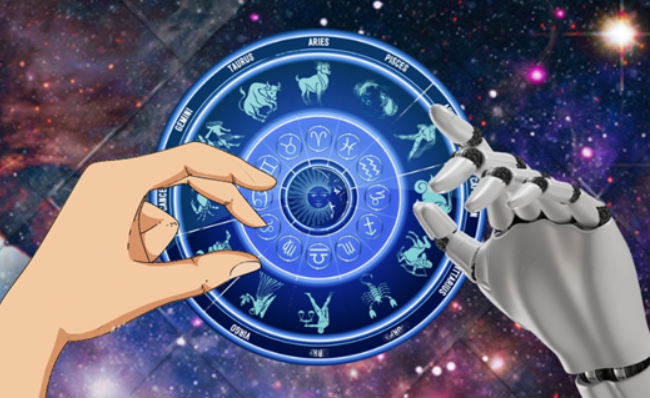
From retrograde memes to data-driven horoscopes, astrology is getting a fresh spin.
If you flip through any Gen Z feed, you’ll note it: images of birth charts, Mercury retrograde memes, cosmic-core aesthetics overtaking TikTok and Instagram. Behind the memes lies a deeper phenomenon: a generational impulse to rewrite the new language of self-discovery, with astrology—aided by artificial intelligence—at the centre of that conversation.
AI birth charts are not merely a repackaging of standard sun-sign horoscopes; they fuse ancient signs through the lens of machine learning to offer, primarily, young, urban, white people a framework for interpreting their identity, purpose, and possibilities through the lens of constellations, with hyper-personalised insights. This is a collection of technologies that is enabling a new 21st-century messaging system for one of humanity’s oldest guidance systems.
The Cosmic Craze: Why Gen Z is Looking Up
Prior to exploring the planets and algorithms, it is helpful to structure astrology’s unmistakable allure to today’s 20-somethings.
- A quest for meaning in chaos. As a generation of kids who grew up with a combination of climate anxiety, political chaos, and a constant barrage of alerts, it is safe to say that young people are looking for ways to influence systems to manage the complexity.
- A language of identity. Signs, houses, and aspects give a playful language of personality that feels both silly and sincere.
- Community and culture. Astrology has spawned memes, group chats, and niche communities on TikTok. Telling people your rising sign may be as simple as sharing a playlist.
While prior generations picked up self-help textbooks or took personality tests, Gen Z wants self-help that is both interactive and bite-sized and has an aesthetic to it. This is why AI-enabled birth charts are the new thing.
Birth Charts 101: The Original Personality Map
A traditional birth chart (also called a natal chart) depicts where certain planets were at the precise time and location of your birth. Astrologers look at those placements to determine how they influence your drives, strengths, relationships, and struggles in life.
Key elements to consider when looking at a traditional birth chart:
- Sun sign: your identity and ego.
- Moon sign: your emotional world.
- Rising (ascendant): the self that you project to others.
Houses and aspects: the area of life shown (career, love, health) and the relationships between the planets in your chart.
For centuries, determining your chart involved hand-drawing spheres and flipping through an intricate table — the type of math that deterred more casual stargazers. The digital age made determining your chart accessible, while AI is making your charts intelligent.
Enter the Algorithm: How AI Elevates Astrology
AI birth charts embrace the traditional structure and add computational strength. Here’s how:
- Instant and Accurate Calculations – Machine learning algorithms can process and plot astronomical data to locate planets and angles correctly within seconds, even relating to obscure asteroids or retrograde cycles, precisely, without a dusty ephemeris.
- Contextual Recognition at Scale – AI can analyse millions of previous charts and user profiles to find correlations between placements and behaviours. This allows platforms to make context-based statements (“Mars in Gemini often comes along with multiple hyphenate career paths”) about statistical trends.
- Natural Language Generation – Rather than complex space science jargon, AI tools deliver conversational explanations co-created to suit each individual user’s vibe and personality – ideal for TikTok captions and swipeable carousels.
- Adaptive Guidance- Some apps will develop with you. As you input, or log, your moods, milestones or relationship updates, the AI will adapt its approach and fabricate its pushes of feedback in an ongoing state guidance rather than being dependent on process models of behaviour and static descriptions.
What Distinguishes AI Birth Charts from Horoscope Apps in the 2010s:
Remember the days of horoscope apps that delivered generic “Today you might meet someone interesting” readings? The technology has arrived:
- Hyper-Personalisation: AI readings factor in your time and location of your birth, but also behavioural data, goals and journaling entries.
- Contextual coaching: the algorithms show how your transits (planetary movements) correlate with real-life events, encouraging proactive thoughts with recommendations.
- User-friendly data visualisation: interactive wheels, mood charts, and timelines allow you to digest your chart readings as dashboards.
The outcome no longer feels like mysticism running in the background and a bit more like a personal cosmic coach built for a swipe fat generation.
The Intersection of Gen Z’s DIY Spirituality and Technology
AI birth charts comfortably occupy Gen Z’s eclectic spirituality landscape. This demographic has no qualms integrating a variety of mindfulness apps, tarot decks, therapy, and astrology into their overall experience; they are less concerned with “believing” than in providing themselves with tools for self-knowledge.
Digital astrology presents benefits, including:
- Non-dogmatic: You can use the insights they provide as metaphors, not as mandates.
- Aesthetic: The charts double as something to share that is beautiful.
- Customizable: Users can choose how much to explore, on a continuum of daily trends to in-depth psycho-spiritual analysis.
They have crafted an entrepreneurial strategy to deliver guidance into meme-ready formats that look sleek (Co-Star, Sanctuary, HiAstro (with Vedic principles merged with AI)).
Behind the Scenes: Data, Ethics & Transparency
With great personalization comes great responsibility. AI astrology requires personalized data – date of birth (DOB), habits, and sometimes even location. Gen Z, who are already wary about surveillance capitalism, want to know:
- How is their data stored and used?
- Are algorithms biased?
- Who is writing or reconciling the interpretations?
Top apps have responded by publishing methodology explainers, allowing users to opt out of data sharing and pairing the generated AI text with a human astrologer review. It is important to establish clear boundaries for keeping the “self-discovery” feel from slipping into “data mining.”
Case Study: HiAstro’s Conversational Charts
Perhaps the best indicator of current technology is from HiAstro, which combines AI chat technology with certified Vedic Astrology. Users share birth information, later chatting in real-time with an AI astrologer trained in factual philosophy. Users can:
- Ask about love compatibility, when to quit their job, or personal exploration.
- Receive instant breakdowns of their chart with suggestions for ritual and journaling prompts.
Experience and explore transits as they happen, even receiving push notifications that give them context of the changing position of planets in their chart (“Your Saturn just enters your 6th house, so expect your work habits to shift”).
HiAstro does a great job of creating an experience that uses the chart as a conversation on an ever-evolving note rather than renting a static PDF.
Why it works (even if you’re a sceptic) — the psychology component
Sceptics might say that astrology and the astrological readings don’t have any empirical evidence. But for many Gen Z astrologers, whether it works is more important than what is or isn’t metaphysical. Here’s what makes Astra’s AI chart useful and engaging:
- Narrative therapy: Putting life challenges into planetary narratives encourages you to think reflectively about tough issues and develop resilience.
- Gamification: Progress trackers and streaks help you build consistent reflection into your routine.
- Social support: Sharing snippets of your chart prompts discussion about values and boundaries.
AI doesn’t “predict your fate.” It simply provides a set of symbolic language to aid your personal development — and that matters.
How Brands & Creators Are Riding the Wave
Astrology content enables engagement on every platform. Consider AI birth charts:
- Influencers present short, fun explainers like “3 things your Jupiter sign says about your work ethic”.
- Wellness brands turn to the cosmos as they integrate that guidance into planners, skincare regimens or fitness challenges.
- Marketers are creatively shaping their campaigns with generative, cosmic archetypes (think “Gemini-approved playlists” on Spotify).
For brands targeting Gen Z, ethical astrology apps provide the opportunity to engage in identity-centric consumer experiences.
Do-It-Yourself: Creating a Conscious Relationship with AI Astrology
If you plan to check out an AI-generated birth chart, remember these tips:
- Protect your data: Review the app’s privacy policy before inputting your identifying information.
- Be curious, not rigid: Use insights derived from readings as a trigger for insight and learning versus a prediction.
- Mix tools: Use an AI chart with journaling, therapy, or some other type of coaching or insight for a more holistic experience.
-
Support transparency: Choose a service that credits astrologers and clearly signifies the algorithm that generated your report.
The process of self-discovery with astrology is most effective when curiosity and exploration of the experience lead you, rather than blind faith.
As AI becomes sophisticated, expect more shocking twists:
- AR & VR charts: Visualise your planetary lineup in interactive 3D
- Voice-activated guides: Ask your smart speaker about today’s transits.
- Integration with wellness trackers: Sync moon phases with sleep data or stress scores.
- Community-driven insights: Crowdsourced correlations linking placements and life events.
While astrology is ancient, its next chapter is unapologetically future-focused.
A Cosmic Mirror for the Digital Age
AI birth charts are more than one-serving; they represent the Gen Z impulse to decode themself in a complex world. By converging ancient symbols, machine learning, and exuberant social culture, these artefacts afford structure and play.
Whether you experience stars as destiny, metaphor, or a mirror to your psyche, the true magic is to pause and ask: Who am I, and who am I becoming? For a generation learning to live in rapid change, this question – queried and creatively produced – may be the most revolutionary discovery of all.