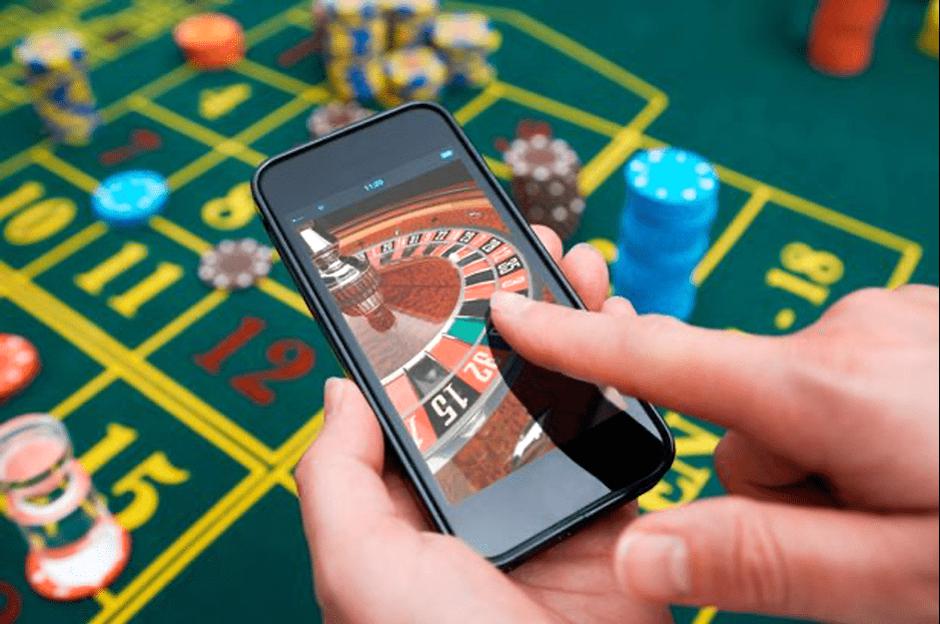
Probability theory forms the backbone of every casino game ever created. At its core, this branch of mathematics deals with analyzing random phenomena and calculating the likelihood of different outcomes. For online casino players, grasping these fundamental concepts isn’t just academic—it’s potentially profitable.
According to a 2023 study by the American Gaming Association, only 12% of regular casino players report having a basic understanding of the probability concepts that govern their favorite games. This knowledge gap contributes significantly to the house edge, which ranges from 1.06% in baccarat to over 15% in certain slot machines.
When you place a bet at an online casino, you’re essentially participating in a probability experiment. Each card dealt, dice thrown, or slot reel spun represents a random variable with specific mathematical properties. Understanding these properties gives you valuable insight into the true nature of the games you play.
Expected Value: Your Decision-Making Compass
One of the most powerful concepts in probability theory for players at SpinBet Casino is expected value (EV). Simply put, EV tells you how much you can expect to win or lose on average per bet over the long run.
The formula for calculating expected value is straightforward: EV = (Probability of Winning × Amount Won) – (Probability of Losing × Amount Lost)
Let’s apply this to a real example. In American roulette, when betting on a single number:
- Probability of winning: 1/38 = 0.0263
- Payout for winning: 35 to 1
- Expected value: (0.0263 × 35) – (0.9737 × 1) = 0.9205 – 0.9737 = -0.0532
This negative expected value (-0.0532) means that for every $1 you bet on a single number in American roulette, you can expect to lose about 5.3 cents in the long run. This 5.3% house edge is built into the game’s design.
Moreover, a comprehensive analysis of online casino data in 2023 revealed that players who reported making decisions based on expected value calculations lost 23% less money over time compared to those who played based solely on intuition or superstition.
House Edge and Game Selection
Understanding probability theory helps you identify games with the lowest house edge—a crucial strategy for extending your playing time and maximizing your chances of winning.
Comparison of Popular Casino Games by House Edge
| Game | Variant | House Edge | Optimal Strategy Complexity | Volatility |
| Blackjack | Basic Rules | 0.5%-1% | High | Medium |
| Baccarat | Banker Bet | 1.06% | Low | Medium |
| Craps | Pass Line | 1.41% | Medium | High |
| Roulette | European | 2.7% | Low | High |
| Roulette | American | 5.26% | Low | High |
| Slot Machines | Standard | 5%-15% | None | Very High |
| Keno | Standard | 25%-30% | None | Extreme |
The data clearly shows that games like blackjack and baccarat offer significantly better odds than slots or keno. Furthermore, within each game category, specific bets offer better mathematical value than others.
For instance, in craps, the pass line bet has a house edge of 1.41%, while proposition bets can have edges exceeding 16%. By systematically choosing games and bets with lower house edges, you’re making mathematically sound decisions that improve your overall results.
Law of Large Numbers and Bankroll Management
Probability theory teaches us about the Law of Large Numbers—a principle stating that as a random experiment is repeated more times, the actual results will converge on the expected theoretical probability.
This has profound implications for your bankroll management strategy. In the short term (few bets), actual results can deviate significantly from expected results—this explains both lucky winning streaks and devastating losses. However, over thousands of bets, your results will inevitably approach the mathematical expectation determined by the house edge.
According to a 2024 analysis of online gambling patterns, players who allocated no more than 2% of their total bankroll to any single bet were 3.7 times more likely to maintain positive playing experiences over extended periods compared to those who bet inconsistently.
Therefore, effective bankroll management based on probability principles should include:
- Setting a fixed percentage (1-2%) of your total bankroll as your standard bet size
- Establishing clear loss limits (typically 20-25% of your session bankroll)
- Taking profits after reaching predetermined win goals
- Adjusting bet sizes based on your current bankroll, not emotional reactions
Practical Applications of Probability in Specific Games
In blackjack, probability theory becomes particularly useful through card counting techniques. While not illegal, card counting is frowned upon by casinos because it can shift the odds in the player’s favor.
The basic principle involves tracking the ratio of high cards (10s, face cards, aces) to low cards (2-6) remaining in the deck. When more high cards remain, the player has an advantage; when more low cards remain, the house edge increases.
A simple counting system assigns:
- +1 for cards 2-6 (low cards)
- 0 for cards 7-9 (neutral cards)
- -1 for cards 10-Ace (high cards)
By maintaining a running count and adjusting your bets accordingly, you can achieve a mathematical edge of up to 1.5% in favorable conditions.
Video Poker Strategy
Video poker represents another game where probability theory directly translates to optimal strategy. Unlike slot machines, video poker hands follow the established probabilities of poker hand distributions.
For example, in Jacks or Better video poker:
- The probability of being dealt a pair of Jacks or better is approximately 1 in 4.7
- The probability of drawing to a royal flush when holding four suited cards (10-A) is 1 in 47
By memorizing the correct holding strategy for each possible hand (based on expected value calculations), players can reduce the house edge to less than 0.5% in certain video poker variants—making it one of the best games for mathematically-minded players.
Probability as Your Casino Companion
Probability theory won’t guarantee wins at online casinos—nothing can overcome the built-in house edge in the long run. However, understanding these mathematical principles allows you to:
- Select games with the best odds
- Make optimal betting decisions within those games
- Manage your bankroll to maximize playing time
- Recognize and avoid common probabilistic misconceptions
- Approach gambling as entertainment with controlled risk rather than a path to riches
The most successful casino players aren’t necessarily lucky—they’re disciplined in applying probability concepts to their advantage. By embracing these principles, you transform random gambling into strategic play, potentially extending your entertainment value and occasionally walking away a winner through mathematically sound decision-making.