
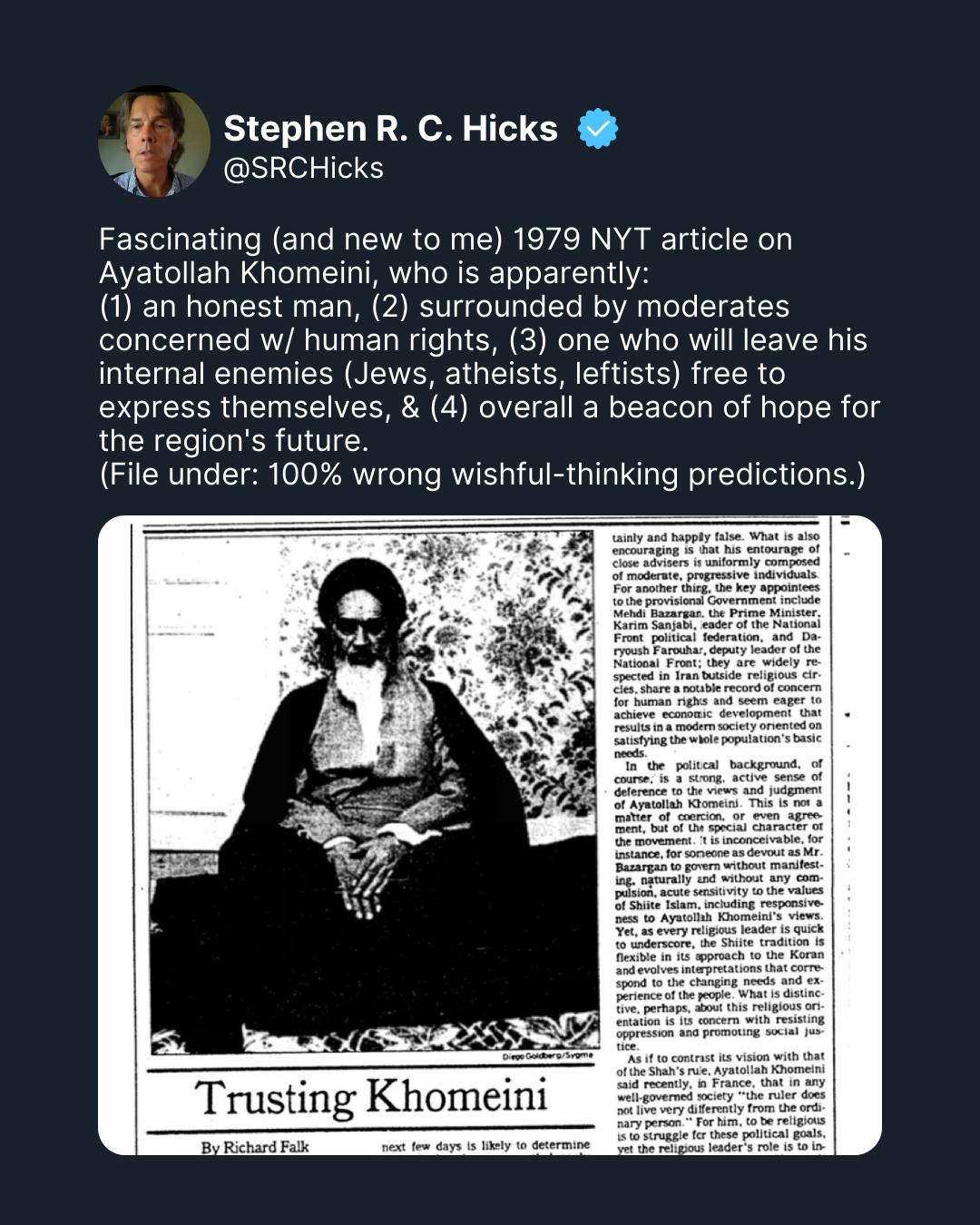
The Danger of Wishful Thinking: Revisiting the NYT’s Disastrous 1979 Prediction of Khomeini
the staff of the Ridgewood blog
Ridgewood NJ, In the world of political journalism, there are “bad takes,” and then there are historic failures. Perhaps the most glaring example in modern history is the media’s initial portrayal of Ayatollah Khomeini during the 1979 Iranian Revolution.
As we witness the current geopolitical shifts in the Middle East, it is vital to look back at how institutional “wishful thinking” can blind the world to the rise of authoritarianism.
The Myth of the “Moderate” Ayatollah
In a 1979 article, The New York Times painted a picture of Khomeini that, in retrospect, feels like a work of fiction. He was described as:
-
An “honest man” surrounded by moderates.
-
A leader deeply concerned with human rights.
-
A figure who would allow dissenters to express themselves freely.
-
A “beacon of hope” for the region’s future.
As the organization Students For Liberty points out, this wasn’t just a failure of reporting—it was a failure of honesty.
Projection vs. Reality: What Actually Happened?
The media institutions of the time weren’t reporting on who Khomeini actually was; they were projecting who they wanted him to be. They traded the harsh reality of Khomeini’s published ideology for a preferred narrative of progress.
The Reality Check:
-
The Purge: The “moderates” the NYT praised were purged, exiled, or executed within months.
-
The Suppression: Instead of “freedom of expression,” Iran saw mass executions, the brutal suppression of women’s rights, and the persecution of minorities.
-
The Legacy: Decades of regional instability, the funding of global proxy wars, and a theocratic regime known for hanging dissidents.
Why the Media Still Gets it Wrong
This 1979 blunder serves as a permanent warning. When institutions mistake their desires for reality, the public pays the price. We see this cycle repeat whenever the media:
-
Romanticizes Authoritarians: Framing extremists as “reformers” or “modernizers.”
-
Whitewashes Extremism: Ignoring the written manifestos and stated goals of radicals.
-
Labels Skeptics as “Alarmists”: Dismissing those who point out the obvious signs of impending tyranny.
“Listen to what people say. Believe what they do. Ignore what you wish were true.” — Students For Liberty
The Lesson for Today
The lesson of the 1979 Khomeini profile is simple: Believe the ideology. When leaders tell you who they are and what they intend to do, take them at their word.
In an era of “fake news” and narrative-driven journalism, maintaining a healthy skepticism of “beacon of hope” headlines is essential for protecting liberty. We cannot afford to let wishful thinking dictate our understanding of the world’s most dangerous regimes.
Follow the Ridgewood blog has a brand-new new X account, we tweet good sh$t
https://twitter.com/TRBNJNews
https://truthsocial.com/@theridgewoodblog
https://mewe.com/jamesfoytlin.74/posts
#news #follow #media #trending #viral #newsupdate #currentaffairs #BergenCountyNews #NJBreakingNews #NJHeadlines #NJTopStories
#History #MediaBias #IranRevolution #Khomeini #Liberty #StudentsForLiberty #Journalism #PoliticalAnalysis #HumanRights #FactCheck








They whitewashed all of them: Ortega, Castro, Chavez, Maduro, Morales, etc.
How did those work out?
You forgot Obama. There was plenty to at least question him on. Instead, they gave him the white glove treatment. Same with just about all the media.