Forget the Scale! New Study Says 70% of Americans Could Be Obese, Forcing a Massive Rethink of BMI and Drug Eligibility
the staff of the Ridgewood blog
Hackensack NJ, Aarevolutionary new study is poised to upend how the medical community defines obesity, suggesting that the decades-old reliance on Body Mass Index (BMI) is fundamentally flawed. This groundbreaking research, published in the prestigious journal JAMA, proposes a new, more comprehensive framework that incorporates waist circumference, potentially skyrocketing the official rate of obesity in America.
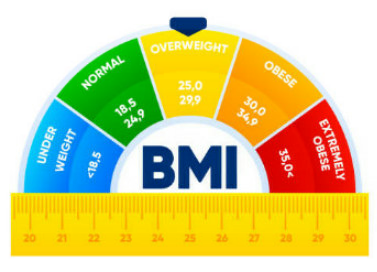
The implications are staggering: if this new definition is adopted, an estimated 70% of American adults could be classified as having obesity—a colossal leap from the current rate of $43\%$ defined by BMI alone. This seismic shift could radically alter public health policy and, most immediately, who qualifies for popular, life-changing weight-loss medications like Ozempic, Wegovy, and Zepbound.
The BMI Problem: Why Where You Carry Weight Matters
For years, BMI—a simple calculation of height and weight—has been the sole screening tool for obesity. Yet, critics argue it often misclassifies muscular individuals and, more dangerously, misses a vast number of people with high levels of visceral fat, the high-risk fat stored deep in the abdomen.
The JAMA study, which analyzed data from over 300,000 individuals, highlighted this flaw, finding that relying on BMI alone fails to identify millions of people at risk.
The proposed new definition of obesity is more nuanced, focusing on body composition and risk factors:
- Having a BMI over 30 plus an elevated waist circumference.
- Having a “normal” BMI but two or more elevated body measurements (such as a high waist-to-hip ratio).
The research demonstrated that people who met this new criteria—even those considered “overweight” or “normal” by traditional BMI—had significantly higher risks for diabetes, cardiovascular events (like heart attacks and strokes), and all-cause mortality.
As Hans Schmidt, M.D., FACS, Chief of Bariatric Surgery at Hackensack University Medical Center, explains, “Central obesity, which is weight carried in the abdomen, is a much higher risk factor for chronic diseases like diabetes, coronary heart disease, strokes, and sleep apnea versus weight carried in the thighs. So yes, it is absolutely important to know where you carry your weight.”
Redefining Treatment: The Impact on Weight Loss Drugs
Perhaps the most immediate consequence of this research lies in access to obesity treatments. Current FDA and insurance criteria for GLP-1 inhibitor medications like Wegovy are strictly tied to BMI.
The JAMA findings raise a critical question: If the official definition of obesity expands to include those with dangerous abdominal fat but a seemingly “normal” BMI, will the qualification criteria for these powerful medications expand, too?
In the future, a person with a BMI of $24$ but a dangerously high waist circumference might be officially diagnosed with obesity, thus making them eligible for treatments previously reserved only for those with a higher BMI.
Seth Kipnis, M.D., FACS, FASMBS, Director of Bariatric and Robotic Surgery at Jersey Shore University Medical Center, notes this evolving landscape: “Most patients are now offered medication first to treat obesity and surgery is reserved for high BMI patients or those who have failed medical treatments.” He adds that all treatments, including GLP-1/GIP medications, are coupled with the support of a registered dietitian to help patients change eating choices.
Is It Time to Retire BMI?
While the study is a powerful critique, experts caution against discarding the BMI entirely.
Dr. Schmidt acknowledges the tool’s accessibility: “While the BMI isn’t perfect, discarding it entirely would be premature.” He argues that it remains a “widely understood, readily accessible, and cost-effective screening tool.”
The key takeaway for patients and policymakers is the need for a multi-faceted approach. The new research is a compelling call to action, pushing medicine to move beyond a single number on the scale and adopt a comprehensive, personalized assessment that recognizes that your health risk is not just about how much you weigh, but where you carry it.
Fighting the Obesity Crisis: President Trump Revives Presidential Fitness Test to Promote Health and Youth Fitness in America
https://youtu.be/8df2skF8gnQ?si=w818Bj-c-fWYyQTf
#ObesityCrisis #PresidentialFitnessTest #TrumpsFitnessCouncil #YouthHealth #FitnessInSchools #NationalFitnessPlan #CDCObesityStats #chickenfat