

NASA’s Curiosity Rover Discovers Giant Martian ‘Spiderwebs’: A New Clue to Ancient Life?
the staff of the Ridgewood blog
Ridgewood NJ, NASA’s Curiosity rover has just given humanity its first up-close look at a bizarre, alien landscape on Mars that scientists are calling “boxwork” formations. From high above in orbit, these ridges look like massive, crisscrossing spiderwebs stretching for miles across the Red Planet’s surface.
Now, thanks to Curiosity’s trek through the “sulfate-bearing unit” on Mount Sharp, we finally know what these structures are—and they suggest that Mars stayed “wet” much longer than previously believed.
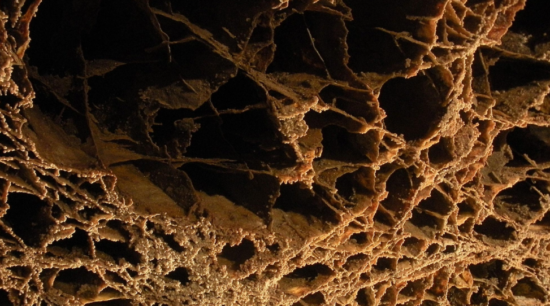
What are the Martian Spiderwebs?
Technically known as boxwork, these are low ridges standing roughly 3 to 6 feet (1 to 2 meters) tall. Scientists believe they formed billions of years ago when groundwater flowed through deep fractures in the Martian bedrock.
As the water flowed, it left behind minerals that hardened the rock. Over eons, the fierce Martian winds eroded the softer, unfortified stone, leaving behind a standing network of mineral-reinforced ridges that look like a giant honeycomb or spiderweb.
Why This Discovery Changes Everything
The presence of boxwork this high up on Mount Sharp—a 3-mile-tall mountain Curiosity has been climbing since 2014—is a game-changer for astrobiology.
-
Extended Habitability: High-altitude boxwork suggests the groundwater table remained high much later in Mars’ history.
-
The Search for Life: “The water needed for sustaining life could have lasted much longer than we thought,” says mission scientist Tina Seeger of Rice University.
-
Mineral Clues: Curiosity’s onboard laboratory analyzed rock powder from the ridges, finding clay minerals in the ridges and carbonates in the hollows—both of which typically form in the presence of water.
Driving an SUV on a Martian Highway
Exploring this region wasn’t easy. Curiosity is roughly the size of an SUV and weighs nearly a ton. Rover drivers at NASA’s Jet Propulsion Laboratory (JPL) had to navigate the vehicle across ridgetops that were often no wider than the rover itself.
“It almost feels like a highway we can drive on. But then we have to go down into the hollows, where you need to be mindful of Curiosity’s wheels slipping in the sand,” says Ashley Stroupe, a JPL operations systems engineer.
The Hunt for Organic Molecules
In a rare move, the team utilized a “wet chemistry” experiment on a sample from this region. This specialized technique uses chemical reagents to make it easier for Curiosity’s instruments to detect organic compounds—the carbon-based building blocks of life.
As Curiosity prepares to leave the “spiderwebs” behind in March 2026, it continues its journey into the sulfate layer, searching for more clues about how a world once filled with lakes and rivers transformed into the freezing desert we see today.
SEO & Search Insights
-
Keywords: NASA Curiosity Rover, Mars spiderwebs, Martian boxwork, life on Mars, Mount Sharp, NASA JPL, Martian groundwater, space discovery 2026.
-
Google Discover Headline Ideas: * NASA’s Curiosity Just Reached the Martian ‘Spiderwebs’—And the View is Incredible.
-
Giant Ridges on Mars Suggest Life Had a Longer Window to Survive.
-
Curiosity Rover Unlocks the Mystery of the Martian ‘Boxwork’ Formations.
-
Tell your story #TheRidgewoodblog , #Indpendentnews, #information, #advertise, #guestpost, #affiliatemarketing,#NorthJersey, #NJ , #News, #localnews, #bergencounty, #sponsoredpost, #SponsoredContent, #contentplacement , #linkplacement, Email: [email protected]
#NASA #Mars #CuriosityRover #SpaceExploration #Astronomy #ScienceNews #RedPlanet #MarsMission







