the staff of the Ridgewood blog
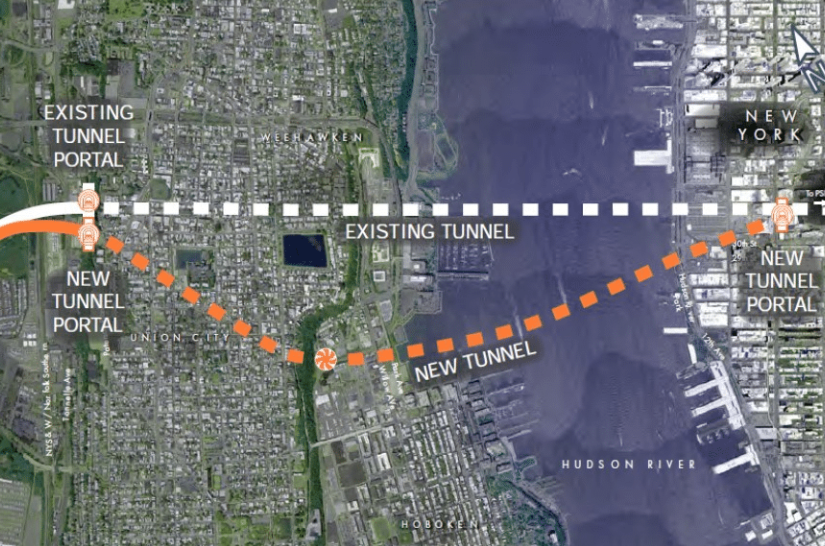
Ridgewood NJ, National Association of Railroad Passengers (NARP) President and Chief Executive Officer Jim Mathews on Tuesday urged federal leaders to fast-track necessary approvals to replace the Hudson River rail tunnels.
If the tunnels aren’t replaced in time, the New York City region could face a “transportation meltdown,” Mathews wrote in a letter to the Federal Railroad Administration (FRA) and New Jersey Transit.
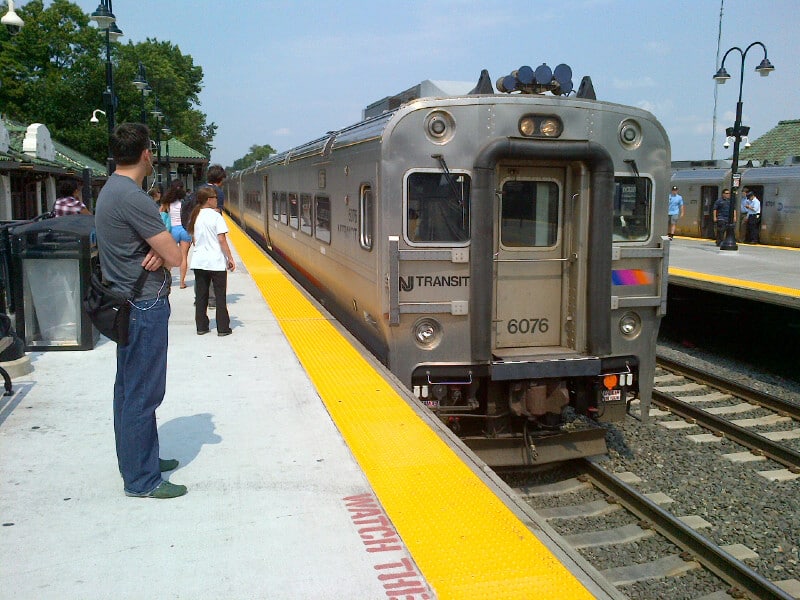
Each day, the aging tunnels accommodate 100 trains carrying 24,000 Amtrak riders. Additionally, NJ Transit trains move 90,000 weekday passengers through the tunnels, which run between New York and New Jersey.
“Given the importance of these tunnels to the entire East Coast transportation system and to passenger rail, NARP strongly urges the government to proceed as expeditiously as possible, within the confines of applicable law, to begin desperately needed and long-overdue construction of new tunnels,” Mathews wrote.
He also advocated separating the Hudson tunnels project from Amtrak’s larger Gateway Program, which calls for a number of upgrades to improve capacity between New York City’s Penn Station and Newark, N.J. Separating the two projects would help ease the funding burden, simplify permitting and design, and “secure the widest possible agreement to proceed from elected and appointed officials throughout the region,” Mathews said.
Currently, Amtrak removes one of the tunnels from service each weekend for continuing maintenance, which results in slow, single-tracking operations. Until new ones are built, this will continue indefinitely, according to Mathews.
Additionally, the existing tubes will be removed from service for a full year for complete rehabilitation after the new ones are built.
“There is a real danger that if one of the current bores becomes permanently damaged or disabled, the throughput of trains would fall some 75 percent,” noted Mathews.