
Posted on 4 Comments

The Neuroscience of Protests: Why Taking to the Streets is an Emotional Rollercoaster and How to Protect Your Mental Health

DSCF3484 scaled e1741516220803

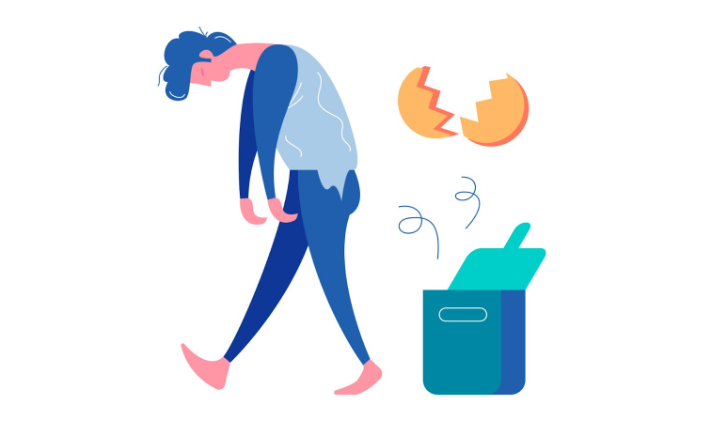
The Protest Brain: Psychiatrists Reveal the Neurobiology of Outrage, Euphoria, and the Mental Health Crash That Follows

file photo by Boyd Loving

the staff of the Ridgewood blog

Paramus NJ – From massive demonstrations led by Gen Z in the U.S. and Nepal to major global movements, millions are actively challenging the status quo. With over 140 mass demonstrations worldwide in the past year, political protests are a defining feature of our time—and they are having a profound psychological effect.

Clinicians from Flow Neuroscience, a company specializing in brain health treatments, explain that activism is a deeply psychological process, and the intense emotional journey requires specific mental health strategies for recovery.
Continue reading The Neuroscience of Protests: Why Taking to the Streets is an Emotional Rollercoaster and How to Protect Your Mental Health

Posted on Leave a comment

Why People Remember Losses Better Than Wins: The Emotional Psychology of Gambling

Screenshot 2025 08 11 134613

The psychology of gamblers is a topic where neuroscience meets emotions. Some remember the first bet on a slot machine, others remember the exact combination they missed on roulette. But if you try to determine which gaming moments most often leave a trace in your memory, the answer is obvious: losses.

Continue reading Why People Remember Losses Better Than Wins: The Emotional Psychology of Gambling

Posted on Leave a comment

Neuroscience tells Us Something we Have Long Suspected : U.S. High Schools Are Too Boring for Students

breakfest club

Neuroscientist: U.S. High Schools Are Too Boring for Students

Lillie M. Thomas | December 29, 2015

Temple University neuroscientist Laurence Steinberg’s research has shown him that adolescent brains are primed for learning.

The problem is, he claims, that most U.S. high schools are not challenging students enough during their adolescent years.

As WQED in Pittsburgh reports, Steinberg has spent his career studying the adolescent brain’s development, and has discovered that it has an “incredible plasticity” and “is exquisitely sensitive to experience.” We tend to think of small children’s brains as sponges for information, but Steinberg basically says the same thing is true of adolescents.

However, Steinberg feels that “American high schools are by and large not taking advantage of this opportunity”:

“Our high school students are among the worst in the developed world… It’s because our high schools are so boring… When we are not challenging our kids in high school, not only are we hindering their academic development, but we also aren’t taking advantage of the plastic prefrontal cortex.”

The article also points out that, unfortunately, American high schools tend to confuse “challenging work” with “amount of work”:

https://www.intellectualtakeout.org/blog/neuroscientist-us-high-schools-are-too-boring-students