Near-Collision Highlights Urgent Need for ‘Space Traffic Control’ as Low Earth Orbit Congestion Explodes
the staff of the Ridgewood blog
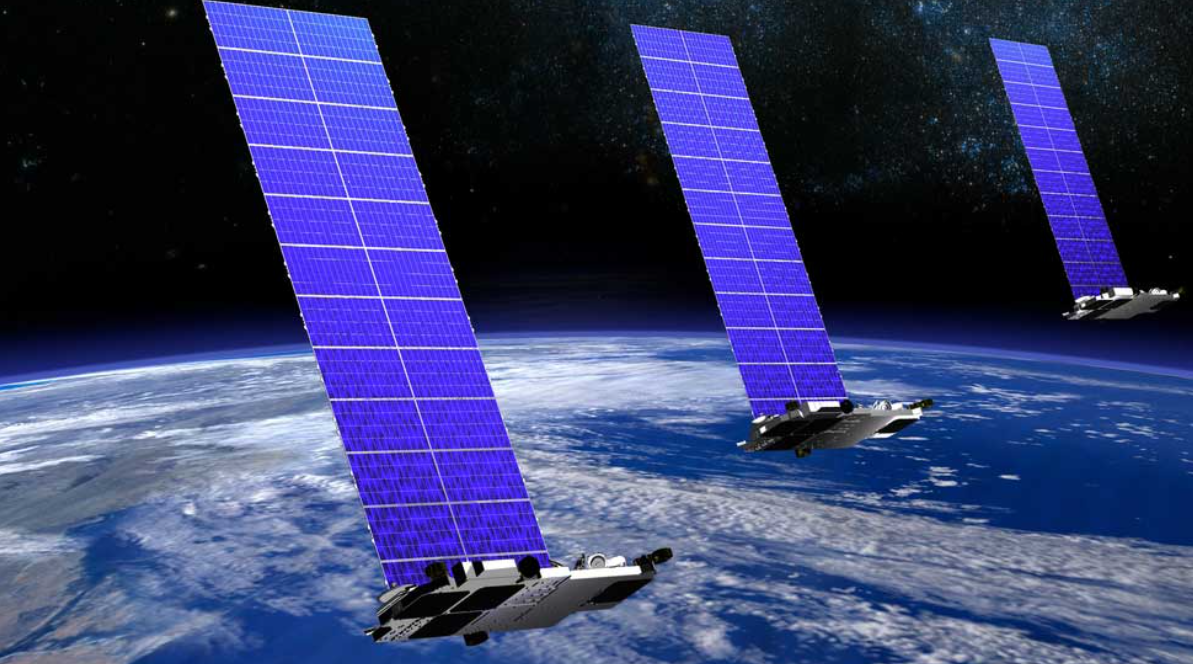
LOW EARTH ORBIT – The busiest highways on Earth are getting exponentially more crowded, and the consequences nearly resulted in a catastrophic crash this week. A SpaceX Starlink internet satellite was forced to execute an evasive maneuver, avoiding a collision with a newly deployed Chinese spacecraft by a perilous distance of just 200 meters (656 feet).
The alarming close call, which occurred at an altitude of approximately 560 kilometers, has prompted a fierce debate over space traffic management and the lack of coordination among the world’s rapidly expanding satellite operators.
SpaceX: “No Deconfliction Performed”
The incident involved a satellite released by the Chinese commercial provider CAS Space, a payload launched atop a Kinetica 1 rocket.
Michael Nicolls, Vice President of Starlink Engineering at SpaceX, took to social media to sound the alarm, stating that the Chinese operator failed to share crucial orbital trajectory data (known as ephemeris data), which would have allowed for proper collision avoidance.
“As far as we know, no coordination or deconfliction with existing satellites operating in space was performed… Most of the risk of operating in space comes from the lack of coordination between satellite operators—this needs to change,” Nicolls asserted.
The sheer speed of objects in Low Earth Orbit (LEO)—traveling at over 17,000 miles per hour—means that even a minor impact at 200 meters could have generated a massive cloud of high-velocity debris, potentially triggering the dreaded Kessler Syndrome, a cascading chain reaction that could render LEO unusable for generations.
CAS Space Responds
The Chinese launch service provider, CAS Space, acknowledged the incident. They noted that the near-miss occurred nearly 48 hours after payload separation, suggesting it was an orbital coordination issue rather than a launch trajectory error.
CAS Space stated that its mandatory procedures use a ground-based space awareness system to select launch windows that avoid known satellites and debris. However, the company agreed with the sentiment for greater collaboration: “This calls for re-establishing collaborations between the two New Space ecosystems.”
The Looming Crisis in LEO
This near-miss underscores a growing orbital congestion crisis:
-
Explosive Growth: There are now approximately 13,000 satellites in Earth orbit, nearly four times the number active just in 2020.
-
Collision Risk: Satellites operating in certain popular bands of LEO, particularly between 400 km and 600 km, are facing significantly increased risk.
-
Automated Avoidance: Starlink, the largest operator with over 6,000 satellites, relies on highly autonomous systems, performing tens of thousands of collision-avoidance maneuvers annually. However, these systems are vulnerable when other operators fail to share essential data.
Experts, regulators, and space agencies are increasingly calling for mandatory data sharing and standardized Space Traffic Management (STM) protocols to ensure the long-term sustainability and safety of Earth’s orbital environment.
Follow the Ridgewood blog has a brand-new new X account, we tweet good sh$t
https://twitter.com/TRBNJNews
https://truthsocial.com/@theridgewoodblog
https://mewe.com/jamesfoytlin.74/posts
#news #follow #media #trending #viral #newsupdate #currentaffairs #BergenCountyNews #NJBreakingNews #NJHeadlines #NJTopStories