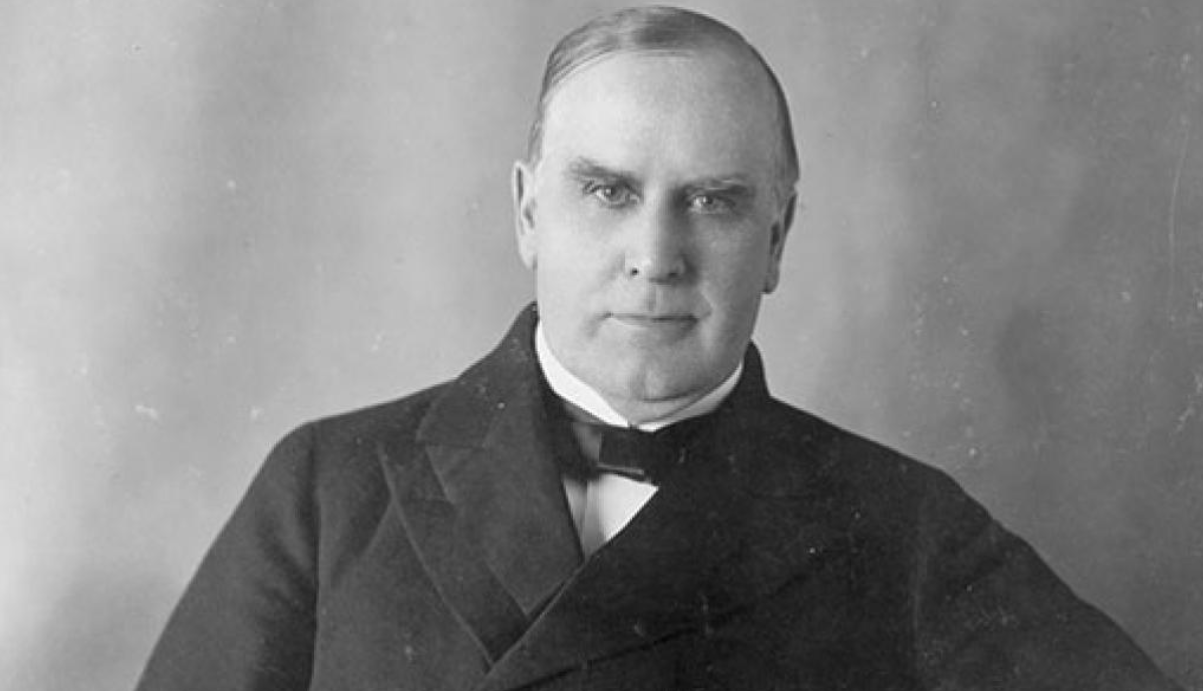
William McKinley Biography: The Tariff King, Spanish-American War, and Assassination
the staff of the Ridgewood blog
Washington DC, history often remembers President William McKinley for the tragic way his life ended, but his presidency was the spark that ignited the American “Century of Power.” Known as the “Tariff King” and the “Advance Agent of Prosperity,” McKinley transitioned the United States from a nation in depression to a global empire.
The Road to the White House: The “Front Porch” Campaign
In 1896, the U.S. was reeling from a deep economic depression. The Republican Party turned to McKinley, a Civil War veteran and former Governor of Ohio, to restore stability.
While his opponent, the fiery orator William Jennings Bryan, traveled thousands of miles advocating for “Free Silver,” McKinley stayed home. In what became known as the Front Porch Campaign, McKinley greeted delegations at his home in Canton, Ohio, delivering calm, reasoned speeches about sound money and protective tariffs. Backed by the organizational genius of Marcus Hanna, McKinley won by the largest popular majority since the Civil War.
The “Tariff King” and the American Economy
McKinley’s primary mission was to protect American jobs and industry. He believed that high taxes on foreign imports would allow American factories and farms to thrive without being undercut by cheap overseas labor.
To achieve this, he enacted the McKinley Tariff Plan, which featured these key pillars:
-
Protectionism: Drastically raised tariffs on imported goods to shield domestic manufacturers.
-
Agricultural Support: Increased rates on foreign farm products to help American farmers.
-
Revenue Generation: Provided the federal government with a steady stream of income.
-
Industrial Growth: Contributed to a period of unprecedented economic expansion and the rise of American industrial “trusts.”
The Birth of an Empire: The Spanish-American War
While McKinley wanted to focus on domestic prosperity, the world had other plans. In 1898, public pressure fueled by “Yellow Journalism” forced his hand into the Spanish-American War.
The conflict lasted only 100 days but fundamentally changed the map of the world. After destroying the Spanish fleet, the United States emerged as a global superpower, acquiring:
-
The Philippines
-
Guam
-
Puerto Rico
-
Cuba (under U.S. protection)
Critics accused McKinley of imperialism, but he maintained that the U.S. had a duty to oversee these territories for the sake of global stability and trade.
The “Full Dinner Pail” and a Tragic End
McKinley’s 1900 reelection campaign was built on a simple, effective slogan: “The Full Dinner Pail.” It promised that under his leadership, every American worker would have a job and food on the table.
His second term began with great optimism, but it was cut short just six months later. On September 6, 1901, while greeting citizens at the Pan-American Exposition in Buffalo, New York, McKinley was shot twice by a deranged anarchist. He succumbed to his wounds eight days later, leaving the presidency to his young and energetic Vice President, Theodore Roosevelt.
Quick Facts: William McKinley
| Category | Details |
| Rank | 25th President of the United States |
| Term | 1897–1901 |
| Nickname | The Tariff King / Advance Agent of Prosperity |
| Major War | Spanish-American War (1898) |
| Legacy | Shifted the U.S. toward a gold standard and globalism |
Follow the Ridgewood blog has a brand-new new X account, we tweet good sh$t
https://twitter.com/TRBNJNews
https://truthsocial.com/@theridgewoodblog
https://mewe.com/jamesfoytlin.74/posts
#news #follow #media #trending #viral #newsupdate #currentaffairs #BergenCountyNews #NJBreakingNews #NJHeadlines #NJTopStories
Tags: #WilliamMcKinley #USHistory #PresidentsDay #AmericanEmpire #Tariffs #GildedAge #HistoricalFacts