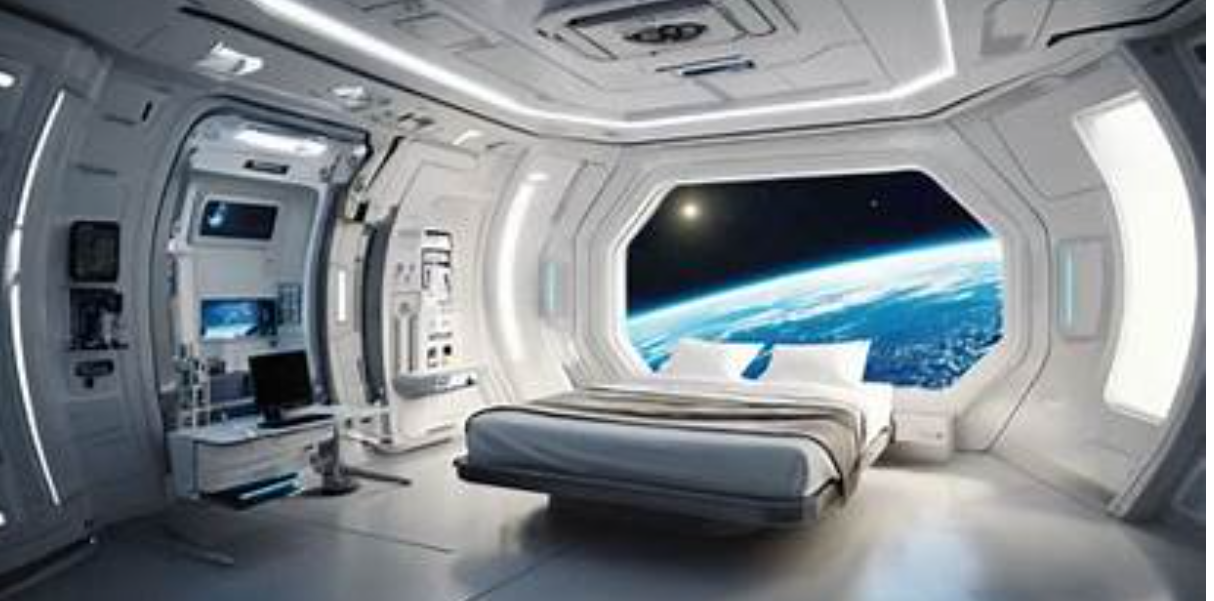
For over 25 years, the International Space Station (ISS) has been humanity’s only consistent home in the stars. But the “Age of the Landlord” is ending. As NASA prepares to deorbit the aging laboratory by 2030, a new “Gold Rush” is happening 250 miles above our heads
the staff of the Ridgewood blog
Ridgewood NJ, starting in 2026, space is officially going corporate. From Jeff Bezos’ Blue Origin to ambitious startups like Vast, the first private space stations are ready for liftoff.
🚀 May 2026: The Launch of Haven-1
The first major milestone in this orbital revolution belongs to California-based startup Vast. In May 2026, the company plans to launch Haven-1 aboard a SpaceX Falcon 9.
What makes Haven-1 different?
-
The “Boutique” Experience: While the ISS is utilitarian and cramped, Haven-1 features “Earth tones,” soft surfaces, and inflatable sleep systems designed for comfort.
-
The Scale: About the size of a shipping container, it will host four-person crews for up to 10 days.
-
The Mission: It serves as a proof-of-concept for Haven-2, a massive modular station intended to be the true successor to the ISS.
“We will be the first standalone commercial LEO platform ever in space… that’s an amazing inflection point for human spaceflight,” says Drew Feustel, Vast’s lead astronaut and NASA veteran.
🏗️ The Heavy Hitters: Who is Building the Next “Orbital Business Park”?
NASA isn’t building a replacement for the ISS. Instead, they are becoming a tenant, paying private companies for “room and board.” Here are the frontrunners vying for NASA’s billion-dollar Phase 2 contracts:
1. Blue Origin: Orbital Reef
Founded by Jeff Bezos, Blue Origin is partnering with Boeing and Sierra Space to create a “mixed-use business park” in space. They recently completed testing on life-size mockups, simulating day-to-day tasks like trash transfer and cargo stowage in microgravity.
2. Axiom Space: The ISS “Parasite”
Axiom has a unique strategy: they are attaching their modules directly to the ISS. By 2028, these modules will detach to become a fully independent, free-flying private station.
3. Starlab: The One-Shot Launch
A joint venture between Voyager Space and Airbus, Starlab is designed to launch in a single mission aboard SpaceX’s massive Starship rocket. It features an external robotic arm and a state-of-the-art research lab.
💰 The New Space Economy: Tourism, Research, and Manufacturing
Why are these companies spending billions? They aren’t just looking for NASA’s business. The goal is to tap into a diverse new market:
-
Microgravity Manufacturing: Making high-end fiber optics and life-saving pharmaceuticals that are impossible to produce under Earth’s gravity.
-
Orbital Tourism: High-net-worth individuals seeking a 10-day stay in a “luxury” module.
-
Sovereign Research: Countries without their own space programs can now “rent” a lab to conduct national research.
⚖️ Will the Gamble Pay Off?
The economics of low Earth orbit (LEO) are far from guaranteed. While launch costs are plummeting thanks to SpaceX, it remains unclear if there is enough demand to support four or five competing private stations.
However, with China’s Tiangong station already permanently crewed, the U.S. and its private partners are racing to ensure that Western presence in orbit doesn’t go dark when the ISS finally retires.
Commercial Space Station Race: Comparison
| Station | Developer | Target Launch | Key Feature |
| Haven-1 | Vast | May 2026 | World’s first standalone private station |
| Starlab | Voyager/Airbus | 2028 | Launched in one go via Starship |
| Axiom Hub | Axiom Space | 2026 (Attach) | Starts as part of the ISS |
| Orbital Reef | Blue Origin | Late 2020s | Designed as a “Business Park” |
Tell your story #TheRidgewoodblog , #Indpendentnews, #information, #advertise, #guestpost, #affiliatemarketing,#NorthJersey, #NJ , #News, #localnews, #bergencounty, #sponsoredpost, #SponsoredContent, #contentplacement , #linkplacement, Email: [email protected]