

Critics argue that the Biden administration treated the SPR as a political tool rather than a strategic asset
the staff of the Ridgewood blog
Washington DC, The Strategic Petroleum Reserve (SPR) was designed as America’s ultimate insurance policy. Established to shield the U.S. economy from catastrophic supply disruptions—like the aftermath of Hurricane Katrina or the global shock of Russia’s invasion of Ukraine—it is meant for emergencies, not optics.
However, recent management of these reserves has sparked a heated debate over national security versus political expediency. While “buying low and selling high” is a fundamental rule of business, the recent depletion of the SPR suggests a much more costly strategy is at play.
The Political Cost of “Plundering” the Reserves
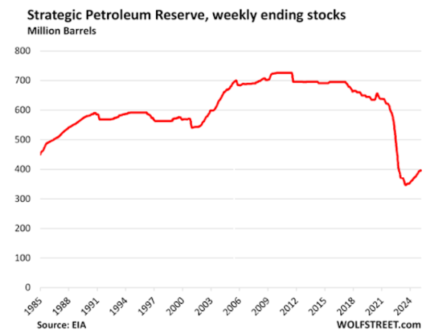
Critics argue that the Biden administration treated the SPR as a political tool rather than a strategic asset. Beginning in November 2021, the administration announced a release of 50 million barrels. At the time, gasoline was averaging roughly $3.40 a gallon—hardly a national emergency, but a significant political headache amidst rising inflation.
Between 2021 and 2023, the administration drew down a staggering 284 million barrels.
The Maintenance Crisis: A $200 Million Hole
The issue isn’t just the volume of oil removed; it’s the physical toll on the infrastructure itself. Recent reports from The Wall Street Journal highlight a brewing crisis:
-
Physical Distress: The rapid drawdown of 200 million barrels has reportedly left the reserve’s storage facilities in need of urgent repair.
-
The Repair Bill: Estimates suggest it will cost at least $200 million to fix the damage caused by improper maintenance and over-use.
-
Limited Utility: Because of this physical degradation, experts warn the SPR may be of limited strategic use if a genuine supply shock occurs today.
Domestic Production vs. Reserve Depletion
The irony of the SPR drawdown is that it occurred while the administration simultaneously restricted domestic growth. From the Day 1 cancellation of the Keystone XL pipeline to the suspension of new drilling leases, the “war on fossil fuels” created a supply vacuum that the SPR was never meant to fill indefinitely.
“At the very time we should have been drilling for U.S. oil and building out our energy infrastructure, we were draining our rainy-day fund.”
Without new refineries or expanded pipeline capacity, the U.S. remains vulnerable. Relying on a depleted and decaying reserve to mask the effects of restrictive energy policies isn’t just bad economics—it’s a risk to national security.
The Bottom Line
The SPR is currently in a “hole” created by a mix of anti-fossil fuel ideology and short-term political maneuvering. To restore America’s energy independence, the focus must shift from draining reserves to unleashing domestic production and repairing the infrastructure that keeps the country running.
Follow the Ridgewood blog has a brand-new new X account, we tweet good sh$t
https://twitter.com/TRBNJNews
https://truthsocial.com/@theridgewoodblog
https://mewe.com/jamesfoytlin.74/posts
#news #follow #media #trending #viral #newsupdate #currentaffairs #BergenCountyNews #NJBreakingNews #NJHeadlines #NJTopStories








Democrats refused to allow trump to replinish it when oil was 25 dollars a barrel