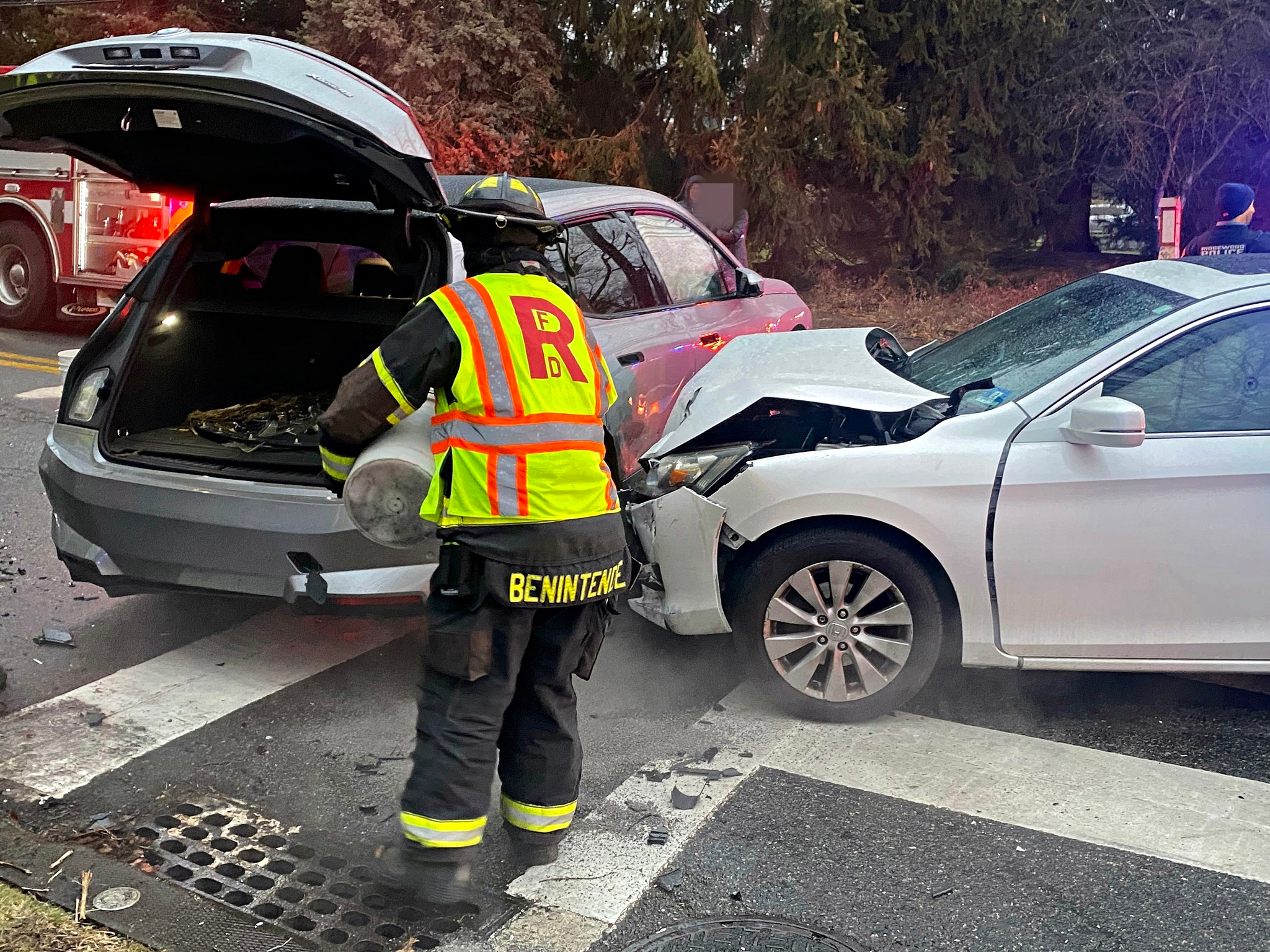
Multiple automobile accidents in Ridgewood over the weekend prompted the question , ” Is it time for Self Driving Cars?”
file photo by Boyd Loving
the staff of the Ridgewood blog
Ridgewood NJ, The future of road safety isn’t just about better airbags or sturdier steel—it’s about taking the “human” out of the driver’s seat.
A groundbreaking study published in JAMA Surgery (January 2026) suggests that the rise of autonomous vehicles (AVs) could be the single most effective public health intervention of the decade. Researchers project that self-driving technology could prevent over 1 million road injuries across the United States between 2025 and 2035.
The Hidden Cost of Human Error
Road traffic collisions are a silent epidemic. In the U.S. alone, car crashes claim more than 120 lives every day. In 2022, accidents sent 2.6 million people to emergency rooms and cost the economy a staggering $470 billion in medical bills and lost productivity.
The common denominator in 94% of these crashes? Human error. Whether it’s distracted texting, driving under the influence, or simple fatigue, human limitations are the primary cause of road trauma.
JAMA Surgery Study: The 1 Million Injury Milestone
A research team led by Dr. Armaan Malhotra (University of Toronto/Sunnybrook Health Sciences Centre) used historical data from 2009–2023 to model the next ten years of American driving. Their findings reveal how even modest adoption of self-driving cars can save lives:
-
The Conservative Scenario (1% Adoption): If only 1% of total miles driven are autonomous and those cars are 50% safer than humans, we still avoid 67,000 injuries.
-
The Optimistic Scenario (10% Adoption): If AVs reach 10% of total miles and prove to be 80% safer than humans (a figure already supported by data from companies like Waymo), the U.S. avoids 1,078,528 injuries by 2035.
Real-World Proof: Is the Tech Already Safer?
While the study is a projection, real-world data from late 2025 and early 2026 suggests these “optimistic” numbers are within reach.
Data from Waymo—which scaled from 10,000 weekly rides in 2023 to over 250,000 in 2025—shows a dramatic safety advantage over human benchmarks:
-
85% fewer suspected serious injuries.
-
96% reduction in intersection crashes (the most lethal type of collision).
-
92% fewer pedestrian-related injuries.
The Challenge Ahead: High-Speed Safety
While the 1 million injury reduction is promising, the researchers noted a critical “data gap.” Currently, most self-driving miles are logged in urban settings. To truly revolutionize public health, the technology must prove its worth on highways, where high-speed crashes result in the most severe fatalities.
Quick Stats: The AV Impact (2025-2035)
| Metric | Projections |
| Injuries Prevented | 67,000 to 1,078,000+ |
| National Injury Reduction | ~3.6% overall decrease |
| Economic Potential | Tens of billions in saved medical costs |
| Primary Safety Driver | Elimination of distracted/impaired driving |
Follow the Ridgewood blog has a brand-new new X account, we tweet good sh$t
https://twitter.com/TRBNJNews
https://truthsocial.com/@theridgewoodblog
https://mewe.com/jamesfoytlin.74/posts
#news #follow #media #trending #viral #newsupdate #currentaffairs #BergenCountyNews #NJBreakingNews #NJHeadlines #NJTopStories