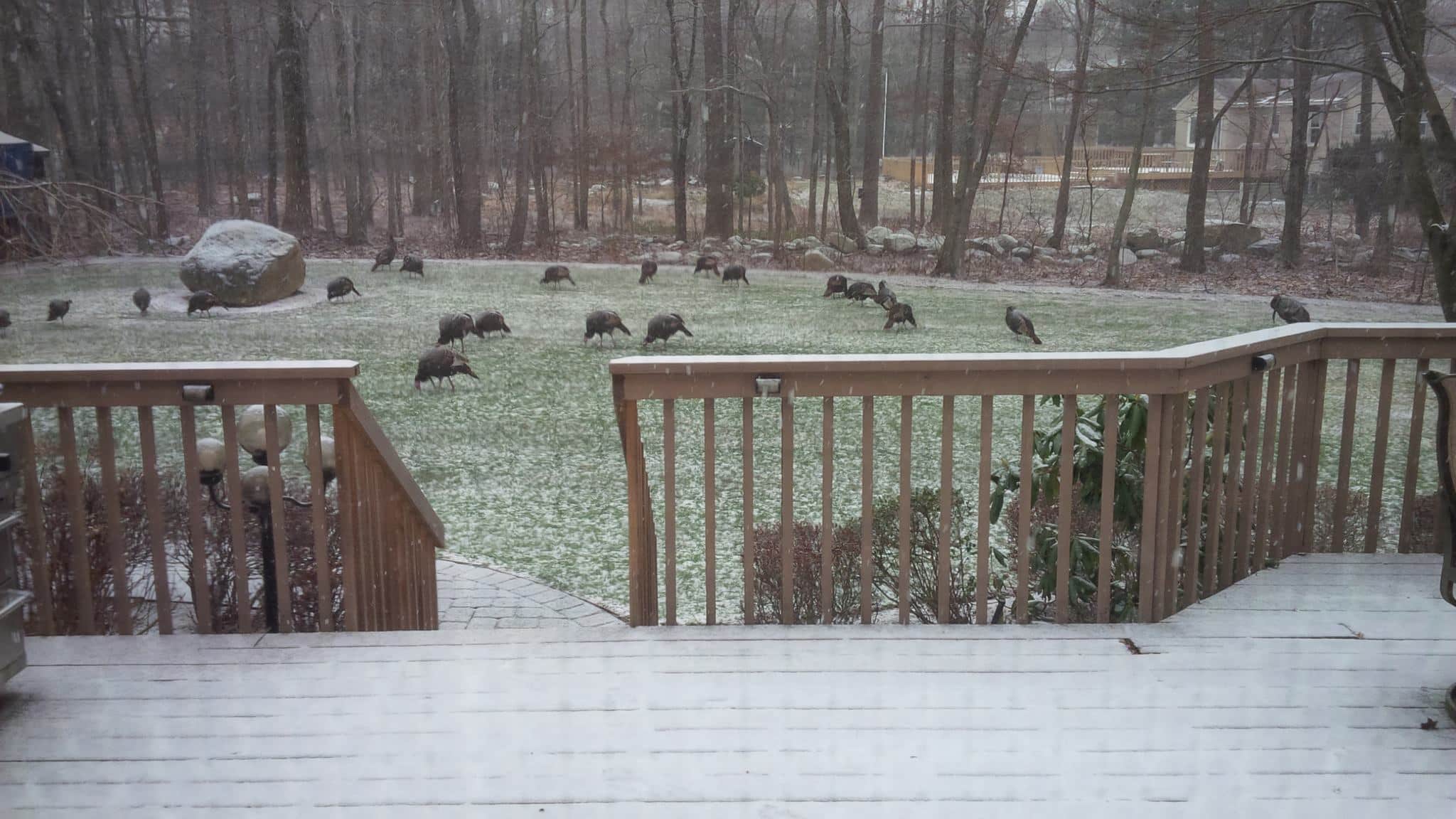
Wild turkeys were successfully reintroduced in 1977 with the release of 22 birds
the staff of the Ridgewood blog
Mahwah NJ, Wild turkeys are common in North Jersey, and their presence is a success story of conservation after they were wiped out in the 19th century. They are now abundant, found in wooded areas near suburbs, and adaptable enough to venture into backyards for food. A unique fact is that a turkey’s head color changes to express its mood, and males can be attractive to females based on the length of their “snood” (the fleshy appendage over the beak).
Conservation and population
Reintroduction: After being wiped out by the mid-1800s, wild turkeys were successfully reintroduced in 1977 with the release of 22 birds.
Population: New Jersey’s population is estimated to be around 20,000 to 25,000 birds.
Habitat: They thrive in wooded areas and are often seen in suburbs, parks, and even near residential backyards, where they forage for food.
Adaptability: They are omnivorous and will eat insects, acorns, nuts, and plant bulbs.
Behavior and characteristics
Nocturnal roosting: They spend their nights roosting in trees to stay safe from predators.
Seasonal movement: Wild turkeys do not migrate, but their foraging areas can shift with the seasons, potentially moving from more wooded areas in warmer months to agricultural fields in the winter to find food.
Communication and mood: A turkey’s head color can change from red to blue to white to express emotion, and males with longer snoods are considered more attractive to females.
Swimming: When necessary, wild turkeys can swim by tucking in their wings and kicking their legs.
Join the new Saddle River Valley, Ramapo and Pascack Valley Communities Facebook group
https://www.facebook.com/groups/1931704860512551/
#news #follow #media #trending #viral #newsupdate #currentaffairs #BergenCountyNews #NJBreakingNews #NJHeadlines #NJTopStories