
The Forgotten History of June 14: Why We Celebrate Flag Day
the staff of the Ridgewood blog
Ridgewood NJ, Every year on June 14, a wave of red, white, and blue sweeps across the United States. While it might look like an early warm-up for the Fourth of July, this day holds its own unique, centuries-old legacy.
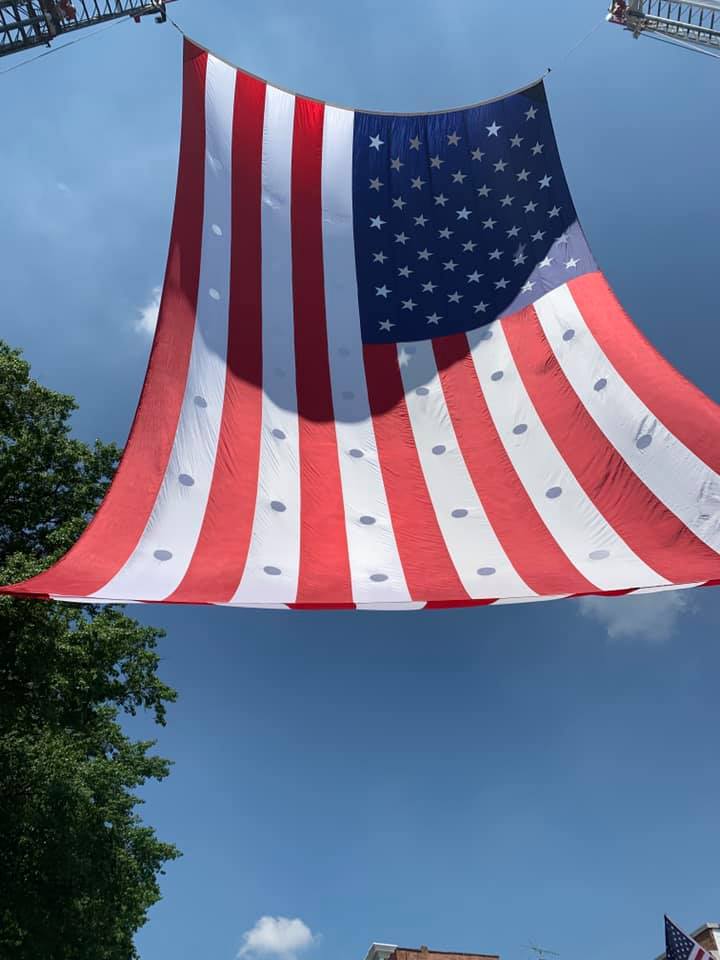
Flag Day is the official American holiday dedicated to honoring the adoption of the Stars and Stripes. But how did a simple piece of fabric become a national symbol of unity, and why do we still celebrate it today?
Here is the surprising history behind Flag Day and how it shaped the nation.
What is Flag Day?
Flag Day is a annual observance in the United States that commemorates the official adoption of the American flag. While it is not a federal holiday (meaning federal banks and post offices stay open), it is a day of national pride marked by parades, essay contests, and flag-raising ceremonies across all 50 states.
The holiday always falls on June 14, a date deeply rooted in the American Revolutionary War.
The True History: How Flag Day Was Born
The origins of Flag Day date all the way back to the earliest days of the American Revolution. Before a unified flag existed, different military regiments fought under vastly different banners, leading to confusion on the battlefield.
1. The Resolution of 1777
On June 14, 1777, the Second Continental Congress stepped in to create a universal symbol of the new nation. They passed a brief but historic resolution stating:
“Resolved, That the flag of the thirteen United States be thirteen stripes, alternate red and white: that the union be thirteen stars, white in a blue field, representing a new constellation.”
2. The Father of Flag Day
While the flag was adopted in 1777, it took over a century for it to get its own holiday. In 1885, a 19-year-old Wisconsin schoolteacher named Bernard J. Cigrand placed a 10-inch, 38-star flag in a bottle on his desk and asked his students to write essays on what the flag meant to them. He spent the rest of his life writing articles and giving speeches to establish a national holiday.
3. Making It Official
The push for a national day of recognition finally caught the attention of the White House:
-
In 1916, President Woodrow Wilson issued a presidential proclamation establishing June 14 as National Flag Day.
-
In 1949, President Harry S. Truman signed an Act of Congress, officially designating National Flag Day as a permanent annual observance.
The Symbolism: What the Flag Represents
The design of the American flag has evolved over time—expanding from the original 13 stars to 50 to welcome new states into the Union. However, the core symbolism of the colors, as chosen by the Founding Fathers, remains unchanged:
-
White: Signifies purity and innocence.
-
Red: Represents hardiness, valor, and the sacrifice of those who protected the nation.
-
Blue: Represents vigilance, perseverance, and justice.
Proper Flag Etiquette: How to Display the Stars and Stripes
If you plan on hanging a flag outside your home or business for Flag Day, the U.S. Flag Code outlines strict rules of respect to follow:
-
Sunlight Only: The flag should only be displayed from sunrise to sunset. If left out at night, it must be properly illuminated by a spotlight.
-
Weather Proofing: Never display a flag during heavy rain, snow, or severe storms unless you are using an all-weather nylon flag.
-
Right Side Up: The blue field (the union) should always be at the peak of the staff, or to the observer’s left when hanging flat against a wall.
-
Never Touch the Ground: Avoid letting the flag touch the floor, ground, water, or anything beneath it.
Tell your story #TheRidgewoodblog , #Indpendentnews, #information, #advertise, #guestpost, #affiliatemarketing,#NorthJersey, #NJ , #News, #localnews, #bergencounty, #sponsoredpost, #SponsoredContent, #contentplacement , #linkplacement, Email: [email protected]
#FlagDay #AmericanHistory #USFlag #June14 #Patriotism #AmericanRevolution #FlagEtiquette #HolidayHistory





