
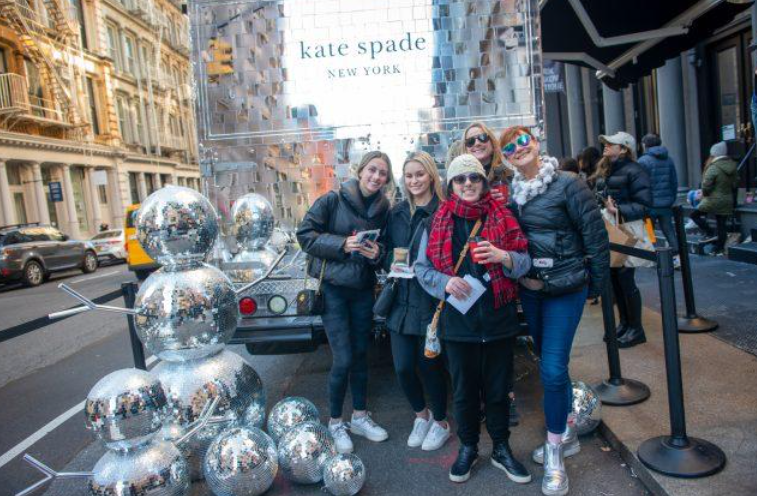
Image Credit: Sweeter
There is a moment that every New Yorker recognizes. You are walking somewhere with somewhere to be, and then something stops you. A truck wrapped in mirror tiles catching the afternoon light. A line going down the block for something you cannot quite identify yet. A smell that makes you slow down before your brain has even processed why.
New York City does not just host brand activations. It is the only city in the world where a great one can stop thousands of people mid-stride and make them feel like they stumbled onto something made just for them.
The person next to you pulls out their phone. Someone three blocks away sees the post and starts walking toward it. Before the brand’s own marketing team even has to engage, the city has already done the work for them. That feeling is not an accident. It is the result of a city and a format that were made for each other.
Why New York Changes What’s Possible
Every market has foot traffic. New York has a different kind of energy altogether. The density, the pace, the cultural diversity, the fact that media, influencers, and tastemakers are walking the same blocks as everyone else: it creates conditions no other city replicates. When something interesting happens on the right block in SoHo or the Flatiron District, word moves fast and with credibility.
New York is also a proving ground. Its consumers are sophisticated, fast-moving, and sometimes hard to impress. An activation that earns their attention has cleared a bar that most markets never set. If it works here, it works everywhere.
What Great NYC Activations Actually Look Like
Kate Spade wanted to own the holiday season in SoHo, so they brought in New York-based experiential marketing company Sweeter to wrap a food truck in over 1,500 hand-applied mirror tiles. Parked during peak shopping season, the truck served custom cookies and hot cocoa while lines stretched down the block. Nobody was told to photograph it. They just did, because it was genuinely beautiful and surprising, and the content spread further than any paid placement.
When Mean Girls opened on Broadway, a Sweeter-produced pink food truck straight out of the Plastics’ universe appeared outside the theater on opening night, serving cheese fries to fans. Tina Fey showed up. Lines went down the block. Photos and videos circulated for days. It worked because it was specific, fully committed, and alive to the moment.
New York as the Start of Something Bigger
New York is not just a great market for a single activation. It is the best launchpad in the country for a multi-city tour. The momentum a brand builds with a strong NYC debut travels. Press follows the tour into the next market. Social content tagged in recognizable New York locations carries cultural weight that the same content from a less iconic city simply does not.
When Sweeter ran the Barbados Tourism tour through New York before extending into Boston, the New York chapter set the narrative and social momentum for the next activation that followed. Brands that start in New York arrive everywhere else with wind at their backs. This time serving over 2,000 guests.
What Other Cities Can Learn From New York
The principles behind great New York activations are not exclusive to New York. They are just more visible here because the city punishes anything that ignores them.
Specificity wins. The best activations are designed for a specific block, a specific consumer, a specific moment. That intention is available in every market and produces the same result: an experience that feels like it belongs exactly where it is.
Location is a creative decision. In New York, the wrong block can sink an otherwise great activation. The same is true in Chicago, Austin, and Atlanta. Where the vehicle parks says something about the brand before a single consumer approaches.
Commitment is contagious. The reason people line up for a great activation in New York is the same reason they will line up in Boston, Denver, or Miami. When a brand shows up with full creative, hospitality and operational investment, consumers feel it. They respond. They share it.
New York, as always, is the place to start. But the lessons it teaches belong to every market on the map.





