
Picture this: You are finalizing a massive move from Bergen County down to Florida, or maybe you are relocating the family out to Texas. The boxes are packed, the movers are already booked, and now you are staring out at your driveway. Driving 1,200 miles down I-95 sounds like a nightmare of endless tolls, terrible highway food, and three exhausted days behind the wheel. Add the cost of gas, three nights in roadside hotels, and the wear and tear on your tires, and that road trip quickly loses its appeal.
You need a reliable way to get your vehicle from Point A to Point B without adding another 1,000 miles to the odometer.
This guide cuts straight to the facts. You will see exactly how interstate car shipping works, what you should actually pay, and how to spot a shady broker before handing over your credit card. No vague advice just the hard details you need to get your vehicle moved safely out of the Northeast so it is waiting for you when you arrive.
What a Car Transport Service Actually Does
When you book auto transport, you are hiring a logistics network to manage the pickup, transit, and delivery of your vehicle. It sounds simple, right? But the specific mechanics matter because assumptions cost money.
Here is what you actually get when you sign an auto transport contract:
- Door-to-door logistics: The truck driver gets as close to your home as legally and safely possible. If you live on a narrow Ridgewood street with low-hanging branches or tight cul-de-sacs, an 80-foot truck physically cannot turn around. You will likely meet the driver at a nearby shopping plaza or grocery store parking lot.
- Basic cargo insurance: Every legally operating interstate car shipping carrier must carry liability and cargo insurance. This covers your vehicle from damage caused by the carrier during loading, transit, and unloading.
- The driving: The carrier handles the fuel, the weigh stations, the DOT logs, and the physical mileage.
Here is what is absolutely not automatically included:
- Guaranteed delivery timestamps: Weather, traffic, blown tires, and loading delays with other customers dictate the schedule. You get an estimated delivery window, not an exact appointment time.
- Full weather protection: Unless you pay a premium for an enclosed trailer, your car is fully exposed to rain, dust, and road grime.
- Moving box transport: Your trunk is not a U-Haul. You cannot pack your vehicle full of heavy boxes, furniture, or heavy tools.
Open vs. Enclosed: Which Option Makes Sense for You
The industry relies heavily on two completely different types of trailers. Picking the wrong one means either overpaying for protection you don’t need or risking damage to a highly valuable asset.
| Feature | Open Carrier Transport | Enclosed Carrier Transport |
| Cost Profile | The industry baseline rate | Typically 30% to 50% more expensive |
| Protection Level | Exposed to rain, snow, dust, and small road debris | Fully shielded from all weather, dirt, and flying rocks |
| Market Availability | Extremely high (faster booking and dispatch) | Limited (requires advanced booking and flexible dates) |
| Best Suited For | Daily drivers, standard SUVs, leased sedans, minivans | Classics, exotics, high-value luxury cars, restorations |
For the vast majority of drivers, an open carrier is exactly what you need. This is the standard, multi-level truck you see rolling down the New Jersey Turnpike carrying eight to ten vehicles at a time. Sure, your Honda CR-V or Ford Explorer might arrive with a fresh layer of highway dust or a few bug splatters on the grille, but structurally, it is completely safe.
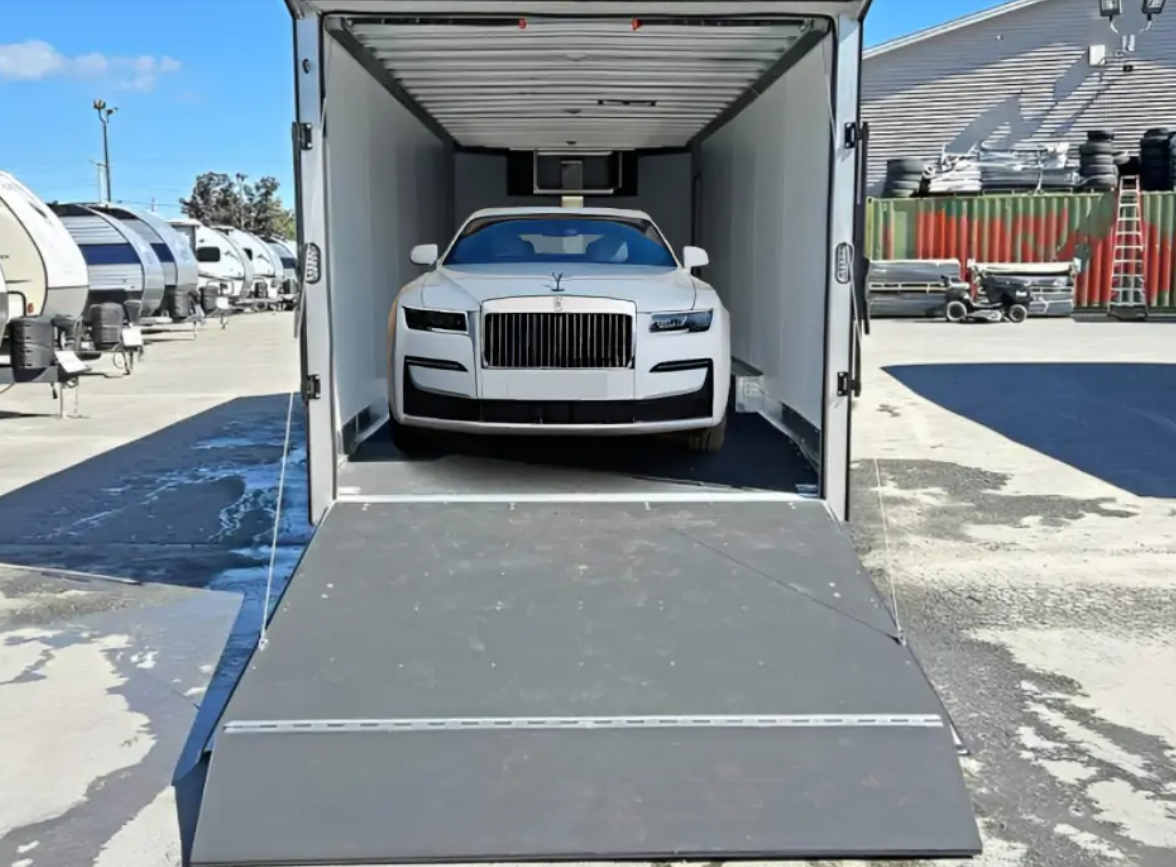
If you just bought a vintage Porsche 911 at an out-of-state auction, or you are moving a brand-new high-end luxury vehicle with custom paint, enclosed transport becomes non-negotiable. The extra cost buys you total peace of mind. Enclosed trailers often feature hydraulic lift gates, which are mandatory for cars with very low ground clearance that would scrape on traditional open trailer ramps.
When you evaluate any car transport service, make sure to confirm exactly which truck type they plan to dispatch. Some aggressive sales reps will quote you an open carrier price just to get you on the hook, only to hit you with an upsell later.
What Does It Cost to Ship a Car Between States?
Everyone wants to know the price immediately. While auto transport rates constantly fluctuate based on a dozen moving parts, you need a realistic baseline to know if a quote is genuinely fair or completely fabricated.
Here is what you can generally expect to pay for popular transit routes leaving the Northeast area:
| Route Origin & Destination | Open Carrier Estimate | Enclosed Carrier Estimate |
| New Jersey → Florida | $900–$1,300 | $1,600–$2,400 |
| New York → Texas | $1,000–$1,500 | $1,800–$2,600 |
| New Jersey → Arizona | $1,100–$1,600 | $1,900–$2,800 |
| New York → California | $1,100–$1,700 | $2,000–$3,000 |
| New Jersey → Illinois | $500–$800 | $900–$1,500 |
Keep in mind that these are benchmark ranges. The final number printed on your invoice will depend heavily on the current market demand, the exact week you try to book. If you want to drill down into the exact math for your specific route and vehicle, understanding thecost to ship a car between states requires looking at carrier availability in real-time.
For example, during the peak snowbird season, when half of New Jersey seems to migrate south to Boca Raton or Naples, those open carrier prices to Florida will easily hit the top end of that spectrum. Conversely, if you ship a car back up to New York in November, carriers might offer heavy discounts just to avoid driving an empty truck north.
The Factors That Move the Price Up or Down
You might wonder why your neighbor paid $900 to ship a standard sedan to Miami, while your quote for a Chevy Tahoe on the exact same route came back at $1,250.
To accurately calculate the cost to ship a car between states, you have to account for several critical pricing factors that dispatchers use to build your quote.
| Pricing Factor | How It Impacts Your Final Quote |
| Total Distance | Longer trips cost more overall, but the price per mile actually drops. A cross-country trip offers a better per-mile rate than a short hop to Ohio. |
| Vehicle Size & Weight | Heavy trucks and large SUVs take up more space and eat into the truck’s strict DOT weight limits. Expect to pay a premium over a compact sedan. |
| Seasonality | Moving south in late fall or north in early spring? Demand spikes drive rates up significantly. Book early during these seasonal shifts. |
| Operability | If the car does not start, brake, and steer, the driver needs a heavy-duty winch to load it. Add $100 to $150 to your quote immediately. |
| Location & Route | Urban hubs near major interstates like I-95 are cheap to route. Small rural towns an hour off the highway cost extra in fuel and time. |
Speed is another silent budget killer. If you call an auto transport company on a Tuesday demanding your vehicle be picked up by Thursday, you are paying a massive premium for expedited service. Trucking carriers plan their complex routes weeks in advance. To squeeze your vehicle in at the last minute, a broker has to essentially bribe a driver with a much higher payout.
Pro Tip: If you live in a dense part of New York or northern New Jersey, offer to meet the driver at a wide-open commercial parking lot right off a major highway. It saves the driver the massive headache of navigating tight residential streets and can sometimes shave a few dollars off your quote.
How to Find and Vet a Reliable Provider
The auto transport industry is highly fragmented. You are essentially choosing between a broker who acts as a matchmaker, leveraging software to find an independent driver for your route and a direct carrier, who actually owns the trucks. Most residential moves rely on brokers because direct carriers rarely have a truck sitting idle exactly when and where you need it.
When you start looking for a car transport service, here is how you properly vet them:
First, gather four or five different quotes. Throw out the absolute cheapest one and the absolute most expensive one. The sweet spot for reliable service is almost always right in the middle.
Next, rigorously verify their credentials. Any legitimate company moving vehicles across state lines must be registered with the Department of Transportation. Head directly over to theFMCSA website and plug in their MC (Motor Carrier) or DOT number. If they aren’t listed, or their operating status is listed as anything but “Authorized,” close the tab and walk away immediately.
Always ask for a Certificate of Insurance (COI) that details their cargo limits. Finally, demand a legally binding written contract before paying a single dime. A friendly phone promise means absolutely nothing if your car gets severely damaged somewhere in Ohio.
Red Flags That Tell You to Walk Away
Scams exist. The auto transport industry has a notoriously low barrier to entry, which means shady, fly-by-night operators sometimes slip through the cracks and target people moving out of state. Protect your wallet and your vehicle by watching for these glaring warning signs:
- The massive lowball quote: If a price is hundreds of dollars lower than everyone else’s, they are simply lying to get your deposit. Once they have your money, they will claim the carrier demands a higher rate to actually dispatch a truck.
- Sketchy payment demands: Legitimate brokers take major credit cards for the initial deposit. If they demand a 100% upfront payment via Zelle, CashApp, Venmo, or wire transfer, you are absolutely being scammed.
- Refusal to provide an MC or DOT number: This is required public information. Dodging the question is an immediate, non-negotiable dealbreaker.
- Guaranteed exact delivery times: Traffic jams, weigh station inspections, and weather delays happen constantly. Anyone guaranteeing your car will arrive exactly at 2:00 PM on a Tuesday is feeding you a line.
- No written agreement: Never surrender your car keys without a signed contract detailing the exact terms, insurance coverage, and final total price.
How to Prep Your Car Before Pickup
Once you have booked your car transport service, you still have a little homework to do. Handing over a dirty, cluttered vehicle is asking for a massive headache if a damage claim arises later.
Run through this quick preparation checklist the day before your driver arrives:
- Wash the exterior thoroughly. You and the driver need to inspect the paint for pre-existing scratches or dents. You simply cannot do that if the car is covered in road grime. Take well-lit, timestamped photos from every angle.
- Clean out the interior completely. Remove your expensive sunglasses, charging cables, and loose change. The carrier’s cargo insurance strictly covers the vehicle itself, not any missing personal items inside the cabin.
- Remove your toll tags. Take your E-ZPass completely off the windshield and wrap it in foil or leave it in your house. If you leave it active on the glass, it will trigger at every single toll booth from New Jersey all the way to your destination.
- Drain the fuel tank. Leave it at about a quarter full. This keeps unnecessary weight off the trailer but leaves enough fuel to safely drive the car on and off the ramps.
- Check the battery and tire pressure. A dead battery or a flat tire mid-transit creates a massive problem for the driver trying to unload cars behind yours.
- Never sign a blank Bill of Lading. The Bill of Lading is your official inspection report. Sign it only after thoroughly reviewing the car’s condition alongside the driver.
Conclusion
Shipping your car across the country does not require insider industry knowledge, just a bit of common sense and solid preparation. The entire transit process is highly predictable once you understand the basic rules of the road and how pricing actually works.
Get multiple quotes to find the market rate, verify the company’s federal license, and prep your vehicle properly before the truck pulls up. If you do the upfront legwork, you completely eliminate the nasty, expensive surprises that catch most first-timers off guard. Book your transport a few weeks early, pull that E-ZPass off the windshield, and fly comfortably to your destination. Your car will be waiting for you there.





