
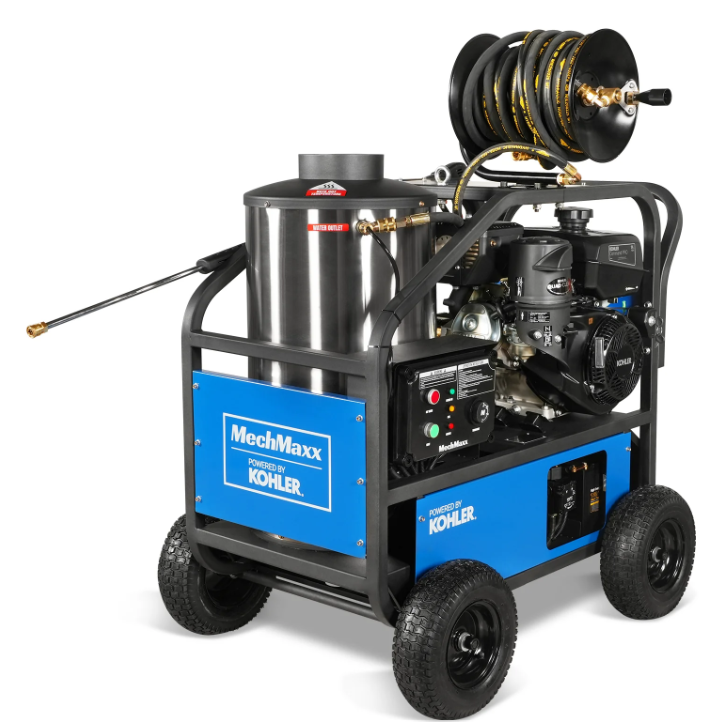
Most pressure washers spray cold water. Cold water can clean a lot of things. A driveway. A deck. A vehicle. But there are jobs where cold water just doesn’t cut it. Oil stains. Grease buildup. Mold and mildew. Heavy industrial grime. For those jobs, you need heat. That’s where a pressure washers hot comes in.
A hot pressure washer combines pressure and temperature. The water is heated to sometimes 300 degrees or more. That heat breaks down grease and oil in a way that cold water never can. You use less chemical. You use less water. You get the job done faster. And you get better results.
If you clean for a living, or you need to clean tough jobs for your business, a hot pressure washer might be one of the best tools you can own.
The Difference Between Hot and Cold Pressure Washers
Let’s start with the basics. A cold pressure washer pumps water at high pressure through a nozzle. The pressure does the cleaning work. It blasts dirt, grime, and loose paint off surfaces.
A hot pressure washer does the same thing, but the water is heated first. The heat softens and dissolves grease and oil. It kills mold and bacteria more effectively. It breaks down tough buildup. The combination of heat and pressure is much more effective than pressure alone.
Think about washing greasy dishes. Cold water and a sponge will eventually clean them, but it takes effort and soap. Hot water makes it so much easier. The grease dissolves instead of just sliding around. The same principle applies to pressure washing. Heat makes the cleaning job easier and more effective.
Jobs Where Hot Water Makes a Real Difference
Some cleaning jobs are practically impossible with cold water. Hot water makes them manageable.
Grease and Oil Removal. This is where hot pressure washers shine. Gas station driveways. Parking lots where trucks sit. Commercial kitchen exteriors. Anywhere grease has soaked into concrete. Cold water sprays it around. Hot water dissolves it. You wash it away with much less effort and much better results.
Industrial Equipment Cleaning. Factories and plants use hot pressure washers to clean machinery and equipment. Oil residue builds up on motors and equipment. Dust and grime stick to it. Cold water won’t touch it. Hot water cuts through it.
Concrete Deep Cleaning. A concrete surface looks clean after a cold water wash, but dirt and grime are still stuck in the pores. Hot water penetrates deeper and gets the concrete cleaner. If you’re trying to really clean a surface, not just rinse it, hot water is the answer.
Mold and Mildew Removal. Hot water kills mold and bacteria better than cold water. It’s not just blasting it away. The heat actually kills it. This is important if you’re cleaning decks, fences, or areas where mold is a health concern.
Heavy Equipment Cleaning. Construction equipment, agricultural equipment, and commercial trucks accumulate serious buildup. Cold water struggles with it. Hot water handles it.
Food Service Areas. Health codes require thorough cleaning of food service equipment and areas. Hot water helps meet those standards more effectively. The heat kills more bacteria and sanitizes better than cold water alone.
How a Hot Pressure Washer Works
The basic setup is similar to a cold pressure washer. There’s a pump. There’s an engine or motor to drive it. There’s a tank or connection to a water source. But there’s an extra component: a heating system.
Some hot pressure washers use an electric heater. Water runs through heating coils and gets hot before it goes through the pump and nozzle. Other systems use a burner that heats a coil. Gas-powered hot pressure washers often have this setup. The engine heats the water while it powers the pump.
The temperature you can reach depends on the system. Residential models might heat water to 150 or 200 degrees. Commercial systems can reach 300 degrees or higher. The hotter the water, the better it handles stubborn grease and heavy grime.
Choosing the Right Size and Power
Hot pressure washers come in different sizes. Small residential units might produce 1000 to 1500 PSI (pounds per square inch). Medium commercial units produce 2000 to 3000 PSI. Large commercial units produce 3000 to 4000 PSI or more.
The PSI is how much pressure the water comes out at. Higher PSI cleans faster and handles tougher jobs. But higher PSI also costs more and uses more water.
Think about what you need to clean. A home driveway needs maybe 1500 to 2000 PSI and moderate heat. A grease-covered garage floor needs 2500 to 3000 PSI and hot water. Industrial equipment cleanup needs 3000 PSI or more and the hottest water you can get.
Don’t over-buy. A 4000 PSI commercial unit costs a lot more than a 2500 PSI unit. If you don’t need that power, you’re wasting money. Buy the size that fits your actual work.
Fuel Type: Gas or Electric
Hot pressure washers run on either gasoline or electricity. Each has pros and cons.
Gas-powered machines are more portable. You don’t need an electrical outlet. They’re often more powerful. They handle heavy commercial work well. The downside is they’re louder, they produce fumes, and they need more maintenance. You have to keep them fueled. You have to change the oil. You have to store fuel safely.
Electric-powered machines are quieter and they don’t produce fumes. They require less maintenance. You just plug them in. The downside is they need an electrical outlet or a long extension cord. They’re sometimes less powerful than similar-sized gas machines. For residential and light commercial work, they’re often perfect. For heavy industrial work, gas might be better.
Durability and Maintenance
A hot pressure washer works hard. It’s under pressure. It’s dealing with heat. It’s under stress from the moment you turn it on. Buy a quality machine from a company that stands behind their products.
Look at the pump. A good pump lasts years. A cheap pump fails quickly. The same goes for the heating system. A quality heating coil will last. A cheap one might corrode or fail.
Maintenance matters. You need to use the right fuel and oil. You need to flush the system if you’re not using it for a while. You need to keep the filter clean. A well-maintained hot pressure washer keeps working. A neglected one fails when you need it most.
Safety Considerations
A hot pressure washer is more dangerous than a cold one. The water is hot. The pressure is strong. You can seriously hurt yourself or someone else if you’re not careful.
Always wear protective gear. Gloves, goggles, closed-toe shoes, long pants. Never point the nozzle at yourself or another person. Never spray near electrical outlets or power lines. Be aware of your surroundings.
If you’re new to using a hot pressure washer, take time to learn. Practice on a less sensitive surface before you tackle something important. Read the manual. Understand the controls. Learn the right way to hold and aim the nozzle.
The Economics of Hot Pressure Washing
If you’re considering buying a hot pressure washer for your business, think about the money side.
A good hot pressure washer costs somewhere between two thousand and six thousand dollars depending on the size and power. That’s real money. But think about what you can charge. A simple cold water wash might be thirty or fifty dollars. A hot pressure wash of a grease-covered driveway? You can charge two hundred or three hundred dollars because it’s so much harder without hot water. And you’ll do the job faster with hot water, so you can take on more jobs.
If you pick up even a few jobs per week that you couldn’t do before because you didn’t have hot water, the machine pays for itself. After that, it’s extra profit.
Getting Started with a Hot Pressure Washer
If you think a hot pressure washer is right for you, do some homework first. Think about the jobs you need to do most often. Think about your space and whether you need a portable machine or a permanent installation. Think about whether gas or electric makes more sense for your situation. Think about your budget.
You want to buy from a supplier who has quality equipment and who can support you. You might have questions after you buy. You might need parts. You want to work with someone who’s helpful.
For hot pressure washers and pressure washing equipment, check out https://mechmaxx.com/collections/pressure-washers. You’ll find different options for different needs. They have equipment for residential work, commercial work, and heavy industrial applications.
A hot pressure washer is one of those tools that opens up new business opportunities. Once you have one, you’ll start seeing jobs everywhere that you can do better and faster with hot water. That’s when you know it was the right investment.





