
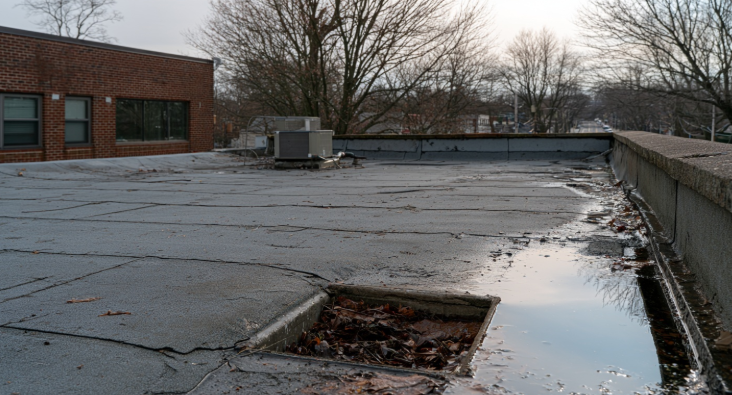
The boiler has a service contract. The alarm system gets tested on a schedule; the parking lot has a snow removal agreement signed every October, and the elevator inspection certificate hangs in the lobby where the inspector can find it. The roof has nothing, and it stays that way until water shows up over a tenant’s display window on a Tuesday morning in March.
Flat roofs fail on a schedule that follows the seasons closely, and almost none of the damage announces itself while it is happening. A commercial roofing service plan organized around the calendar reaches the problems that reactive repairs never see, because it puts someone on the roof during the two windows when the evidence is visible and the fixes are still small. Two inspections a year, plus a look after any serious wind event, covers most of what goes wrong on a building in Bergen County.
Spring: Finding What Winter Left Behind
The spring visit matters more than the other three combined. Everything that January and February did to the roof is sitting there in plain view, and most of it responds to a few hundred dollars of sealant and labor if someone finds it in April rather than in July.
Clear the drains and check where water sits
Winter fills roof drains and scuppers with a mix of leaves, grit and whatever blew off neighboring buildings. Clearing them is the single highest-value task on the list, and it takes one visit.
Then watch what happens after the next rain. Water still standing 48 hours later points to a drainage failure rather than a low spot, and ponded water works on the membrane continuously while adding weight the structure was never meant to carry as a permanent load. A few inches across a wide area runs into thousands of pounds. Note where the puddles form and photograph them, because the same locations will tell you next spring whether the situation is stable or moving.
Inspect seams, flashings and penetrations
North Jersey runs through roughly 60 to 70 freeze-thaw cycles in a typical winter, and each one expands and contracts every joint on the roof. Seams that held fine in November open slightly by March, and sealant around vents, drains, and HVAC curbs cracks where it has aged.
Look closely at the flashing along parapet walls, at the base of every rooftop unit, and anywhere a pipe or conduit passes through the membrane. These transitions account for the large majority of commercial roof leaks, since the field of the membrane rarely fails on its own. Blisters that appeared over the winter deserve attention too, because trapped moisture underneath them expands when it freezes and pushes the layers apart further each season. A contractor with a moisture meter can tell you whether water has reached the insulation while the area is still small enough to cut out and replace.
Summer: Heat, Equipment and the Damage Nobody Reports
Summer damage rarely comes from weather. It comes from people walking around on the roof and from a membrane surface that gets far hotter than anyone standing on the ground would guess.
Rooftop equipment traffic
HVAC service calls put technicians on the roof several times a season, and cable, telecom, and kitchen exhaust work adds more visits. Tools get dropped, ladder feet dig in, condenser coils get changed out with equipment dragged across the membrane, and screws end up underfoot where somebody steps on them later.
Nobody reports this. The technician finishes the repair, packs up and leaves, and the puncture surfaces as a stain on a ceiling tile four months later. Keep a log of every trade that goes up there, and check the areas around rooftop units in late summer specifically. Buildings with regular equipment service benefit from permanent walkway pads between the roof hatch and the units, which cost less than repairing the traffic path repeatedly.
What surface heat does to the membrane
A dark membrane in full July sun can reach 160 degrees or more while the air temperature sits in the nineties. The material expands, cools overnight, contracts, and repeats that cycle daily for three months, working at the same seams that winter already loosened.
Heat also ages sealant faster than anything else on the roof. Caulking that looked acceptable in April can be brittle and cracked by September at the base of a curb facing south. Wet insulation makes both problems worse, since it stops insulating and lets cooling costs climb without any obvious cause, which is often the first sign an owner notices from inside the building.
Fall: The Preparation Window
Autumn closes the last practical opportunity for planned work. Membrane adhesives and welding equipment need temperatures above certain thresholds, and once the weather turns, repairs shift from scheduled to emergency, with the pricing that implies.
The second full inspection of the year
Go over the same seams, flashings, and penetrations examined in spring, plus anything that showed up during summer equipment traffic. Small defects addressed in October cost a fraction of what the same defects cost in February when a crew has to work around ice and a tarp.
Material lead times deserve attention here as well. Membrane in a specific thickness or color, insulation board, specialty flashing components: any of these can run several weeks out. A repair identified in mid-October with a four-week material wait becomes a December project, which in this climate often becomes a March project.
Drainage before the leaves fall, and again after
Clearing drains in September accomplishes little, since the trees have not finished yet. Schedule the real cleaning after leaf drop completes, generally mid to late November in Bergen County, and check it once more before the first hard freeze.
Blocked drains cause more winter roof damage than snow does. Water that cannot leave the roof freezes in place, expands, and forces its way into seams and under flashing, then thaws and refreezes with the next warm spell. Exterior gutters and downspouts on the building need the same attention, because ice backing up at a downspout can push water back onto the roof edge.
Winter: Watching Load and Ice
Winter maintenance consists mostly of observation. Repair work is limited by temperature, so the goal shifts to catching conditions that threaten the structure and documenting anything that needs attention in spring.
Snow load and when it needs removing
Dry powder weighs roughly 7 pounds per cubic foot. Wet, settled snow runs three times that, and a layer of ice adds more still. Most commercial roofs handle a normal season without trouble, but a heavy wet storm following an existing accumulation deserves a calculation rather than an assumption.
Watch for signs inside the building: doors that suddenly stick, new cracks in interior drywall, sagging in the ceiling grid, unfamiliar creaking. Any of those calls for a structural opinion the same day. Removing snow yourself with shovels puts blades and boot traffic on a cold, brittle membrane, and the punctures that result do not surface until spring.
Ice at the drains and along the edges
Frozen drains turn a roof into a shallow basin during every thaw. Check them after each warm spell, since a drain that runs freely in December can be capped with ice by mid-January. Ice buildup along parapet edges and at roof-to-wall transitions works its way under flashing as it expands, and that damage shows up as a spring leak with no obvious cause.
What You Can Check Yourself and What Needs a Contractor
Plenty of monitoring happens from inside the building at no cost. Ceiling stains and their locations, damp spots at the top of interior walls, musty smells in storage areas, heating and cooling bills that climb without a rate change: all of these signal roof problems and all of them are visible without a ladder. From outside, look at exterior downspouts during rain, watch for ice at the roof line in winter, and take a look at the roof surface from an upper floor of an adjacent building if you have access.
Anything requiring actual roof access belongs to a contractor. Seam and flashing inspection needs a trained eye, moisture testing needs equipment, and walking a membrane you are unfamiliar with damages it, particularly in cold weather when the material is stiff. Insurance and fall protection requirements make this a professional task regardless.
A two-inspection year with written reports gives an owner something a stack of repair invoices never provides: a record of how the roof is changing. Contractors working across North Jersey, among them Paramount Home Solutions, document seam condition and drainage performance at each visit, and that history is what turns an eventual replacement into a budgeted expense instead of an emergency.





