photo courtesy of Bergen County Historical Society
the staff of the Ridgewood blog
River Edge NJ, this year primitive technologist Steve Adams will be flint knapping – making projectile points – arrowheads – by the Campbell-Christie House. Chwame Gischuch, Under the Shad Moon.
River Edge Nj, Bergen County Historical Society on April 15th presented Friday’s Fare at Historic New Bridge Landing . Hot Cross Buns A traditional spiced/sweet bun eaten on Good Friday, marking the end of Lent, was incised with a cross representing the crucifixion, & with spices used for embalming, as well as believed to carry magical or medicinal properties. The 6th century AD Greeks were making spiced cakes marked with a cross, & Pagan Saxons honored the goddess of spring Eostre [Easter] with loaves marked with crosses, representing the four stages of the moon or four seasons
Ho-Ho-Kus NJ, Dr. Sherri Burr traces her ancestry to John Pierre Burr, an anti-slavery activist on the Underground Railroad, who was the son of color of Aaron Burr. The Aaron Burr Association had been researching for over a decade the paternity of John Pierre Burr and his sister Louisa Charlotte when Sherri Burr presented evidence related to genetic ties in 2018. The Aaron Burr Association voted unanimously to acknowledge that Aaron Burr had fathered John Pierre Burr and Louisa Charlotte Burr, and that all their descendants were legitimate members of the Burr family dating back to Jehue Burr, Sr., who arrived in this country in 1630. Both Aaron Burr and Mary Eugenie Beauharnais Emmons, the mother of the two children, lived at The Hermitage during the Revolutionary War.
River Edge NJ, Friday’s Fare from Historic New Bridge Landing is Peach Ice Cream . Thomas Jefferson, enamored with French cooking, brought one back along with the recipe from his stint as US Ambassador to France. A sabotiere is a copper cylinder can with a handle placed in a bucket of salted ice. First, a [French] custard of eggs, cream and sugar is cooked the day before. A flavoring is then added in. Some flavors back then were oyster, parmesan cheese and orange blossom. We added in chopped peaches, preserved from last year. The cooked custard is left to cool overnight in a spring house [in the fridge]. The sabotiere is placed in a bucket of ice with salt, and then is 1/3 filled with custard. It sits to get the metal cold, then is turned 10 times, the inside is scraped down to move the more frozen custard to the center and stirred, then turned 10x; repeating this procedure until the contents have thickened. It takes awhile, and does not get rock hard like today’s confection. It’s more like a very stiff cold custard. FYI – French ice cream has eggs, whereas American generally does not. A special treat from last month’s General Washington’s birthday celebration was making ice cream using a sabotiere. Our ad hoc version gave our young visitors a hand at turning it, as they counted the 10 turns. There were so many, they were it turning all day and had fun. https://www.bergencountyhistory.org/
River Edge Nj, Friday’s Fare from Historic New Bridge Landing Dublin Coddle Though well known for the Dutch who settled here, a large group of Irish names can be found in the old records, and they certainly brought their culture to Bergen County. Coddle, more than likely derived from the French word caudle, means is to cook slowly, gently, and just below the boiling point in a liquid. Seems it was found mentioned in 1651 (no more info on that), and later considered developed during the First Irish Famine 1740-41. Many rural Irish moved into the cities looking for work, this simple one-pot meal could be set up to cook all day, and come home for a good hot meal at day’s end. Meats and vegetables are arranged in layers covered with a liquid, and simply allowed to slow cook all day. Liquid used here is from the meat [bacon and sausage] with a bit of flour, broth, and 12 oz of Guinness. Vegetables; potatoes, onions, and ‘cos had’em on hand – cabbage, carrots and a parsnip with some seasonings then simmered in the pot 3 to 5 hours. Served with some soda bread and pint, a great way to celebrate. Happy St. Patrick’s Day from BergenCountyHistory.org .
Ridgewood NJ, James Polk (1795-1849) served as the 11th U.S. president from 1845 to 1849. During his tenure, America’s territory grew by more than one-third and extended across the continent for the first time. Before his presidency, Polk served in the Tennessee legislature and the U.S. Congress; in 1839 he became governor of Tennessee.
River Edge NJ, Historic New Bridge Landing is open for Washington’s Birthday, visit 3 Jersey-Dutch Sandstone Houses and come celebrate Washington’s Birthday with the Bergen County Historical Society on Sunday February 27th 1 pm- 4 pm at Historic New Bridge Landing. 1201 Main Street, River Edge NJ! Come home to history and walk in the footsteps where history was made.
River Edge NJ ,“These are the times that try men’s souls.” This simple quotation from Founding Father Thomas Paine’s The American Crisis not only describes the beginnings of the American Revolution, but also the life of Paine himself. Throughout most of his life, his writings inspired passion, but also brought him great criticism. He communicated the ideas of the Revolution to common farmers as easily as to intellectuals, creating prose that stirred the hearts of the fledgling United States.
From the Bergen County Historical Society at Historic New Bridge Landing a posting for remembering pamphleteer Thomas Paine’s birthday, (Jan 29, 1737-June 8, 1809), he thought it was important to describe in detail events in Bergen County Nov 20, 1776 to rally the troops and citizens in “The American Crisis”:
River Edge NJ, on the 21st of January for the Friday’s Fare from Historic New Bridge Landing the Bergen County Historical Society showcased Rumbledethumps. Rumbledethumps is a whimsical name for a traditional dish from the Scottish Boarders. “Rumble” is a old culinary term for pounding or mashing vegetables together, then they are “thumped” into a pan for cooking. A Scottish mainstay using what could be grown locally, easy and cheap to make, but also healthy. Was it Sir Frances Drake, or Sir Walter Raleigh, or Sir Thomas Harriott; there are conflicting reports on just who is responsible, in the late 16th century for introducing the potato to the British Isles. Another source says it came by way of Spanish traders. But before the spud, the Scots’ main source of carbohydrates was bread made from oats or barley. Now, cabbage was considered a medical cure-all health food dating back to ancient Rome, and possibly they brought it as they moved north into the British Isles. Rumbledethumps is made of cooked potatoes [tatties], cabbage [cal], and chives [syboes], then baked with butter, cream, and a good Scottish cheddar. Scotland’s National Bard Robbie Burns’ birthday, 01.25.1759, is a major celebration, with reading of his poetry, feasting, dancing, and drinking in this northern nation [but not independent of the UK]. A contemporary of Alexander Hamilton, Burns is known for penning “Auld Lang Syne”, “Tam o” Shanter”, and “The Selkirk Grace”. A fair number of Scots settled here in Bergen County, as well as Dutch, French, Irish, English, etc. So raise a pint, and enjoy a Burn’s Supper of rumbledethumps with a a couple slices of gammon on Burn’s Night, January 25. Oidhche Bhlas Burns from BergenCountyHistory.org
Historic New Bridge Landing in River Edge NJ, on Christmas Eve the Bergen County Historical Society presented Friday’s Fare at Historic New Bridge Landing Advocaat van de Duivel . When looking for an old eggnog recipe for sipping into a seasonal mood, came across this intriguing Dutch custard-like eggnog; that translates as “Advocate of the Devil”. With a claim of being much smoother than my grandfather’s whisky eggnog, once you taste this nectar resistance is futile. Advocaat, of Dutch origin, was introduced during the 17th century, and boasted as good for the throat. Advocaat, Dutch for lawyer [or is the lawyer the devil?], alleges this drink is soothing for someone who must speak in public.
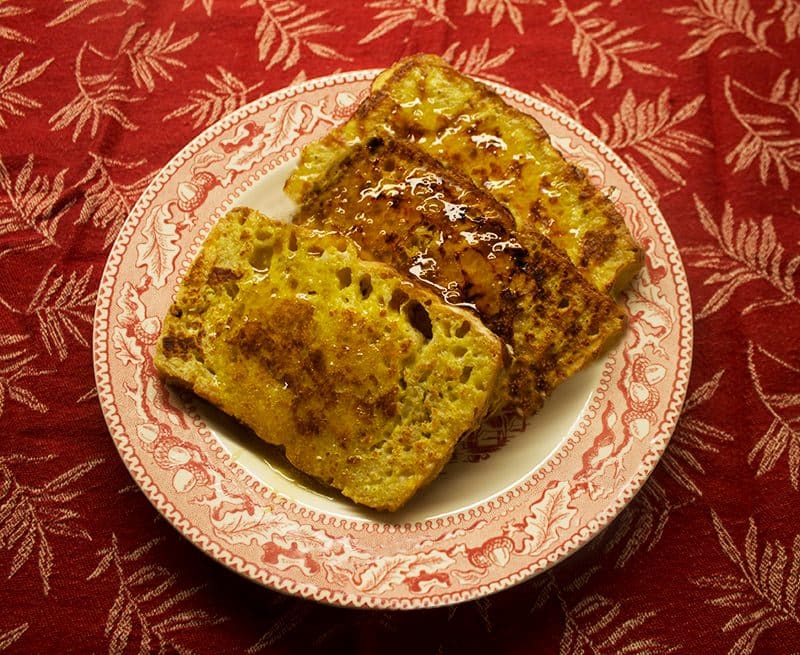
New bridge Landing, River Edge NJ, French toast is a dish made of sliced bread soaked in beaten eggs and typically milk, then pan fried. The Bergen County Historical Society gives us the run down on the history and back ground of “French Toast”.
Washington Crossing Park NJ, the annual Christmas Day crossing will take place from 12:00 noon to 3:00 pm on Saturday, December 25, 2021 (actual crossing at approximately 1:00 pm). The Christmas Day crossing is free, and it is recommended that visitors arrive before 1:00 pm to ensure a good place along the viewing line.
Trenton, NJ – Visitors and New Jerseyans alike can now use their smartphones to enjoy narrated travels in George Washington’s footsteps as the Crossroads of the American Revolution National Heritage Area introduces its Ten Crucial Days audio tour. Travelers will follow the route of key events that turned the tide of the Revolutionary War in the very spots where they happened, starting with the launch point of Washington’s Christmas night Delaware River crossing in 1776 through the Continental Army victories at Trenton and Princeton. You will hear these events unfold through the experiences of the people who were there, in their own words.
New Bridge Landing , the Bergen County Historical Society presents Holiday Scenes and Songs at Historic New Bridge Landing a special outdoor holiday event on Sunday December 5th, 4 pm-5:30 pm. 1201 Main Street, River Edge, NJ.
photos courtesy of the Bergen County Historical Society
the staff of the Ridgewood blog
New Bridge Landing NJ, marking the 245th Anniversary of this pivotal event during the Rev War, the Bergen County Historical Society, along with the Brigade of the American Revolution, co-sponsored a day of living history on Sunday, November 21st, 10 am-4 pm at Historic New Bridge Landing. The 3rd New Jersey Regiment, “Jersey Grays” marched, retracing the 7-mile retreat of Washington’s Army, arriving from Fort Lee around 10:30AM, then engaged in a skirmish with three other units for the bridge in a tactical weapons demonstration portraying the action that occurred when British troops forced the Continental Army away from the area and captured this vital crossing point over the Hackensack River. Up to the challenge of feeding an army, the Out Kitchen cooked for over 65 [reenactors from, I believe, four units present, along with the ladies] a hearty stew of 20 pounds of beef, 12 pounds of potatoes, 15 pounds of carrots, 8 onions, and a celery head in a tasty broth served with good crusty bread. Pictured are unit ladies who volunteered to serve.