Posted on 1 Comment

More Americans than residents of Georgia draw income from gig economy

cell phones

BY TATIANA DARIE
BLOOMBERG NEWS |
WIRE SERVICE

It’s a job market revolution: an estimated 10.3 million Americans earned income through Web-based platforms like Uber and Airbnb between 2012 and 2015. That’s more people than reside in the entire state of Georgia and amounts to 6.5 percent of the total U.S. workforce.

So-called gig jobs, in which a person performs a task for another individual often through Web-based platforms, are often easier to land, and help generate additional income when regular earnings aren’t sufficient, according to a new study by the JPMorgan Chase Institute.

Participants in this economy are typically younger, with the 25 to 34 age group accounting for the largest part of the gig workforce. They are more likely to be male, live in the West and have an average median income of about $2,800 per month, according to the study.

The number of people earning income in the online economy over the three-year period of JPMorgan’s study increased 47-fold. Labor platforms, including ride-hailing service Uber, that connect customers with freelancers have grown more rapidly than capital platforms like Airbnb, which rent homes and assets or sell goods. Demand is also driving the growth as online service use becomes more common.

Now, “most people would know they can get their groceries picked up, they can get a ride from three or four different companies — things that only a year ago, only earlier adopters learned,” Diana Farrell, the institute’s founding president and chief executive officer, said in an interview. “It’s becoming more mainstream.”

https://www.northjersey.com/news/business/10-3-million-americans-worked-gig-jobs-1.1515503

Posted on Leave a comment

Welcome to the “Keynesian black hole”, Negative central bank interest rates

Black Hole

Mapped: Negative central bank interest rates now herald new danger for the world

Negative rates are becoming the “new abnormal” in a shaky world economy. With fresh panic hitting markets, are we finally hitting the limits of what monetary policy can achieve? Click on the countries to find out

The world’s tentative experiment with negative interest rates got off to an unremarkable start.

Sweden’s Riksbank – the world’s oldest central bank – became the first major monetary authority to cross the rubicon and take its main policy rate into the red exactly a year ago to the month (see map above).

The Riksbank’s move followed the likes of Switzerland and Denmark, who had turned negative in a bid to stimulate flagging inflation and halt the punishing appreciation of their currencies.

https://www.telegraph.co.uk/finance/economics/12149894/Mapped-Why-negative-interest-rates-herald-new-danger-for-the-world.html

Posted on Leave a comment

People Over 50 Carrying More Debt Than in the Past

piggyBank

The average 65-year-old borrower has 47% more mortgage debt than those in 2003

By
JOSH ZUMBRUN
Updated Feb. 12, 2016 4:17 p.m. ET

Older Americans are burdened with unprecedented debt loads as more and more baby boomers enter what are meant to be their retirement years owing far more on their houses, cars and even college loans than previous generations.

The average 65-year-old borrower has 47% more mortgage debt and 29% more auto debt than 65-year-olds had in 2003, after adjusting for inflation, according to data from the Federal Reserve Bank of New York released Friday.

Just over a decade ago, student debt was unheard-of among 65-year-olds. Today it is a growing debt category, though it remains smaller for them than autos, credit cards and mortgages. On top of that, there are far more people in this age group than a decade ago.

The result: The composition of U.S. household debt is vastly different than it was before the financial crisis, when many younger households took on large debts they could no longer afford when the bottom fell out of the economy.

The shift represents a “reallocation of debt from young [people], with historically weak repayment, to retirement-aged consumers, with historically strong repayment,” according to New York Fed economist Meta Brown in a presentation of the findings.

https://www.wsj.com/articles/new-york-fed-finds-large-increase-in-debts-held-by-those-over-age-50-1455289257

Posted on 1 Comment

The world can’t afford another financial crash – it could destroy capitalism as we know it

wall-street-bull

A new economic crisis would trigger a political backlash in Britain, Europe and the United States which could drag us all down into poverty

By Allister Heath

10:24PM GMT 10 Feb 2016

They bounce back after terrorist attacks, pick themselves up after earthquakes and cope with pandemics such as Zika. They can even handle years of economic uncertainty, stagnant wages and sky-high unemployment. But no developed nation today could possibly tolerate another wholesale banking crisis and proper, blood and guts recession.

We are too fragile, fiscally as well as psychologically. Our economies, cultures and polities are still paying a heavy price for the Great Recession; another collapse, especially were it to be accompanied by a fresh banking bailout by the taxpayer, would trigger a cataclysmic, uncontrollable backlash.

The public, whose faith in elites and the private sector was rattled after 2007-09, would simply not wear it. Its anger would be so explosive, so-all encompassing that it would threaten the very survival of free trade, of globalisation and of the market-based economy. There would be calls for wage and price controls, punitive, ultra-progressive taxes, a war on the City and arbitrary jail sentences.

https://www.telegraph.co.uk/finance/newsbysector/banksandfinance/12151115/The-world-cant-afford-another-financial-crash-it-could-destroy-capitalism-as-we-know-it.html

Posted on Leave a comment

Scary New Ways the Internet Giants Profile You

google-dr-evil-and-mini-me_theridgewoodblog

Facebook, Google, and the other Internet titans have ever more sophisticated and intrusive methods of mining your data, and that’s just the tip of the iceberg.

The success of the consumer Internet can be attributed to a simple grand bargain. We’ve been encouraged to search the web, share our lives with friends, and take advantage of all sorts of other free services. In exchange, the Internet titans that provide these services, as well as hundreds of other lesser-known firms, have meticulously tracked our every move in order to bombard us with targeted advertising. Now, this grand bargain is being tested by new attitudes and technologies.

Consumers who were not long ago blithely dismissive of privacy issues are increasingly feeling that they’ve lost control over their personal information. Meanwhile, Internet companies, adtech firms, and data brokers continue to roll out new technologies to build ever more granular profiles of hundreds of millions, if not billions, of consumers. And with next generation of artificial intelligence poised to exploit our data in ways we can’t even imagine, the simple terms of the old agreement seem woefully inadequate.

In the early days of the Internet, we were led to believe that all this data would deliver us to a state of information nirvana. We were going to get new tools and better communications, access to all the information we could possibly need, and ads we actually wanted to receive. Who could possibly argue with that?

https://www.thedailybeast.com/articles/2016/02/08/scary-new-ways-the-internet-profiles-you.html

Posted on Leave a comment

Debt, defaults, and devaluations: why this market crash is like nothing we’ve seen before

Texas Oilfield Confessions

A pernicious cycle of collapsing commodities, corporate defaults, and currency wars loom over the global economy. Can anything stop it from unravelling?

By Mehreen Khan, graphic by Tom Shiel

10:00AM GMT 06 Feb 2016

A global recession is on the way. This truism of economics holds at any point in which the world is not in the grips of a contraction.

The real question is always when and how deep the upcoming downturn will be.

“The crash will come, but it would be nice if it came two years from now”, Thomas Thygesen, head of economics at SEB told over 200 commodity investors and analysts in London last month.

His audience was rapt with unusual attention. They could be forgiven for thinking the slump had not already arrived.

Commodity prices have crashed by two thirds since their peaks in 2014. Oil has borne the brunt of the sell-off, suffering the worst price collapse in modern history. Brent crude has fallen from $115 a barrel in the summer of 2014, to just $27.70 in mid-January.

https://www.telegraph.co.uk/finance/economics/12138466/when-is-the-next-financial-crash-coming-oil-prices-markets-recession.html

Posted on Leave a comment

Citi: World economy seems trapped in ‘death spiral’

broken-heart-sad-wallpapers-pics-for-boys

Katy Barnato | @KatyBarnato

The global economy seems trapped in a “death spiral” that could lead to further weakness in oil prices, recession and a serious equity bear market, Citi strategists have warned.

Some analysts — including those at Citi — have turned bearish on the world economy this year, following an equity rout in January and weaker economic data out of China and the U.S.

“The world appears to be trapped in a circular reference death spiral,” Citi strategists led by Jonathan Stubbs said in a report on Thursday.

“Stronger U.S. dollar, weaker oil/commodity prices, weaker world trade/petrodollar liquidity, weaker EM (and global growth)… and repeat. Ad infinitum, this would lead to Oilmageddon, a ‘significant and synchronized’ global recession and a proper modern-day equity bear market.”

https://www.cnbc.com/2016/02/05/citi-world-economy-trapped-in-death-spiral.html

Posted on 1 Comment

Keynesian black hole: The Fed Wants to Test How Banks Would Handle Negative Rates

Black Hole

Rich Miller

Three-month Treasury bill rate falls to negative 0.5 percent
Very adverse scenario posits harsh worldwide recession

Share on FacebookShare on Twitter

As interest rates turn negative around the world, the Federal Reserve is asking banks to consider the possibility of the same happening in the U.S.

In its annual stress test for 2016, the Fed said it will assess the resilience of big banks to a number of possible situations, including one where the rate on the three-month U.S. Treasury bill stays below zero for a prolonged period.

“The severely adverse scenario is characterized by a severe global recession, accompanied by a period of heightened corporate financial stress and negative yields for short-term U.S. Treasury securities,” the central bank said in announcing the stress tests last week.

In that particular simulation, the unemployment rate doubles to 10 percent, the same level it reached in the aftermath of the last financial crisis.

Three-month bill rates have slipped slightly below zero several times in recent years, including in September after the Fed delayed rate liftoff amid global financial market turmoil, touching a low of minus 0.05 percent on Oct. 2.

But in the stress test, banks would have to handle three-month bill rates entering negative territory in the second quarter of 2016, and then falling to negative 0.5 percent and holding there through the first quarter of 2019.


https://www.bloomberg.com/news/articles/2016-02-02/rates-less-than-zero-is-bank-stress-fed-wants-to-test-in-2016

Posted on Leave a comment

U.S. CEOs unleash recession fears in earnings calls

window jumper

By David Randall

NEW YORK (Reuters) – U.S. companies are growing more concerned about the prospects of a recession in the year ahead for the first time since the end of the financial crisis.

So far this year, the number of companies whose executives have mentioned recession concerns to analysts and investors is up 33 percent from the same period a year ago; the first such increase since 2009. Some 92 companies have discussed a U.S. recession in their earnings calls, according to Thomson Reuters data.

That gloomy talk highlights worries that growth in the world’s largest economy may be coming to a halt. Gross domestic product grew 0.7 percent in the final quarter of 2015, down from 2 percent in the third quarter, while double the number of companies are cutting or flat-lining their capital spending in the year ahead, according to Reuters data. The benchmark S&P 500, a leading indicator of economic strength, had its worst January since 2009 as oil tumbled below $30 a barrel and remained near 12-year lows.

While nearly all companies that have discussed recession say that U.S. consumers continue to look healthy, many are growing concerned that the steep declines in energy prices and job cuts in the industry are going to bleed into the larger economy. Overall, economists expect the U.S. economy to grow 2.4 percent in 2016, according to a Dec. 30 Reuters poll.

Richard Fairbank, chief executive of Capital One Financial Co., for example, said he sees a recession as increasingly likely if financial market turmoil spreads into the real economy.

https://news.yahoo.com/u-ceos-unleash-recession-fears-earnings-calls-190343404–sector.html

Posted on Leave a comment

The Fed Is Freaked Out about the Financial Markets

U

by LARRY KUDLOW
January 29, 2016 7:30 PM

Because it is completely misreading the situation. Early in the new year, on Sunday, January 3, Federal Reserve vice chair Stanley Fischer delivered a hawkish speech to the American Economic Association.

Completely misreading the economy, which is woefully weak while inflation is virtually nil, Fischer strongly hinted that the Fed would be raising its target rate by a quarter of a percent every quarter for the next three years.

The next day the S&P 500 dropped 1.5 percent. In the week that followed, the broad index fell 6 percent. The week after that it fell over 2 percent. During that two-week period, the Dow Jones dropped 1,437 points.

The dollar went up. Oil plunged 21 percent. Raw-material commodities dropped. And credit risk spreads in the high-yield junk market rose substantially. Actually, it was a global event, as stock markets around the world plunged. Utter chaos.

Read more at: https://www.nationalreview.com/article/430532/federal-reserve-and-stock-market

Posted on 1 Comment

The NJBIZ Power 100: The state’s most influential people in business

The Celebrity Apprentice


What’s the definition of power? It’s the question we get most often at NJBIZ, when it comes time for the Power 100. Unfortunately, there’s not an easy explanation. The one we often give is this: “If you called the governor, how quickly would he call you back? If at all.” NJBIZ Staff, Read more

Posted on Leave a comment

New York-Area Ports Shut Down as Longshoremen Walk Off the Job

port_authority

By MARC SANTORAJAN. 29, 2016

Thousands of longshoremen in New York and New Jersey walked off the job on Friday, grinding activity at some of the busiest ports on the East Coast to a halt and threatening to disrupt the delivery of goods across the region.

The walkout surprised many involved in the operation of the ports, according to officials, and the reasons behind the move were not immediately clear.

News of the work stoppage came in an alert issued by the Port Authority of New York and New Jersey, which acts as a landlord for the ports but does not control daily operations.

“Due to the current work stoppage in the port, no new trucks will be allowed to queue on port roadways,” the alert said. “Do not send trucks to the Port at this time.”

Officials with the New York Shipping Association, which runs the ports, could not immediately be reached for comment.

A spokeswoman for the association who spoke to Bloomberg News said the group was “trying to understand the reason for what appears to be a walkout and will take every measure available to ensure work resumes.”

The International Longshoremen’s Association, the union representing port workers, also could not be reached for comment, but a representative of the union told a local radio station that the dispute centered on hiring practices.

https://www.nytimes.com/2016/01/30/nyregion/new-york-area-ports-longshoremen.html?_r=0

Posted on Leave a comment

Talk of Fed ‘policy error’ grows

mother goose

Robin Wigglesworth

Gathering for the first time after their epoch-ending decision to raise interest rates in December, the backdrop couldn’t be more different for Federal Reserve policy officials.

The long-awaited rate increase went smoothly, but simmering concerns over China, the global economy as a whole, deflating commodities and financial market valuations have since risen to the fore. Even fund managers that were relaxed about slightly tighter monetary policy last month are now wondering whether that was complacent.

“It is reasonable for investors to wonder whether Fed’s December rate hike was a policy error,” admits Bob Michele, chief investment officer of JPMorgan Asset Management. “Historically the Fed has raised rates because either growth or inflation was uncomfortably high. This time is different — growth is slow; wage growth is limited; deflation is being imported.”

Perhaps most of all, many investors now fret that they are operating without a safety net they had grown attached to during the post-financial crisis era.

https://www.ft.com/intl/cms/s/0/fcb4202a-c04d-11e5-846f-79b0e3d20eaf.html#axzz3yOZYWeNT

Posted on 2 Comments

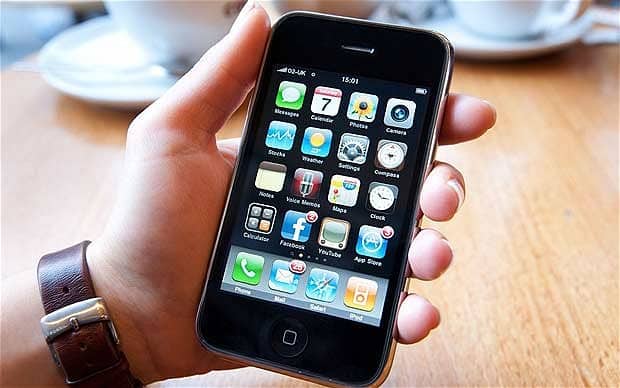
Fewer orders at Apple suppliers could signal first iPhone sales decline

iphone_2018021b

TAIPEI | BY J.R. WU

Some of Apple Inc’s main Asian suppliers expect revenues and orders to drop this quarter, indicating iPhone sales are almost certain to post their first annual decline since the flagship product was launched almost a decade ago.

The forecasts of lackluster sales by companies including Taiwan Semiconductor Manufacturing Co (TSMC), the world’s biggest contract chipmaker, and smartphone camera lens producer Largan Precision Co Ltd add to concerns about Apple’s outlook amid slowing global demand for smartphones.

Industry executives say the latest iPhone did not have enough new features from the previous model to tempt users, raising fears that Apple’s innovative streak – and the profits it has generated – may be running its course.

Apple, which reports December-quarter results on Tuesday, declined to comment on its sales outlook.

“Visibility is only a month at a time and demand is quite weak,” Largan Precision Chief Executive Adam Lin told an earnings briefing, referring to his company’s overall business.

Other suppliers said Apple now only gave them orders one month in advance, instead of the usual three months.

https://www.reuters.com/article/us-apple-suppliers-idUSKCN0V00V5

Posted on 4 Comments

Markets suffer their worst start to the year since Great Depression

market sell off

Marcus Leroux
Last updated at 12:01AM, January 16 2016

The start of this year has been the worst for financial markets since the onset of the Great Depression, with stock prices slumping around the world amid mounting concern over the situation in China.

A wave of selling has swept the world’s leading financial centres over the past two weeks, with the value of Britain’s leading companies falling by more than £110 billion since the start of the year.he year.

The FTSE 100 index of Britain’s biggest quoted companies fell 114 points, or 2 per cent, to 5,804 yesterday — the lowest close since November 2012. Indices in Europe and America have fared even worse: the Shanghai market was the worst performer, closing down 3.6 per cent, taking its total losses to 18 per cent for 2016. This was prompted by the price of a barrel of Brent crude dipping below the $30 mark, for the third time this week. In America the Dow Jones industrial average closed down 391 points, or 2.4 per cent, at 15,988.

The FTSE 100 index of Britain’s biggest quoted companies fell 114 points, or 2 per cent, to 5,804 yesterday — the lowest close since November 2012. In America the Dow Jones industrial average closed down 391 points, or 2.4 per cent, at 15,988.

The Shanghai market was the worst performer, closing down 3.6 per cent, taking its losses for the year so far to 18 per cent. This was prompted by the price of a barrel of Brent crude dipping below $30 for the third time this week.

David Buik, of Panmure Gordon, the investment bank, suggested that the “financial carnage” in stock markets in the first two weeks of the year was the worst since 1928.

https://www.thetimes.co.uk/tto/public/assetfinance/article4667135.ece