October 6,2016
the staff of the Rmidgewood blog
Ridgewood NJ, Patrolman Dibenedetto assisted Otto the Auto at Somerville school today as they spoke with the students about pedestrian safety.
October 6,2016
the staff of the Rmidgewood blog
Ridgewood NJ, Patrolman Dibenedetto assisted Otto the Auto at Somerville school today as they spoke with the students about pedestrian safety.
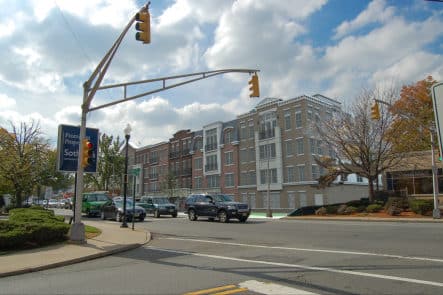
Here is my biggest concern with the proposed all day kindergarten. Although conceptually there are pluses, I question whether we can afford it. And I think one of the biggest reasons we won’t be able to afford it has to do with the hundreds of apartments that are being built downtown. These apartments will be marketed to those with two income earners and young families. Our schools are going to be one of the largest drivers of families to those units. I question whether we will be able to afford the influx of new elementary age students as it is, and that problem will be compounded if we have to double the number of kindergarten seats both for existing children and new children. I worry that we are going to need to construct new classrooms at our elementary schools – – and I am not sure that cost has been factored into the equation. I simply haven’t seen enough to convince me that the $110 tax increase is going to cover the costs of new residents from the multifamily housing units. Particularly if we have to build new classrooms to accommodate these new students, then the $110 number may be multiplied very quickly.
We keep proposing to add more and more to our town without thinking through how each addition takes away from the whole. Those pushing for all day kindergarten need to also get involved in other aspects of our town as well so they can view and work towards making sure things remain in balance. It may be a great idea, but does it fit with the needs and budget of the town as a whole? If we are going to keep adding hundreds of new residents, will we be able to afford ideas such as all day kindergarten and are we going to need to cut back on other Village and school services in order to balance our budget?

the staff of the Ridgewood blog
Ridgewood NJ, Ridgewood now joins the great debate ;Full-day vs Half-day Kindergarten. Lets face it in the Village we have many parents who seem very pro-full day because it saves money on day care . We also have another group that believes it better prepares children to acquire basic skills for learning . Still others like the teachers union see it as job producing and more yet want to give their kids a leg up on global competition.
The detractors feel its nothing more than additional baby sitting ,that the results do not really justify the extra time ; that kids need time to be kids, and parents should act like parents . Some feel that too much control is given to the schools and that one sided points of views will be pushed even further stunting creativity and intellectual curiosity .
But first lets take a look at the history ,Kindergarten dates all the way back to the 1800s when it began as a full-day program.Half-day Kindergarten actually began during WWII when schools across the country began to cut their kindergarten classes back to a half-day in order to free up additional labor.
Full-day kindergarten reappeared in the 1960s as an intervention to help disadvantaged children catch up to their peers through additional schooling. But, now it has gained popularity among middle class two income families. Over the past 30 years, where the percentage of children in full-day programs has grown from 10% to just over half of U.S. kindergartners.
The rationale for full-day kindergarten has been and continues to be that the more time children spend in school, the more they will learn. Detractors however have warned that an early emphasis on academic learning, at the expense of play time, could harm children emotionally and academically in the long run.
Lets face it we constantly hear how “Millennials ” are the most over educated and under performing generation. Spending there days watching reality TV ,playing video games and questioning why they have to work at all. They are buried under a pile of student loans with degrees in under water basket weaving .So it would seem at lest for Millennials” more time in school has not worked at all.
This all brings us back to the quality over quantity argument and clearly for many “Millennials ” its been as the saying goes ;garbage in ,garbage out.
While many studies show academic gains for full day Kindergarten can be fleeting , others show significant gains for disadvantaged children particularly ,’English is a second language types .
A new study from Chloe R. Gibbs at the University of Virginia holds some preliminary good news for proponents of full-day kindergarten.Though the implications of the study won’t be clear until the students studied are much older. The Gibbs study showed most notably, the advantage for Hispanic full-day students over other Hispanic kindergartners is nearly twice that seen in the overall sample.
Other studies have suggested that children in full-day programs scored higher in reading and math than their half-day counterparts at the end of kindergarten, those gains had evaporated by the end of 1st grade, the researcher reports. This was true for both girls and boys and black and Hispanic children. In fact, Hispanic children who attended full-day kindergarten programs performed worse at the end of 1st grade than children who attended half-day kindergarten.
An interesting note in the Gibbs study and this very much applies to Ridgewood ; Because full-day kindergarten classes have long been used as a way to give high-need students an extra boost, full-day students have historically been comparatively disadvantaged. As a result, any difference in the groups’ outcomes may be due to full-day kindergarten or may be caused by other differences in their lives outside the classroom — such as disparities in access to learning opportunities and academic support at home — typically associated with living in poverty.
Which gets to the heart of our point in a Village like Ridgewood with a huge diversity of opportunities for learning ,friends, doing ,playing and experiencing . Our fear is the full-day kindergarten will actually decrease the diversity of opportunities for some people and again that one sided points of views will be pushed even further stunting creativity and intellectual curiosity .
We have no way of knowing, unfortunately only time will tell , but as many promoters of school budgets in that past have issued the battle cry ; “do it fir da kidz”. So what ever you decide on November 8th the decision should be should be made based on whats best for your kids or your grand childern. You know your kids better than anyone and they probably need you more than you think .

the staff of the Ridgewood
“While the program will cost $930,000, according to Best, it will only cost average homeowners $111 per year ($16 per $100,000 assessed value of their house).”.https://www.northjersey.com/news/education/presentation-supports-full-day-kindergarten-1.1669299″
While the the BOE website also states ,”What would be the tax impact on a “yes” vote for the second question on full-day Kindergarten? ○ If full-day Kindergarten is passed by the voters, the average Village assessed home of $693,904 would have taxes increased by approximately $111.” Also a bit unclear .
All indications are that the property tax increase on average Village assessed home of $693,904 is more likely to increase $111 per month ,not $111 per year.

October 2,2016
the staff of the Ridgewood blog
Ridgewood NJ, Each year, parents send their sons and daughters off to college with high hopes that in four years – give or take – they will earn a degree and embark on successful careers.
But while moms and dads may fret most about grades and study habits, they can give their offspring a real boost if they also insist the students carry some of the financial burden for college, says Matt Stewart, an entrepreneur and co-founder of College Works Painting (www.collegeworks.com/about), an internship program that provides practical business experience for college students.
That means getting a job – either during the school year or over the summer break, or both.
“College students are much more invested in the experience if they have to help pay for college, rather than have mom and dad take care of everything for them,” Stewart says. “There’s a natural tendency to work a little harder on classwork when at least a part of the tuition or dorm room costs come out of your own pocket.”
But beyond that personal-responsibility aspect, it’s worth noting that businesses are seeking job candidates with real-world work experience.
“Those on-the-job lessons are invaluable,” Stewart says.
For example, interns with College Works Painting operate their own house-painting business with hands-on guidance from mentors.
The benefits for students of working their way through college include:
• A regular paycheck. The rising cost of higher education has put paying the full price of college out of reach for many parents, and scholarships and grants often provide only a small percentage of the costs. The more students can pay themselves, the lower their student-loan debt will be when they enter the workforce.
• Practical experience. Nothing prepares you for work like work, Stewart says. A classroom can train students on certain skills necessary for their career choice, but on-the-job experience is just as valuable. Even if a part-time job is unrelated to career aspirations, a student might learn such skills as collaboration, time management and customer relations.
• Resume enhancement. One of the weaknesses recent college graduates sometimes have is their resumes can be skimpy. A few summer jobs can help tremendously, Stewart says, giving managers who might consider hiring you more confidence that you have experience beyond listening to professorial lectures and cramming for final exams.
• Additional references. Hiring managers want to talk with people who know your work habits, and while it’s nice that a favorite professor or a high school football coach is willing to say good things, it’s even better to have references who can discuss relevant job skills.
“Having any job can be beneficial, but if you can you should try to land an especially challenging job or internship,” Stewart says. “When you graduate, you’re going to face stiff competition in the job market. The more you’ve been able to stretch yourself past your comfort zone and develop new skills, the greater the odds are that you’ll be the one picked out of all the applications that come pouring in.”
About Matt Stewart
Matt Stewart is co-founder of College Works Painting (www.collegeworks.com/about), which provides business experience for thousands of college students each year. The award-winning program also offers high-quality house-painting services for homeowners.

the staff of the Ridgewood blog

We all know full day K is extended day-care for moms who work (except in Ridgewood where if fills the need of moms who go to the spa or lunch or tennis). But that is OK, we’ll just pay for it and move on.
.
To say that it has and significant educational value and kids who don’t attend full day K will be at a (long term) disadvantage is disingenuous at best.
.
The only place where full day K might make sense would be for those children diagnosed with significant (medical) developmental disabilities
.
But again, these facts don’t matter – give the moms what they want, pay for it and move on.
Why start applying logic to the Ridgewood school budget now…

September 28,2016
the staff of the Ridgewood blog
Ridgewood Nj, Governor Chris Christie School Funding Fairness Formula Catches the Eye of the Ridgewood Board of Education. In the latest RPS news letter Board President Sheila Brogan devoted a significant amount of space to the Christie Fairness formula and the failure of the Abbott School districts .
Sheila Brogan’s Legislative Report September 2016
Lately, there has been much discussion in Trenton about state funding for school districts. Governor Christie has asked the courts to give the state relief from the School Funding Reform Act of 2008 (SFRA) and to allow the NJDOE Commissioner relief from statutory and contractual impediments that negatively impact on the thorough and efficient
The first link below will bring you to the Abbott Memorandum, filed for Governor Christie, asking the NJ Supreme Court for relief from the current funding formula. It is 95 pages, but worth the read.
Some of the issues discussed in the memorandum are —
#1 More funding does not equal higher student achievement in the School Development Authority (SDA) districts (formally the Abbott districts). The SDA districts have 22.8% of all NJ students and they receive 59% of the pre-K through grade 12 school aid.
#2 The most important factor for quality education is effective teachers. Districts must be allowed to have systems in place to attract and retain effective teachers. Statutory and contractual impediments to this must be eliminated. Essentially, the memorandum calls for eliminating LIFO (last in, first out) when there is a reduction in force (RIF) of the teaching staff. The memorandum also calls for streamlining the process of removing tenure teachers who are ineffective. It requests that the court allows the Commissioner to override contractual impediments in teacher contracts that negatively impact on student achievement.
In another document released last week, the State Auditor listed flaws in the way the state distributes school aid. There were four recommendations:
#1. School funding should be distributed based on current district data — for example — current enrollment and district demographics. The state is not using current data. Eighty percent of districts are receiving less aid than what they should receive under the current state aid formula, School Funding Reform Act of 2008 (SFRA).
#2. Special Education funding is not being distributed on the actual number of special education students in a district. Under the 2008 state aid formula, the state started using the census model to distribute money using the assumption that every district had a14.78% special education classification rate. Some districts have higher classification rates. According to the report in 2015, 234 districts, and in 2016, 258 districts, had actual classification rates that were more than10% higher than the state’s rate used for funding. This funding is not tied to actual need.
#3. Pre-school aid should be adjusted for actual enrollment. According to the report, in 2016, 30 districts over estimated enrollment and overpayments to these districts from the state amounted to $32.9 million
#4. The per pupil cost for preschool ranges from $2,036 to $27,663 and this disparity leads to imbalances in funding. It should be noted that districts receiving pre-school funding can offer half day or full day programs creating disparity in the educational experiences and opportunities offered these students.
This report is linked below.
Finally, Senate President Sweeney and Senator Ruiz introduced a concurrent resolution, SCR119, to establish the State School Aid Funding Fairness Commission consisting of six members who would be appointed by the Senate President (2 members ,one of whom would represent the NJEA), Speaker of the General Assembly (2 members, one of whom would represent a NJ education professional association), Senate Minority leader (1 member), and General Assembly Minority Leader (1 member). The Senate approved SC119 on Thursday. The Commission would be charged to study the following issues:
#1. the impact of School Funding Reform Act of 2008 (SFRA) adjustment aid and state aid growth limitation provisions;
#2. the tax levy growth limitation and the ability for school districts to adequately fund operating expenses;
#3. the per pupil administrative cost limits and its impact on district staffing and operations;
#4. determining local fair share amounts and how property tax abatements impact fair share; and
#5. the ability for districts that are at or above adequacy budget to lower their tax levy if given additional state aid
The report must be issued no later than June 30, 2017 with its findings, recommendations, and proposed legislation. The legislation would be introduced in the Senate and the Assembly. It would not be referred to committees. The proposed legislation would be given three readings and must be approved or rejected by the Senate and the Assembly without changes or amendments.
Over the next 5 years, $500 million would be added to the state budget for school districts to give districts 100% of the aid as determined by SFRA.
The process for the commission will include three public hearings to gather input and then three hearings after the report is issued to elicit public input on the findings, recommendations, and proposed legislation.
It now goes to the Assembly for consideration.
https://www.nj.gov/governor/
https://www.njleg.state.nj.us/

In addition to the four semifinalists, 25 students have been identified as Commended Students in the most recent competition.
Advanced Placement Scholars Named
One hundred thirty six students at Ridgewood High School have been named AP Scholars by the College Board in recognition of their exceptional achievement on the college level Advanced Placement Examinations.
The College Board recognizes several levels of achievement based on the students’ performance on AP exams. At RHS:
About 18 percent of the more than 1.9 million high school students worldwide who took AP Examinations in May 2016 performed at a sufficiently high level to merit such recognition.
Twenty-one award recipients are juniors. These students have at least one more year in which to do college-level work, and possibly earn another Advanced Placement Award.

Reader ...”I worked part time and my kids got picked up at their elementary school and transported to enrichment 2-3x/week. My greatest joy was picking them up from kindergarten, watching them play with friend in the playground and then going out for lunch or.making.lunch together. As a parent, I would not want ffull day K…they grow up too quickly not to treasure those early years together.”
Forget the Common Core, Finland’s youngsters are in charge of determining what happens in the classroom.
“The changes to kindergarten make me sick,” a veteran teacher in Arkansas recently admitted to me. “Think about what you did in first grade—that’s what my 5-year-old babies are expected to do.”
The difference between first grade and kindergarten may not seem like much, but what I remember about my first-grade experience in the mid-90s doesn’t match the kindergarten she described in her email: three and a half hours of daily literacy instruction, an hour and a half of daily math instruction, 20 minutes of daily “physical activity time” (officially banned from being called “recess”) and two 56-question standardized tests in literacy and math—on the fourth week of school.
That American friend—who teaches 20 students without an aide—has fought to integrate 30 minutes of “station time” into the literacy block, which includes “blocks, science, magnetic letters, play dough with letter stamps to practice words, books, and storytelling.” But the most controversial area of her classroom isn’t the blocks nor the stamps: Rather, it’s the “house station with dolls and toy food”—items her district tried to remove last year. The implication was clear: There’s no time for play in kindergarten anymore.

The public vote on full-day K is November 8. Public presentations will be on October 5 at Benjamin Franklin Middle School and on October 27 at George Washington Middle School. The question on the ballot will be as follows:
RESOLVED, That there shall be raised an additional $929,800 for General Funds in the 2016-2017 School Year. These taxes will be used to employ additional personnel and to acquire additional equipment and supplies in order to implement the District’s full-day kindergarten program. Approval of these taxes will result in a permanent increase in the District’s tax levy.
The additional taxes authorized herein will be used exclusively for purposes described herein and to finance expenditures that are in addition to those necessary to achieve the Core Curriculum Content Standards.
It’s a done deal. I watched the Board of ED meeting last night and they said that currently 71 percent of parents pick up their kids from kindergarten and drive them to another day half day program. If those parents vote, the full day program will be implemented.
I think, not positive, that they said the cost to taxpayers would be about a little over $100 a year for each household.
I am not for it. They said kids get to more time for unstructured make believe play, imaginative play and socialization in the full day program.
I believe that unstructured make believe time should occur in a quiet setting where the imagination and creativity can best be free to roam without interruption and noise from a roomful of other kids.
As far as socialization is concerned , it happens folks just by living in a family, even if you are an only child. I mean hey, kids don’t live in that Emma Donaghue(spelling) Room (novel)setting. But if that’s what life is like with working mothers, that is the way it is going to be.
I sure wouldn’t want some teacher over my head while playing with my dolls and puppets. I remember being happy to come home after kindergarten and make up my own world. Try telling that to the types who teach young kids nowadays….ha ha ha. Real rigid unimaginative types with stereotypical ideas. By the way, I would love to read my first grade report card to the teachers who want full day kindergarten , after having only a half day of kindergarten before first grade. It is from 1949 and says how independent I was, that I didn’t need any prodding to do an assignment and that I loved to share my experiences with the class. We had sharing time. I had one sibling four years younger. So really no playing with a one year old. No pets at that time. A mother at home, a father working outside the home.
interesting read …..
Study finds improved self-regulation in kindergartners who wait a year to enroll
October 7, 2015
By May Wong
A new research paper co-authored by Professor Thomas Dee finds strong evidence of mental health benefits in delaying kindergarten.
A new study on the mental health effects of kindergarten enrollment ages found strong evidence that a one-year delay dramatically improves a child’s self-regulation abilities even into later childhood.
According to the study co-authored by Stanford Graduate School of Education Professor Thomas Dee, children who started kindergarten a year later showed significantly lower levels of inattention and hyperactivity, which are jointly considered a key indicator of self regulation. The beneficial result was found to persist even at age 11.
“We found that delaying kindergarten for one year reduced inattention and hyperactivity by 73 percent for an average child at age 11,” Dee said, “and it virtually eliminated the probability that an average child at that age would have an ‘abnormal,’ or higher-than-normal rating for the inattentive-hyperactive behavioral measure.”
Findings from the study, which Dee co-authored with Hans Henrik Sievertsen of the Danish National Centre for Social Research, could help parents in the recurring debate over the pros and cons of a later school entry.
Though many children in developed countries now start their formal schooling at an older age, a growing body of empirical studies could neither conclusively point to improved test scores nor higher incomes from a delayed kindergarten entry, the study stated.
Dee and Sievertsen’s research, however, provides new evidence instead on mental health aspects that are predictors of educational outcomes.
In the psychology realm, the measure of inattention and hyperactivity – the mental health traits behind Attention Deficit Hyperactivity Disorder – effectively reflects the concept of self regulation. A higher level of self regulation, which describes a person’s ability to control impulses and modulate behavior in attaining goals, is commonly linked to student achievement.

Photo from left to right: Mary Micale Foundation President; Bart Lidsky owner of Hammer and Nail, Sponsor; Linda Hannafey Foundation Treasurer; Jody Irwin Foundation Secretary; Paul McCarthy Foundation Vice President; and Janis Fuhrman, Sponsor.
September 26,2016
the staff of the Ridgewood bog
Ridgewood NJ, Oktoberfest is THIS Saturday 10/1/16 at the Hermitage. The Ridgewood Education Foundation is hosting their second Oktoberfest to raise funds to support educational grants across the district. Tickets are still available but going fast! The Dad’s Night band is playing! Great food and drinks. Lots of amazing raffle and auction items to bid on. To order your tickets go to
www.foundationoktoberfest.com.
Don’t delay! Time is running out. It’s a great event for a great cause.
Go to www.foundationoktoberfest.com to order tickets.
Click here to view the superintendent’s Opening of School Report 2016, containing statistics and summaries on enrollment, curriculum, facilities and technology
BOE-REA Sign Memorandum of Agreement
BOE Meets on September 26, 2016 at 7:30 p.m.
The Ridgewood Board of Education will hold a Regular Public Meeting on Monday, September 26, 2016 at 7:30 p.m. The meeting will be held in the Board Room at the Education Center, 49 Cottage Place. The public is invited to attend the meeting or view it live via the district website at www.ridgewood.k12.nj.us using the “Live BOE Meeting” tab on the district website, or on Fios tv channel 33 or Optimum 77.
Click here to view the agenda for the September 26, 2016 Regular Public Meeting.
Click here to view the 2016-2017 Budget presented at the May 2, 2016 Regular Public Meeting.
Click here to view the Full Day Kindergarten Recommendation presented to the Board at their March 7, 2016 Regular Public Meeting.