The New York Times’ refusal to put Ted Cruz’s memoir on its bestseller list is once again being called into question — this time by Amazon, the largest Internet retailer in the country.
On Sunday, an Amazon spokesperson told the On Media blog that the company’s sales data showed no evidence of unusual bulk purchase activity for the Texas senator’s memoir, casting further doubt on the Times’ claim that the book — “A Time For Truth” — had been omitted from its list because sales had been driven by “strategic bulk purchases.”
“As of yesterday, ‘A Time for Truth’ was the number 13 bestselling book, and there is no evidence of unusual bulk purchase activity in our sales data,” Sarah Gelman, Amazon’s director of press relations, said in an email.
Amazon’s findings match those of HarperCollins, the book’s publisher, which said Friday that it had “investigated the sales pattern” for Cruz’s book and found “no evidence of bulk orders or sales through any retailer or organization.” Moments after that announcement, Cruz’s campaign issued a press release accusing the Times of lying and calling on the paper to provide evidence of bulk purchasing or else formally apologize.
“The Times is presumably embarrassed by having their obvious partisan bias called out. But their response — alleging ‘strategic bulk purchases’ — is a blatant falsehood,” Cruz campaign spokesperson Rick Tyler said in a statement Friday. “The evidence is directly to the contrary. In leveling this false charge, the Times has tried to impugn the integrity of Senator Cruz and of his publisher HarperCollins.”
Trump: The U.S. will invite El Chapo, the Mexican drug lord who just escaped prison, to become a U.S. citizen because our “leaders” can’t say no!
By Greg Richter | Sunday, 12 Jul 2015 07:16 PM
Donald Trump on Sunday blasted “corrupt Mexican officials” for letting a notorious drug kingpin escape from a maximum security prison.
Joaquin “El Chapo” Guzman escaped the prison by riding a motorcycle through a mile-long tunnel that was connected to the shower area of Guzman’s cell. It is his second escape, and prison employees are being questioned.
Editor’s Note: Do You Approve of Obama’s Job Performance? Vote Here Now.
Trump noted that the last time Guzman escaped he was free for 13 years.
“He has been selling drugs in the U.S. big-time – a major kingpin,” he said in a statement sent to the media.
“He is possibly in the U.S. and his drugs and drug dealers freely cross into the United States through our pathetic border,” Trump said. “This is just one example of the many instances of Mexico taking advantage of the United States. They take our country’s money but leave the tremendous crime, much of which is a result of the rampant drug trafficking.”
JULY 12, 2015 LAST UPDATED: MONDAY, JULY 13, 2015, 12:16 AM
BY GREGORY RUMMO
SUBURBAN TRENDS
Two articles caught my attention last week about one of everyone’s favorite topics—bacon.
The first headlined “High on the Hogs as Herds Rebound,” appeared in the July 3 Wall Street Journal and shared the joyful news that farmers are “on track to produce a record amount of pork this year.”
You may recall in the spring of 2013 the US population of hogs was decimated by an infection called PED, short for porcine epidemic diarrhea. Piglets were born in poor health and many of them didn’t survive more than a few days. It was estimated that anywhere from 7-10 million hogs died and the economics of the U.S. livestock industry being simply one of supply and demand pushed the price of pork to all-time records, and, sadly, bacon along with it.
Fast forward two years and in a startling reversal of fortunes for farmers and bacon connoisseurs, this is all about to change.
2015 is forecast to be a record pork production year in the United States, eclipsing the previous record of 23.35 billion pounds set in 2008.
I can almost hear it sizzling on the griddle!
The price of pork—including bacon—will be dropping as fast as you can say “Budea, budea th, tha, that’s all folks!”
But is eating all that bacon really healthy for you?
He drives a Harley-Davidson motorcycle. He brags about wearing a sweater he bought for $1 at Kohl’s department store.
He touts his humble upbringing as a small-town minister’s son, and how he proposed to his wife over ribs at a local barbecue joint. Scott Walker, the governor of Wisconsin, has criss-crossed the country for months regaling crowds with his everyman, “regular Joe” shtick.
On Monday, as he becomes the 15th Republican to enter the race for the party’s 2016 presidential nomination, his backers are hoping he can convince voters not only that he is the most authentic candidate, but one who can rise to meet the most complex economic and foreign policy challenges facing the country.
“He’s a Midwesterner, he is a governor, and he is an average Joe,” said Larry Sabato, a politics expert at the University of Virginia. “People can relate to that. And if you pretend to be something you’re not, you’re going to be unmasked.”
Since surging into the top tier of the crowded field with a barnstorming speech at a GOP event in Iowa in January, Mr Walker’s workmanlike approach has been damaged by a series of public gaffes, and amid whispers from senior Republicans that he is not ready for prime time.
Having first risen to national prominence on the back of a crackdown on public sector unions and a conservative fiscal agenda rooted in boosting jobs and slashing the size of government, Mr Walker is expected to cite his record in Wisconsin as a template for broader reform.
By Philip Rucker and Robert Costa July 11 at 10:22 PM
PHOENIX — Republican presidential candidate Donald Trump, whose caustic comments about Mexicans have inflamed the immigration debate, told thousands of cheering supporters here Saturday that “we have to take back the heart of our country.”
In a rambling, defiant speech delivered in this border state that has been the epicenter of the nation’s divisive battle over immigration reform, Trump declared: “These are people that shouldn’t be in our country. They flow in like water.” One man in the crowd of 4,200 shouted back, “Build a wall!”
Basking in polls that show he has risen to the top of the crowded Republican field, Trump took obvious glee in mocking former Florida governor Jeb Bush, the establishment favorite who is setting fundraising records.
“Jeb Bush, let’s say he’s president — Oy, yoy, yoy,” Trump said. He asked the crowd: “How can I be tied with this guy? He’s terrible. Terrible. He’s weak on immigration.”
Trump’s 70-minute address here, which sounded more like a stream-of-consciousness rant than a presidential-style stump speech, put an exclamation point on his bombastic push since his presidential announcement last month to return immigration to the forefront of the national conversation.
The political process is fundamentally antisocial and corrodes our ability to live in harmony with others.
Politics is nothing to be proud of. We shouldn’t believe in it, shouldn’t get excited about it. Shouldn’t think it’s noble or, worse, fun. On a good day, politics is a silly game with negative externalities. A waste of countless hours and countless minds—hours and minds that could’ve gone to productive, radical, world-changing, and life-improving pursuits. Politics, on a good day, is lost opportunities. On a bad day, it’s livelihoods and sometimes lives destroyed. It’s violence and ignorance and fear.
Strong words demand definitions, though. So what do I mean by “politics?” I mean the act of deciding for others via the mechanisms of the state. Choosing for others, and then getting government to make them go along with our choices. Granted, when we make decisions via those mechanisms—by, say, voting—we expect the outcome will apply to ourselves and not just to other people. But it’s misleading to say we are “deciding for ourselves” when we vote, because if what we vote for is something we would’ve done anyway, we could always choose to do it independent of a vote. If I think contributing money to a cause is worthwhile, I don’t need the state to make me do it. I can cut a check any time. By voting, by shifting from the personal and voluntary to the political and compulsory, we call for the application of force. A vote is the majority compelling the minority to comply with the majority’s wishes. Thus politics is a method of decision-making where choices are moved from individuals choosing privately to groups choosing collectively, and where the decisions those groups arrive at are backed by law and regulation. It’s this last aspect—the backing by the force of law—that distinguishes politics from, say, five friends voting on where to go for dinner.
Most of us have at least a sense there’s something wrong with politics. Watch cable news, listen to talk radio, sit through weeks or months of campaign ads, and it’s impossible to avoid the unseemliness of political practice. It’s off-putting and makes us, or ought to make us, question the character of anyone enthusiastic about it. But its pernicious influence extends beyond those who embrace politics as a vocation or hobby. Politics represents a corrupting influence in all our lives, a stumbling block in our paths toward living well. No matter how minimal our participation.
Politics accomplishes this by undermining our ability to practice well the art of good living. One way is indirect: politics contributes to an environment where learning the skill of living well becomes more difficult than it would be otherwise. An important prerequisite to living well is a certain amount of material security—if we’re just scraping by, we have no time for higher pursuits. We’re used to common libertarian claims, grounded in economics, that a system where decisions are made politically—whether through the democratic process or by legislators and bureaucrats instead of by individuals—will lead to less wealth and innovation, and thus give us fewer resources to lead the kinds of lives we would decide to lead in a world of choice and plenty. In this way, a politically controlled environment becomes less compatible with maximally good lives.
But politics doesn’t just make the world around us worse. It makes us worse, as well. When we participate in politics—by seeking office, by voting—we take part in a system where we attempt to decide for others while they attempt to decide for us, and where those decisions, whoever makes them, are backed by violence or, at the very least, the threat of violence. It’s a system where the participants say to each other, “I know what’s best for you, you need to do what I say, and if you don’t, these men with guns will threaten you or take your money or lock you in a cage or kill you.” Such a system encourages us to deal with each other in ways beneath the standards of behavior we ought to reach for, and it encourages us to see each other not as friends and companions and fellow seekers of the good life, but as enemies and rivals and obstacles in the way of finding happiness.
Politics inculcates pettiness, short-sightedness, Manichean thinking, tribal feuds, selfishness, and rage. It discourages reason and respect and a basic appreciation of the dignity of others, especially those who seek lives different from our own. It makes us less likely to find virtuous mentors or learn from the virtuous actions of others, because everyone we encounter will themselves suffer from its corrosive influence. Politics encourages extreme reactions instead of careful seeking of the proper, measured response. Politics distances decisions from local knowledge and so limits moral wisdom by making it less likely we will act to bring about virtuous outcomes even when motivated by virtuous impulses.
Politics is, at best, a blunt instrument, though perhaps an occasionally necessary one. But its use has costs, including, I believe, degradation of our character. We should resort to politics only when we have no other options, and then only reluctantly. At the very least, it should never be cause for celebration or held up as the ideal of civic virtue. In short, politics makes us worse. We’d be better people without it. Better off if we rejected the political as a means to flex our will in the world and instead made more effort to live up to our potential as rational, discoursive beings. The good life is not the life of politics and politics is, at a fundamental level, incompatible with the good life.
Donald Trump is holding a massive rally in Phoenix Saturday to take on illegal immigration — an event that generated so much interest that the campaign had to book a larger venue.
Trump will speak at the Phoenix Convention Center, after aides said demand for tickets exceeded space at the original venue, the Biltmore Resort and Spa.
“We received 4,000 RSVPS in 2¹/₂ hours,” said Trump campaign chairman Corey Lewandowski.
Trump has come under fire for his anti-Mexican comments made at his campaign launch last month.
Rep. Rick Larsen (D-Wash.) is co-sponsoring a bill to increase the federal gas tax to help pay for transportation projects across the nation.
The measure, which was originally sponsored by Rep. Earl Blumenauer (D-Ore.), would increase the gas tax by 15 cents over the next three years, matching a proposal that was included in the 2011 Simpson-Bowles budget reform proposal.
Larsen said Wednesday that he is becoming the 35th co-sponsor of the measure because the gas tax, which helps pay for the nation’s infrastructure projects, has not been increased since 1993.
“When I talked with local transportation leaders, the message I got was that Congress needs to act quickly,” he said in a statement about the proposed legislation, which is known as the Update, Promote and Develop America’s Transportation Essentials (UPDATE) Act.
“Federal funds make up about a quarter of Washington state’s transportation budget each year,” Larsen continued. “We cannot have a big league economy with little league infrastructure. Raising the gas tax for the first time in more than 20 years will mean states and cities can count on funds to upgrade aging bridges, make rail crossings safer and expand transit options to reduce traffic congestion.”
The new support for the legislation to increase the gas tax comes as lawmakers are searching for money to pay for an extension of federal infrastructure funding that is currently set to expire on July 31.
Congress has been grappling since 2005 with a transportation funding shortfall that is estimated to be about $16 billion per year, and they have not passed a transportation bill that lasts longer than two years in that span.
The 18.4 cent-per-gallon federal gas tax has been the main source of transportation funding for decades, but it has not been increased since 1993, and more fuel-efficient cars have sapped its buying power.
JULY 9, 2015, 8:39 PM LAST UPDATED: THURSDAY, JULY 9, 2015, 8:47 PM
BY HANNAN ADELY
STAFF WRITER |
THE RECORD
A state task force on school security issued a final report Thursday that recommends more police presence, the creation of a school safety academy, and a requirement that all staff and students carry identification, among other measures.
The task force was created two years ago as state officials and educators sought ways to improve safety after the school shooting rampage in Newtown, Conn. in which 20 children and six adults were killed. The group, which included leaders in education and law enforcement, made 42 recommendations in the report.
The report calls for New Jersey to create and fund a “school safety specialist academy” to centralize information, resources and training in one place. The academy would oversee school compliance with safety rules and regulations and conduct a certification program.
For school security staff, the report recommends hiring school resource officers, sworn police officers assigned exclusively to schools, though the high cost of this approach was noted in the report. Schools that use non-police security guards should develop agreements with local law enforcement on qualifications, communications, chain of command and responsibilities, the report states.
The task force calls for more police patrols on school grounds, especially at busy times like the start of the school day, dismissal and at activities and events. Police should also be invited to talk about topics like bullying, “sexting” and school violence in an effort to build trust and cooperation with the community.
The report also urges that the state should require students and staff to carry identification cards in a visible place when school is in session, the task force concluded. It also calls for the state to require school security to have two-way radios in schools with a dedicated channel to talk directly to emergency responders.
Western societies are producing more and more Lost Boys, the fail-to-launch young men who carry dangerous social grudges.
What’s going on with young American men? Another mass shooting has led to another round of social and political recriminations. A young man—a “loner” and “adrift,” as usual—seizes a vile cause and attacks innocent people. Amidst the wreckage, we look for reasons that already fit our preconceptions about violence, and we blame racism, guns, unemployment, drugs, a bad family, or whatever else helps us to make sense of the tragedy.
But the truth of the matter is that Dylann Roof (at least from what we know) isn’t that different from so many other young, mostly white men over the past 30 years or so who have lashed out against their society in different ways. Although mass killers understandably seize our imaginations and dominate the media, and not all dysfunctional young males are violent and not all of them gain the publicity they crave. Some are terrorists, others are murderers, and some are merely vandals. A few are traitors and deserters.
What they all have in common is their gender (male), their race (most are white), and their youth (almost all under 30 at their peak destructiveness). Beyond this, they seem to share little beyond a stubborn immaturity wedded to a towering narcissism. In almost every case, they dress their anger in the clothes of ideology: white supremacy, jihad,hatred of abortion, or anti-government paranoia. Stuck in perpetual adolescence, they see only their own imagined virtue amidst irredeemable corruption. In a typical sentiment, Roof wrote before his rampage that “someone has to have the bravery to take it to the real world, and I guess that has to be me.”
The Lost Boys Arise
This is the battle cry of the narcissist, and we’ve heard it before. Western societies are producing more and more of these Lost Boys, the fail-to-launch young men who carry weighty social grudges. Some of them kill, but others lash out in other, more creative ways: whether it’s Edward Snowden deciding only he could save America from the scourge of surveillance, or Bowe Bergdahl walking away from his post to personally solve the war in Afghanistan, the combination of immaturity and grandiosity among these young males is jaw-dropping in its scale even when it is not expressed through the barrel of a gun.
San Francisco (CNN)The gun used in the killing of a San Francisco woman in a case that gave new political prominence to the issue of illegal immigration was stolen from a vehicle belonging to a federal Bureau of Land Management agent, a source familiar with the investigation said Wednesday.
Kate Steinle was shot to death on July 1 on one of San Francisco’s busiest piers.
The .40-caliber pistol was a personal weapon, not an official firearm, the source said. Investigators still are trying to determine how Juan Francisco Lopez-Sanchez, the man accused in Steinle’s killing, allegedly obtained the weapon, according to the source.
Earlier, a source close to the probe told CNN that the gun belonged to a federal agent.
The San Francisco Chronicle reported this week that the weapon was stolen in a car burglary in June, citing sources close to the investigation.
Kate Steinle, 32, died after being shot July 1 at a San Francisco pier.
Lopez-Sanchez told CNN affiliate KGO-TV that he fired the weapon, but it was an accident. He said he’d found the gun wrapped inside a T-shirt before it accidentally went off.
It was not clear if Lopez-Sanchez understood all the questions posed in English and Spanish during the KGO interview. He appeared disoriented and gave contradictory answers about what had happened and how he felt.
Shooting victim Kate Steinle known for thinking of others first
Lopez-Sanchez is an undocumented immigrant and a repeat felon who has been deported to Mexico five times, according to immigration officials.
The case has drawn the attention of presidential candidates and brought a renewed focus on U.S. immigration laws and the role local authorities should play in enforcing them.
The key question is whether San Francisco’s policies set the stage for the shooting by putting a criminal on the streets instead of delivering him into the hands of federal authorities who could have deported him again.
the staff of the Ridgewood blog and the Ridgewpood Police Department
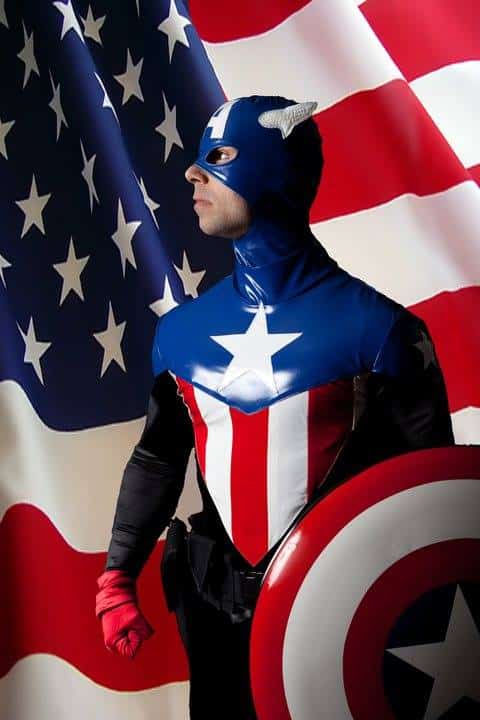
Ridgewood NJ, Ridgewood Polis report that on 07/04/2015 patrol units responded to the area of 57 East Ridgewood Avenue for a report of a suspicious male. A further investigation revealed that a 37 year old Hackensack man was on the roof tops above 43 East Ridgewood Avenue.
The male party was found to be wearing a Captain America costume and determined to be heavily intoxicated. The male party was removed from the roof by officers in fire department ladder truck. He was transported to the Valley Hospital for treatment.
In America, is it possible to have open, vigorous, no-holds-barred debate?
Is it? Is it really possible?
It’s a shame we have to even ask the question but consider the following:
– If you question the theory of climate change (formerly known as global warming till that was discredited), you’re attacked as neanderthal.
– If you disagree with the Supreme Court’s bare majority (5 to 4) ruling on gay marriage, you’re called a bigot.
– If you argue that separation of church and state was never meant to separate us from church, you’re targeted as a raving evangelical.
– If you defend the Second Amendment and the right to bear arms, you’re a threat to society; among those who “cling to their guns.”
– If you seek to have a reasonable discussion about the waves of illegal immigrants coming across our southern border, you’re termed a racist.
– If you opposed Obamacare, you are have no compassion.
– If you defend capitalism, financial success and property rights, they call you selfish and greedy.
– If you don’t want your kids to be subjected to government-sponsored sex education or a curriculum that reinvents American history, you’re accused of being unenlightened or, worse yet — guilty of parental neglect.
– If you defend states’ rights, you’re divisive. If you’re weary of radical Islamists and you’re wondering when we’ll respond in kind, you’re a war-monger. If you don’t admire European-style socialism, you’re myopic and provincial.
– If you speak up on these or similar matters, you’re likely to be branded mean or jingoistic or imbecilic.
This is what we’re dealing with. This is what “argument” has been reduced to. And it’s juvenile, self-serving, demagogic and ultimately destructive.
As a high school and collegiate debater I learned that there were at least two sides to every issue and that issues can and should be fairly and fully aired based on fact. But today we have a government, a media and a popular culture that engage in name-calling, broad-brushing, stereotyping, band-wagoning, hand-wringing, fear and intimidation. All of these are among the worst types of propaganda.
And, make no mistake about it, the biggest purveyors of these techniques can be found on the left among re-branded “progressives” (aka liberals).
They preach tolerance and understanding but they practice a near maniacal form of intolerance. In the name of compassion, they will swat you down quicker than you can say “Why?” or “Where” or “When?” or “How?”
Those are question they don’t want to deal with — questions they have no intention of answering.
We’ve reached a stage of polarization where people simply do not want to be challenged. Period.
After an 18-month investigation, Macy’s has agreed to pay a $650,000 fine and hire an independent monitor to address complaints that minority shoppers faced heightened surveillance and, in some cases, wrongful detention at its flagship store in Midtown Manhattan.
The investigation, conducted by the state attorney general’s office, reviewed the internal “loss prevention” procedures employed by Macy’s at its Herald Square store as well as allegations that black and Hispanic shoppers were unfairly targeted by security officials. The inquiry found that Macy’s “detained African-Americans, Hispanics and other minorities for allegedly shoplifting at significantly higher rates relative to whites,” a settlement agreement to be released on Wednesday said.
“This agreement will help ensure that no one is unfairly singled out as a suspected criminal when they shop in New York,” the attorney general, Eric T. Schneiderman, said in a statement set to accompany the release of the settlement document, which covers all 42 Macy’s stores in New York State.
The deal with Macy’s comes a week after Mr. Schneiderman’s office reached a similar one with Barneys New York, which agreed to pay $525,000 and institute a host of reforms aimed at addressing allegations of racial profiling at its Madison Avenue store.
The Macy’s investigation included a review of complaints since 2007 from 18 minority shoppers who claimed they had been improperly detained at the Herald Square store. Among those who complained were a black woman confronted by security workers while riding an escalator with merchandise openly draped over her arm, and a black man in the store to exchange goods.
Univision and NBC may claim to be distancing themselves from Republican presidential candidate Donald Trump over his recently stated opposition to criminal illegal aliens, but Trump’s strong stance against criminal illegals has been well established for years and buttressed by governmental data.
In his 2011 bestselling book, Time to Get Tough, Trump held both Republicans and Democrats responsible for the nation’s failed immigration policies and cited Government Accountability Office (GAO) data revealing the economic costs the nation’s 351,000 criminal aliens imposed on U.S. taxpayers at the time.
“Both sides need to grow up and put America’s interests first—and that means doing what’s right for our economy, our national security, and our public safety,” wrote Trump. “According to a Government Accountability Office (GAO) 2011 report, America’s prisons house 351,000 criminal aliens who committed a crime after having already broken the law by entering America illegally.”
Trump added, “Making taxpayers pay for 351,000 criminals who should never have been here in the first place is ridiculous.”