
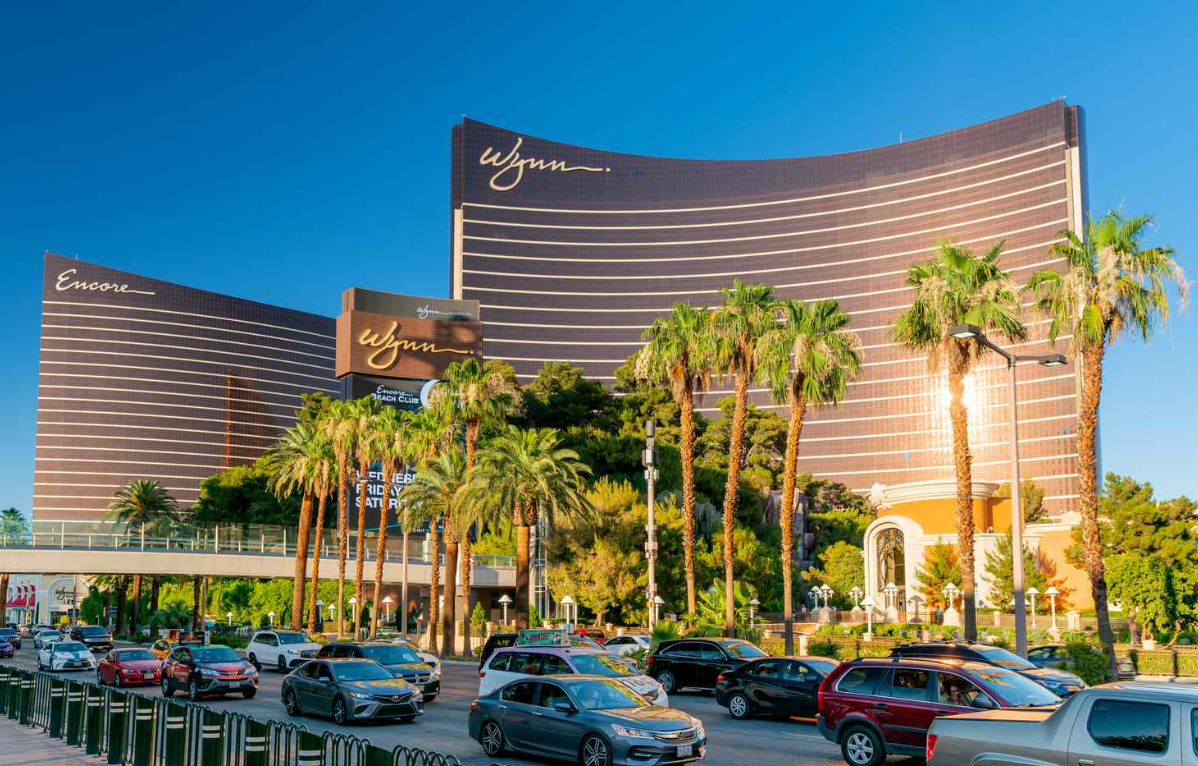
Picture this: a hotel on the Strip replaces its commercial dishwasher two full years ahead of its expected lifespan. Nobody files a warranty claim, because the warranty manual explicitly excludes mineral damage. That’s a $12,000 purchase absorbed as a normal operating cost, when it shouldn’t be normal at all.
Las Vegas runs on hospitality. Hotels, restaurants, laundromats, and event venues collectively process millions of gallons of water every day, and nearly all of it arrives loaded with calcium and magnesium. Most operators know the water is hard. Far fewer have actually quantified what that hardness is costing them, floor by floor, appliance by appliance. This article does exactly that.
The Water You’re Working With
According to the Las Vegas Valley Water District, the hardness of local water sits at 291 parts per million, or 17 grains per gallon, classified as “very hard.” The two nontoxic minerals driving this are calcium and magnesium, carried into Lake Mead from the mineral-dense Colorado River.
To put 17 grains per gallon in context: water hardness varies throughout the United States, and in areas where water is relatively hard, the U.S. Geological Survey notes that industries may have to spend money to soften their water because hard water can damage equipment. Las Vegas doesn’t just qualify as “hard.” It sits at roughly 1.6 times the USGS threshold for the “very hard” classification.
Every coffee machine, steam oven, boiler, ice maker, and laundry unit in your building processes this water. Scale doesn’t announce itself. It builds quietly inside heating elements, inside pipes, inside the joints you can’t see without pulling equipment apart.
The Scale Tax: A Framework for Counting the Real Losses
Think of hard water damage as a hidden operating tax with four distinct line items. Call it the Scale Tax. Most hospitality businesses are paying all four, but they’re buried across different budget categories, which is exactly why the total rarely gets noticed.
Line 1: Energy bleed. Hard water causes mineral buildup that increases energy costs by over 25% due to limescale insulating heating elements. In a commercial kitchen running three steam ovens and a dishwasher simultaneously, that’s not a rounding error. It shows up on your utility bill every single month, attributed to “energy costs” rather than “hard water damage.”
Line 2: Shortened equipment life. Fixtures and plumbing are vulnerable to damage from calcium and magnesium deposits, leading to costly repairs and replacements. A steam oven rated for 10 years may need full replacement at year six or seven when it runs on unprotected Las Vegas tap water. That gap is your money, gone.
Line 3: Warranty gaps. Most manufacturers state in their manuals that they will not provide a warranty or replacement for hard water issues, so you will have to pay out of pocket. This single clause in equipment documentation transforms what would be a covered repair into a full out-of-pocket replacement. Most operators only discover this clause when they’re already holding a broken appliance.
Line 4: Emergency repair premiums. When systems fail due to mineral blockages or component burnouts, production stops completely. For commercial laundries and similar operations, unexpected downtime translates directly into lost revenue. The emergency labor costs required to repair or replace scale-damaged equipment are significantly higher than planned maintenance costs.
Add these four together and the Scale Tax is almost always the largest single infrastructure cost a Las Vegas hospitality business isn’t tracking.
Where Scale Hits Hardest in a Commercial Operation
Not all equipment suffers equally. Here’s how the damage typically stacks up across a mid-size hotel or restaurant:
| Equipment Type | Primary Scale Damage Mode | Typical Impact
|
|---|---|---|
| Commercial dishwashers | Heating element coating, spray arm clogging | Reduced wash quality, higher energy use |
| Ice makers | Scale inside water lines and freezing chambers | Lower ice output, cloudy ice, valve failure |
| Steam ovens and combi units | Boiler scale, restricted water flow | Uneven cooking, premature boiler failure |
| Commercial laundry units | Drum scale, heating element buildup | Shortened lifespan, linen quality degradation |
| Hot water systems and boilers | Thick internal deposits on heat transfer surfaces | Fuel cost spikes, tube overheating risk |
Ice makers deserve a special mention. In hot equipment like steamers and boilers, hard water evaporates and leaves behind concentrated minerals. Limescale can also develop in freezing water, where sediment forms into hardened crystals that cause ice malformation, valve scoring, clogs, and possible tube restriction. For a hotel bar or restaurant, that’s a guest-facing problem as much as a mechanical one. Cloudy ice is a signal guests read immediately, even if they can’t name the cause.
“For every visible deposit on your faucet, there’s far more scale accumulating inside your pipes, water heater, and appliances, where it causes the most expensive damage.”
This observation from water quality researchers reflects what commercial property managers learn the hard way: the surface chalking on your fixtures is almost irrelevant compared to what’s happening inside the systems you can’t inspect without shutting down operations.
The Quiet Drain Audit: What to Check Before You Call a Tech
You can catch early-stage scale damage yourself with a structured walkthrough. This is a practical starting point before you bring in any service provider.
- Water pressure at multiple points. A consistent drop in flow from one quarter of your building to another often means localized pipe restriction from scale buildup. Compare pressure at the kitchen, laundry room, and guest floors.
- Visual on dishwasher spray arms. Pull one out and hold it up to light. Clogged ports are almost always scale, not food debris. If more than a third of ports are partially blocked, your wash quality is already compromised.
- Ice maker output vs. rated capacity. If your unit is rated for 300 pounds of ice per day and you’re seeing 220 in cooler months, scale is the most likely culprit.
- Steam oven cycling frequency. Scale-insulated heating elements work harder and cycle more often to reach temperature. Unusual cycling is a diagnostic signal before you see any visible buildup.
- Boiler inspection records. If your last boiler descale was more than 18 months ago under Las Vegas water conditions, you’re already behind. Budget accordingly.
If your audit turns up multiple red flags, the next call is to someone who handles commercial water softener repair in las vegas businesses depend on, because softener systems themselves require maintenance to keep performing at the volume commercial properties demand.
Prevention vs. Repair: The Math That Changes the Decision
The hesitation most operators have about water treatment investment is upfront cost. That hesitation flips when you run the actual numbers over a three-year window.
Consider a single commercial kitchen running a dishwasher, a combi oven, and a boiler-fed hot water supply without any softening treatment. The Scale Tax compounds annually. Energy costs creep up. One appliance replacement lands in year two. An emergency boiler service call hits in year three. Those individual events feel disconnected. They’re not. They’re the same cause, billed under different line items.
A properly sized and maintained commercial water softening system running on Las Vegas water is not optional infrastructure. It’s the alternative to paying the Scale Tax forever. The U.S. Geological Survey’s water hardness data makes clear that in high-hardness regions, industrial operators routinely absorb significant costs from untreated supply water. Las Vegas sits at the extreme end of that spectrum.
And a softener only prevents damage when it’s working correctly. A softener running on exhausted resin, a miscalibrated salt dose, or a faulty bypass valve delivers false confidence. You think you’re protected. Your equipment is still scaling. That’s the scenario where repair matters as much as installation.
Practical Decisions Every Las Vegas Operator Should Make Now
Three things worth doing regardless of where you are in the equipment cycle:
First, request a copy of the warranty exclusion language on every water-using appliance you currently operate. Know before it breaks, not after.
Second, pull your utility bills for the past 24 months and look for a slow upward trend in energy consumption that doesn’t track with business volume growth. That pattern is a scale signature. Hard water mineral buildup has been documented to increase energy costs by over 25% as limescale insulates heating elements, and Buildings magazine reported in 2024 that this damage extends to plumbing lines and creates hidden liability that commercial property owners rarely catch before it compounds.
Third, schedule a softener service check if you haven’t had one recently. Maintenance on the treatment system is where most Las Vegas operators fall short. The hardware is in place; the upkeep isn’t happening at the frequency that 17 grains per gallon actually demands.
Hard water in Las Vegas is a fixed condition. The Scale Tax is not. Which one are you still paying?





