
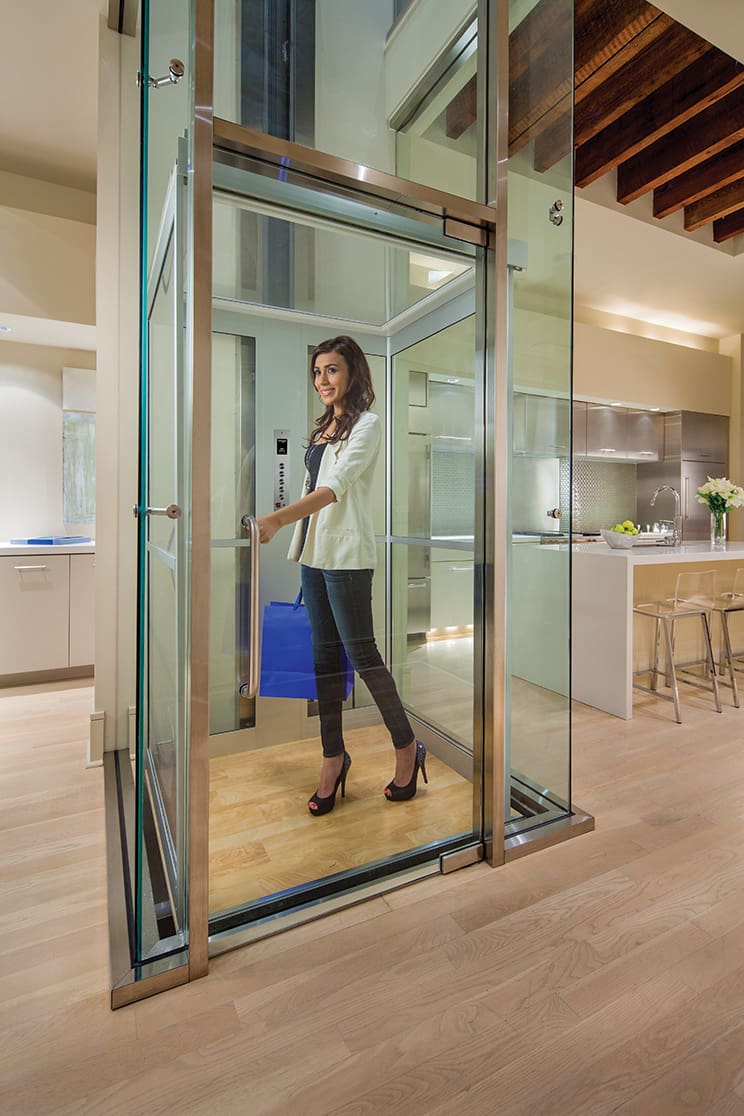
When you picture a “dream home,” what comes to mind? For decades, it was all about sprawling kitchens, grand staircases, and massive yards. But today, the concept of the perfect home is shifting. It’s becoming less about sheer size and more about smart, flexible, and comfortable living. We want homes that adapt to us, not the other way around. And at the heart of this transformation, in a way that might surprise you, is the residential elevator.
What was once a symbol of extravagant luxury or a purely clinical necessity is now becoming a cornerstone of modern, accessible design. This single feature is fundamentally changing how we plan our spaces, how we live in them, and how we plan for our future.
Redefining Accessibility: The “Forever Home”
Let’s be honest: stairs are a design flaw. They are a barrier. They’re a pain when you’re carrying laundry, a challenge with a baby stroller, and an absolute non-starter for anyone with a mobility issue or an elderly relative visiting.
The biggest driver behind the rise of the home elevator is the “aging in place” movement. More than ever, people want to stay in their beloved homes through their retirement years. A residential elevator is the ultimate future-proofing tool. It ensures that a two-story or three-story home remains 100% accessible, no matter what life throws your way.
But here’s the key shift: it’s no longer just a reactive measure. Homeowners in their 30s and 40s are installing them in new builds, not because they need them now, but because they want to ensure their home is a “forever home.”
This is where the elevator completely outperforms its clunky cousin, the stairlift. A stairlift is a visible, often unattractive, single-purpose solution that blocks the staircase. An elevator is a discreet, multi-purpose vehicle. It transports people, luggage, groceries, and even a vacuum cleaner, all while being neatly integrated into the home’s design. It offers accessibility with dignity.
The Elevator as an Architectural Centerpiece
Forget the image of a dark, cramped box. The modern residential elevator is a design statement. Architects and interior designers are no longer hiding elevators in back corners; they’re making them the focal point of the home.
The most stunning trend is the panoramic glass elevator. These transparent, often cylindrical, cabs move between floors like a piece of functional sculpture. They allow natural light to flow through the home and add a “wow” factor that a traditional staircase just can’t match.
Another popular style is the pneumatic (or vacuum) elevator. These futuristic-looking tubes are incredibly compact, require no pit or machine room, and offer a 360-degree view. They look like they’re straight out of a sci-fi movie and fit beautifully into minimalist or contemporary designs.
For those with a more traditional aesthetic, elevators can be finished with rich wood paneling, custom fixtures, and subtle gates that make them blend seamlessly with the home’s existing woodwork, appearing as just another stylish closet from the outside.
Practical Magic: New Tech and Real Value
This widespread adoption wouldn’t be possible without technology. The biggest hurdle for elevators used to be space. Traditional models required a deep pit dug into the foundation and a bulky, separate machine room to house the motors and gears.
That’s all changed with MRL (Machine-Room-Less) technology.
MRL elevators fit all their compact, energy-efficient components directly within the elevator shaft itself. This innovation means a residential elevator can now have a footprint as small as a standard closet (around 15-20 square feet). This makes retrofitting them into existing homes not just possible, but practical.
This new tech is also greener. Modern MRL and pneumatic systems use significantly less energy than the old, power-hungry hydraulic models, making them a more sustainable choice.
And what about the investment? While not inexpensive, a residential elevator is one of the few luxury upgrades that adds significant, measurable value to your property. It doesn’t just add a “luxury” tag; it dramatically widens your pool of potential buyers to include anyone looking for a future-proof, accessible home. In many markets, the added resale value can offset a large portion of the installation cost.
The New Standard for Smart Living
The residential elevator has successfully made the leap from an extravagant perk to a practical, intelligent, and beautiful home feature. It solves the fundamental problem of multi-story living, offering seamless convenience for a young family, a “cool” feature for guests, and an essential key to independence for those with mobility challenges.
By blending high-tech engineering with high-end design, the home elevator isn’t just changing our floor plans, elevating our entire concept of what a modern home should be.








You can clearly see that she could not possibly make it up a short flight of stairs.
Oh no, I would carry her…