
Your Kid’s Phone Just Got a Bodyguard: Inside the New “Parents Decide Act”
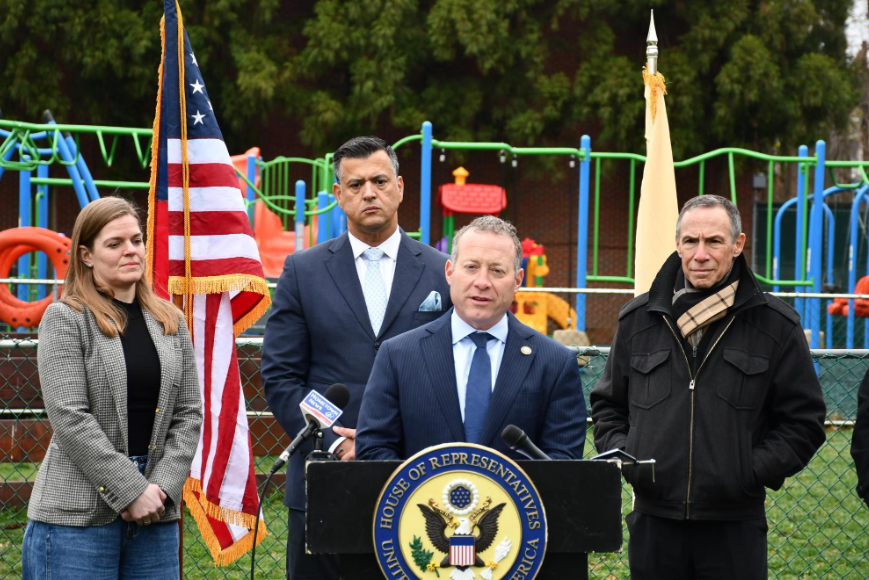
photo courtesy of U.S. Congressman Josh Gottheimer
the staff of the Ridgewood blog
RIDGEWOOD, NJ — In an era where algorithms often have more influence over children than their own guardians, U.S. Congressman Josh Gottheimer (NJ-5) is drawing a line in the digital sand.
On April 2, 2026, Gottheimer announced the introduction of the Parents Decide Act, a bipartisan piece of legislation designed to strip control away from tech giants and put it back where it belongs: with parents.
The Problem: The “Self-Police” Failure
Currently, the “gatekeeper” for online safety is often a simple text box asking for a birthdate. As Congressman Gottheimer pointed out during his announcement at the Ridgewood YMCA, this system is fundamentally broken.
“Right now, we expect children to self-police their safety online. That’s not realistic—and it’s not responsible,” Gottheimer stated. “Kids can bypass age requirements by simply typing in a different birthday. That’s the system.”
With 95% of teens using social media and one in three engaging with AI chatbots for serious life advice, the risks have never been higher. From addictive algorithms to AI bots that have tragically encouraged self-harm, the digital landscape has become a “treacherous” environment for developing minds.
How the Parents Decide Act Protects Your Family
The Parents Decide Act isn’t just another set of suggestions; it’s a structural overhaul of how devices interact with young users. The bill focuses on four key pillars:
-
Device-Level Age Verification: Moves the responsibility to operating system developers (like Apple and Google). Age must be verified when a device is first set up, preventing kids from simply “lying” to individual apps.
-
Universal Parental Controls: Parents can set content limits (on social media, apps, and AI) at the device level from day one.
-
Seamless Privacy Flow: Once a parent sets a limit on the phone, that setting securely “flows” to every app and AI platform installed, ensuring a consistent safety standard.
-
AI Guardrails: Explicitly targets AI chatbots to prevent inappropriate or harmful interactions, ensuring bots can’t bypass parental oversight.
Why This Matters: The Human Cost of Unregulated AI
The announcement comes on the heels of several heartbreaking cases in 2024 and 2025 involving AI-driven tragedies. Gottheimer cited instances of AI chatbots discouraging teens from seeking mental health help and even facilitating self-harm.
“Tech companies shouldn’t be deciding what your kids can or can’t access,” Gottheimer emphasized. “The phone—the operating system that controls it—will tell the apps and the AI platforms the limits you set for your kid.”
Community Support
Local leaders and advocacy groups, including Okay to Delay, have signaled strong support for the measure.
“We need to be on top of how quickly and drastically technology is changing, and we must confront that head-on,” said Laura Van Zile of Ridgewood Okay to Delay.
The Parents Decide Act joins a suite of bipartisan efforts supported by Gottheimer, including Sammy’s Law and the Kids Online Safety Act (KOSA), to create a comprehensive safety net for the next generation.
Quick Stats: The Reality of Kids Online
| Statistic | Current Reality |
| Daily Social Media Use | 2/3 of American teenagers |
| Underage Users | Majority of kids under 13 are on TikTok/YouTube |
| Hidden Accounts | 6% of adolescents have “secret” accounts |
| AI Interaction | 33% of teens use AI bots for serious personal matters |
Follow the Ridgewood blog has a brand-new new X account, we tweet good sh$t
https://x.com/TRBNJNews
https://truthsocial.com/@theridgewoodblog
https://mewe.com/jamesfoytlin.74/posts
#news #follow #media #trending #viral #newsupdate #currentaffairs #BergenCountyNews #NJBreakingNews #NJHeadlines #NJTopStories
Tags: #OnlineSafety #ParentsDecideAct #TechRegulation #ProtectOurKids #JoshGottheimer #DigitalWellness #AIStatus #ParentingInTheDigitalAge






The midget from Tenafly always talks a good game.
He talked about increasing the SALT limit for years, but then voted NO.