
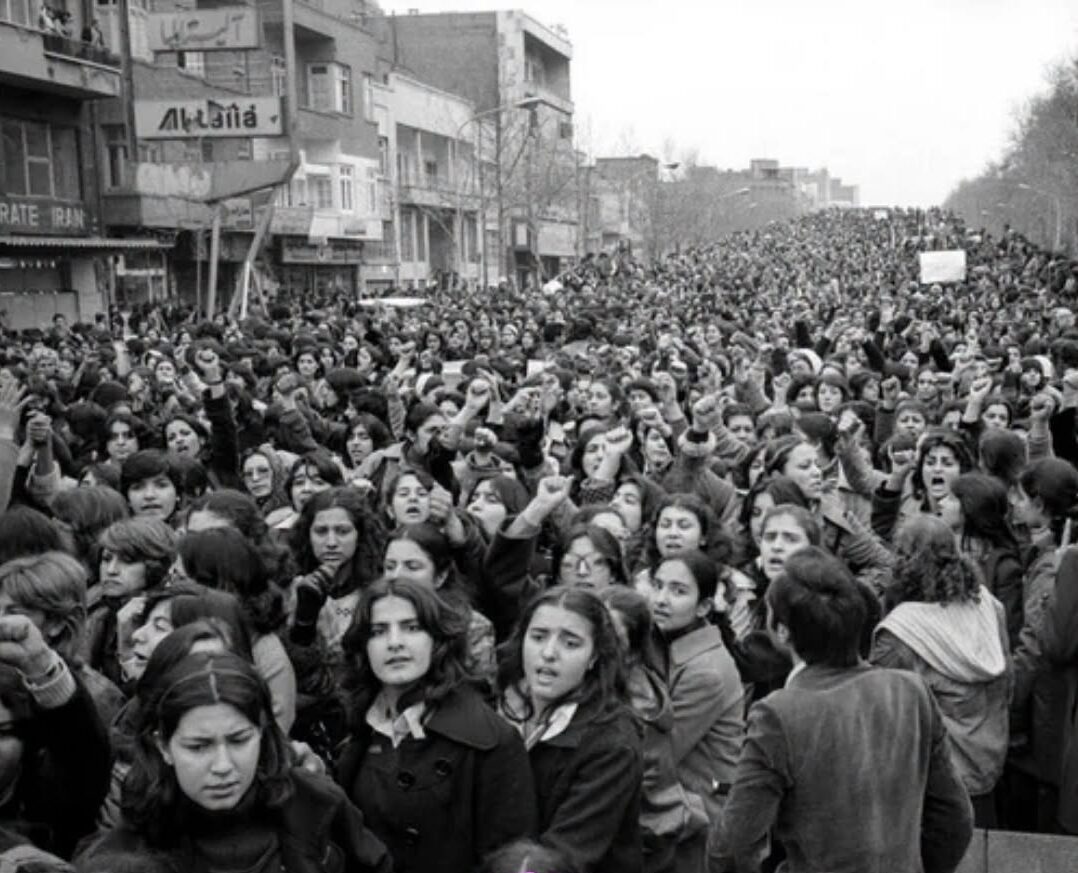
March 8, 1979: The Untold Story of the Day Iranian Women Marched for Their Freedom
the staff of the Ridgewood blog
Tehran Iran, on March 8, 1979, tens of thousands of Iranian women poured into the streets of Tehran. Just weeks prior, many of these same women had marched side-by-side with men to overthrow the Shah during the Iranian Revolution.
Now, they were back in the streets—this time to protest the very revolution they had fought to achieve.
The Catalyst: Mandatory Hijab and Stripped Rights
On March 7, 1979—the day before International Women’s Day—Ayatollah Ruhollah Khomeini decreed that all women working in government offices must wear Islamic dress.
This mandate came alongside a series of rapid legal rollbacks, including the suspension of Iran’s Family Protection Law, which had previously expanded women’s rights regarding marriage, divorce, and child custody.
The timing was monumental. March 8 was International Women’s Day, turning a global celebration of female empowerment into a massive groundswell of resistance across Iran.
A Diverse Movement Under Threat
The protests brought together women from every corner of Iranian society. Lawyers, nurses, students, teachers, and office workers stood shoulder to shoulder. Some chose to wear headscarves out of personal or religious preference; others did not.
Photographer Hengameh Golestan walked among the crowds, capturing historic images of women raising their fists and holding handwritten signs.
       1979 Protests vs. Enforced Decrees
       ----------------------------------
March 7, 1979  │ Mandatory Islamic dress decree announced for government workers.
March 8, 1979  │ Thousands assemble in Tehran for International Women's Day.
1980s Onward   │ Compulsory hijab enforced across all public spaces in Iran.
At first, the atmosphere carried a spirit of optimism—the revolution had just proved that public action could alter the course of history. However, the movement was quickly met with intense opposition:
-
Street Harassment: Protesters were verbally insulted, physically harassed, and attacked by pro-government mobs.
-
State Smear Campaigns: State-controlled media dismissed the demonstrations, labeling the women as immoral or loyalists to the fallen Shah.
-
Media Suppression: Local newspapers refused to publish Golestan’s photographs to avoid acknowledging the immense scale of the resistance.
The Unending Fight for Autonomy
Despite continuous pushback over several days, the marchers could not halt the political shift. By the early 1980s, compulsory dress codes were fully integrated into public law.
Decades later, the photographs of March 8, 1979, remain a powerful testament to civil resistance. The women who took to the streets that day stood at the opening chapter of a fight for physical autonomy and human rights that Iranian women continue to wage over four decades later.
Follow the Ridgewood blog has a brand-new new X account, we tweet good sh$t
https://x.com/TRBNJNews
https://truthsocial.com/@theridgewoodblog
https://mewe.com/jamesfoytlin.74/posts
#news #follow #media #trending #viral #newsupdate #currentaffairs #BergenCountyNews #NJBreakingNews #NJHeadlines #NJTopStories
Recommended Tags: #WomenHistory #Iran1979 #HumanRights #InternationalWomensDay #IranianWomen #HengamehGolestan #History #WomenInHistory






I’ve been hearing this shit regarding Iran for the past almost 50 years now it’s ridiculous, obviously they can’t be trusted, and yet it’s amazing how many Iranian people I have met through my life and a badmouth this country. Well it’s not perfect, if you don’t like it, you’re not forced to stay. It’s amazing how some of these people come from these countries and a badmouth the United States. Go back you’re allowed.