
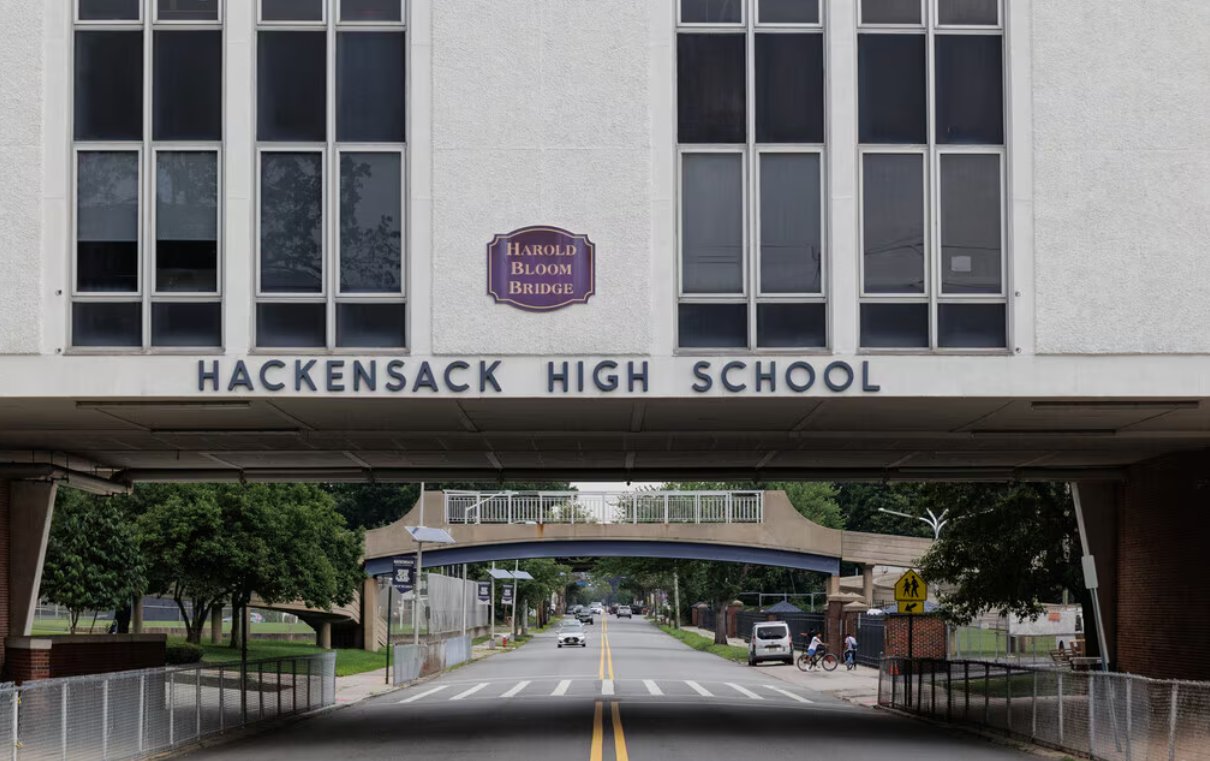
A devastating fiscal crisis is sweeping through New Jersey public schools, forcing boards of education to make painful staff cuts, eliminate vital programs, and reduce critical student support services
the staff of the Ridgewood blog
Hackensack NJ, At recent school board meetings across the state, the emotional toll of these decisions has taken center stage. Long-time educators, special education paraprofessionals, and support staff are pleading for their livelihoods. Unfortunately, these structural budget deficits mean that widespread layoffs are already underway.
Here is an in-depth look at why New Jersey school districts are facing massive budget shortfalls, how temporary federal funding masked a growing enrollment crisis, and what it means for the future of K-12 education in the Garden State.
The Hackensack School District Crisis: A Case Study in Budget Shortfalls
The Hackensack school district serves as a glaring example of the current K-12 financial chokehold. The district had to eliminate over 150 positions to address a massive $17 million shortfall for the 2025–2026 school year, with initial projections for the following year looking at a staggering $24 million deficit.
By pushing through severe personnel reductions—including the elimination of tenured teachers, office staff, speech-language pathologists, and occupational therapists—the district managed to reduce the upcoming gap to $21 million.
An independent financial audit uncovered 22 distinct issues within Hackensack’s books, including a missing Position Control Roster and a $12 million deficit area tied directly to unbudgeted personnel costs.
The Staffing Paradox: Hiring Up While Student Enrollment Drops
The underlying issue isn’t unique to Hackensack. Data reveals a systemic paradox across New Jersey: school districts rapidly increased hiring even as student enrollment consistently declined.
According to data compiled by Georgetown University’s Edunomics Lab, between the 2018–2019 and 2024–2025 school years:
-
Hackensack added 79 employees while losing 390 students.
-
Statewide NJ Districts hired a combined 11,157 staff members while overall enrollment dropped by 5,098 students.
-
Paraprofessionals made up the largest share of new hires state-wide (6,147 positions), followed by 1,679 teachers.
Why Did K-12 Enrollment Decline?
The National Center for Education Statistics predicts that New Jersey student enrollment will continue to slide through 2031. This shift is driven by:
-
Lower regional birth rates.
-
Shifting immigrant demographics due to border policy adjustments.
-
An increase in homeschooling and alternative K-12 educational paths following pandemic disruptions.
The Perfect Storm: ESSER Funds Dry Up, Health Costs Spike
If student enrollment was dropping, how did districts justify hiring more staff? The answer lies in temporary federal pandemic relief.
During 2020 and 2021, billions of dollars flowed into school districts via the Elementary and Secondary School Emergency Relief (ESSER) Fund. This injection of capital allowed administrators to expand staffing to manage bureaucratic demands, handle increased post-pandemic behavioral issues, and support a rise in special education identifications.
However, ESSER revenue was a temporary windfall, and those federal funds have officially dried up. Districts that implemented permanent salary bumps and aggressive hiring strategies using one-time relief money are now stuck with unsustainable operating ledgers.
“A lot of districts offered bigger pay raises when they had that temporary money, and now they’re stuck with that higher pay, and they’re struggling to afford it. New Jersey districts are not alone. Trade-offs are happening all over the country.” — Marguerite Roza, Director of the Edunomics Lab at Georgetown University
Compounding the loss of ESSER funds, school districts are battling:
-
Skyrocketing Health Benefit Costs: Hackensack alone faced a sudden 30% spike in employee health insurance premiums.
-
The 2% Property Tax Levy Cap: New Jersey law limits annual school tax levy increases to 2%. With inflation and operational costs rising well past 2%, even fiscally responsible, growing districts like Clifton have been forced into targeted layoffs.
Urban and Suburban Wealth Disparities: No District is Immune
This fiscal cliff is disrupting communities regardless of local wealth demographics. While Hackensack operates in an area with a median family income of $84,000, affluent Montclair—boasting a median income of $151,000—recently faced its own $8.8 million shortfall due to budget mismanagement, forcing similar programmatic cuts and a state-mandated corrective action plan.
In response to the budget strains, some districts are attempting to outsource specialized services to cut costs. Hackensack approved an $800,000 shared-services contract for special education with the South Bergen Jointure Commission.
However, parents and educators warn that outsourcing speech therapy and special education disruptions can harm student progress, breaking the essential consistency and trust that vulnerable students rely on.
Accountability: Rebalancing School Boards and Administrations
As public school systems struggle to stay solvent, education leaders are calling for systemic reforms. Policy experts suggest that state education agencies should mandate long-term, multi-year strategic finance plans that prove balanced budget projections before hiring booms are greenlit.
Furthermore, there is a growing demand for strict accountability regarding the dual dynamic between local school boards and superintendents. When financial ruin hits a public district, it often stems from a failure of transparent financial forecasting or school board trustees prioritizing political posturing over sound fiscal advice.
Without a shift toward multi-year financial sustainability models, more New Jersey communities will face structural deficits, fracturing classrooms and destabilizing the educators who keep them running.
Tell your story #TheRidgewoodblog , #Indpendentnews, #information, #advertise, #guestpost, #affiliatemarketing,#NorthJersey, #NJ , #News, #localnews, #bergencounty, #sponsoredpost, #SponsoredContent, #contentplacement , #linkplacement, Email: [email protected]
#NJEducation #SchoolBudgets #TeacherLayoffs #HackensackNJ #K12Finance #ESSERFunds #NewJerseySchools #PublicEducation






Hackensack Board of Education failed basic math.
They also possess ZERO management skills.