>


>
>
THE VILLAGE OF RIDGEWOOD WILL CONTINUE TO COLLECT LEAVES, WEATHER PERMITTING, UNTIL ALL THE LEAVES ARE PICKED UP. The following dates remain in the original schedule for leaf collection. AREA “A” Dec. 3 – AREA”B” Dec. 6 – AREA “C” Dec. 10 – AREA “D” Dec. 13 Click Here to view a map showing your pick up area.

>
It seems no one is safe from the voracious appetite for tax revenue not even our four legged friends. The Village Council is looking to raise fees off the backs of local cats, an unidentified spokesmen states,”hey cats have nine lives it is only fitting that we raise the licensing fees, to be fair to the rest of us who only have one life.” It was erroneously been reported on that other party flog that cats will be sprayed? if we are mistaken the Ridgewood blog suggest the Village manager spray the cats maroon and white in fitting with the Village colors. Or perhaps something more seasonal like Red and Green for December and so on. If Ordinance 3088 is passed licenses for first unspayed/un-neutered cat will be $14.00 Licenses for additional unspayed/un-neutered cats will be $10.00. Licenses for first spayed/neutered cat will be $11.00 Additional spayed/neutered cats licensed within the same calendar year, will be $ 7.00 per cat. Delinquent fee, if not licensed during the month of rabies vaccination, will be $ 10.00 per cat.

>LeRoy Neiman Thursday, December 13th – 5:00pm
Welcome back world famous Artist / Author, LeRoy Neiman who will be signing his latest Book: Femlin. Femlin is the legendary character Mr. Neiman has sketched for Playboy for many decades! Don’t miss this legend! BOOKENDS232 E. Ridgewood Ave.Ridgewood, NJ 07450Tel: 201/445-0726Fax: 201/445-8301
12/17 Last Day to Change Party Affiliation For Feb 5 Presidential Primary The last day to change party affiliation for the February 5, 2008 Presidential Primary Election is December 17, 2007 and the voter registration deadline is January 15, 2008. As usual, the Clerk will be in her office during the workday and in the Library Lobby from 4:30pm to 9:00pm.
>During the month of Ramadan, Muslims observe a strict fast and participate in pious activities such as charitable giving and peace-making. It is a time of intense spiritual renewal for those who observe it. At the end of Ramadan, Muslims throughout the world observe a joyous three-day celebration called Eid al-Fitr (the Festival of Fast-Breaking).
A. Eid al-Fitr falls on the first day of Shawwal, the month which follows Ramadan in the Islamic calendar. It is a time to give in charity to those in need, and celebrate with family and friends the completion of a month of blessings and joy.
Before the day of Eid, during the last few days of Ramadan, each Muslim family gives a determined amount as a donation to the poor. This donation is of actual food — rice, barley, dates, rice, etc. — to ensure that the needy can have a holiday meal and participate in the celebration. This donation is known as sadaqah al-fitr (charity of fast-breaking).
On the day of Eid, Muslims gather early in the morning in outdoor locations or mosques to perform the Eid prayer. This consists of a sermon followed by a short congregational prayer.
After the Eid prayer, Muslims usually scatter to visit various family and friends, give gifts (especially to children), and make phone calls to distant relatives to give well-wishes for the holiday.
>History of 3 Kings Day – Epiphany
Lovers of carols and Christmas parties know that this season has 12 days, packed with golden rings, calling birds and various kinds of gentry, musicians and domestic workers. December 25 is Christmas – and 25 minus 12 does equal 13. Do the math and you will see why shopping malls, newspapers, television networks, and other cultural fortresses annually deliver some kind of “Twelve Days of Christmas” blitz, beginning on December 13.
Problem is that for centuries church calendars in the East and the West have agreed that there are twelve days of Christmas and they begin on Christmas Day and end on January 6.
The twelve days of Christmas end with the Feast of Epiphany also called “The Adoration of the Magi” or “The Manifestation of God.” Celebrated on January 6, it is known as the day of the Three Kings (or wise men/magi): Caspar, Melchior and Balthasar. According to an old legend based on a Bible story, these three kings saw, on the night when Christ was born, a bright star, followed it to Bethlehem and found there the Christchild and presented it with gold, frankincense and myrrh.
January 6, the last day of Christmas, comes with its own traditions, rituals and symbols. Carolers are going from house to house; in many homes the Christmas tree is taken down and in some areas is burnt in a big bonfire. For the children this is an especially joyous occasion because, associated with taking down the tree goes the “plündern” (raiding) of the tree. The sweets, chocolate ornaments wrapped in foil or cookies, which have replaced the sugar plums, are the raiders’ rewards.
The history of Christmas, (the festival of the nativity of Jesus Christ,) is intertwined with that of the Epiphany. The commemoration of the Baptism (also called the Day of Lights, i.e. the Illumination of Jesus) was also known as the birthday of Jesus, because he was believed to have been born then of the Virgin or reborn in baptism. In some records Christmas and Epiphany were referred to as the first and second nativity; the second being Christ’s manifestation to the world.
In the fourth century, December 25 was finally adopted by the Western Christian Church as the date of the Feast of Christ’s birth. It is believed that this change in date gave rise to the tradition of the “12 Days of Christmas.” While the Western Christian Church celebrates December 25th, the Eastern Christian Church to this day recognizes January 6 as the celebration of the nativity. January 6 was also kept as the physical birthday in Bethlehem. In the Teutonic west, Epiphany became the Festival of the Three Kings (i.e. the Magi), or simply Twelfth day.
On the evening before Three Kings, traditionally there were prayers, blessed dried herbs would be burnt and their aromatic smell would fill the house. Doorways would be sprinkled with holy water and the master of the house would write with chalk C + M + B and the year above the house and barn door and say: “Caspar, Melchior, Balthasar, behütet uns auch für dieses Jahr, vor Feuer und vor Wassergefahr.” (“CMB, protect us again this year from the dangers of fire and water.”) C + M + B has traditionally been translated with Caspar, Melchior and Balthasar, however, according to the Church it stands for “Christus Mansionem Benedictat” (Christ bless this home).
The custom of the Star Singers, reminiscent of the travel of the Three Kings is still very much alive in Bavaria and Austria. Beginning with New Years and through January 6, children dressed as the kings, and holding up a large star, go from door to door, caroling and singing a Three Kings’ song. For this they receive money or sweets. Formerly the collected donations went to unemployed craftsmen and veterans, today they go to charities of the church or the Third World.
Oldtimers of Jasper in Indiana still remember the times when January 6 was celebrated. Lillian Doane and her family lived app. 4 miles out of town. Since it was a holy day they would go to church over the corduroy road. Claude and Martina Eckert also remember it as a special day. “People would put their trees out for the city to pick up and then all would be told that six o’clock this evening they would burn the Christmas trees. That was sometime ago; now the city will pick them up and chop them up as mulch. If you chipped in a tree you can get a bag of mulch.” For the Reichmanns in Brown County, “Dreikönigsabend” is always a special event. If there are any treats left on the tree (Ruth buys them at the Heidelberg Haus in Indianapolis), the grandchildren come to get them. In the evening there is a big gathering with Christmas foods, Glühwein and Stollen and Christmas carols with Eberhard at the piano.
© Copyright Ruth M. Reichmann
Max Kade German-American Center, IUPUI
>
Hanukkah is the annual Jewish festival celebrated on eight successive days beginning on the 25th day of Kislev, the third month of the Jewish calendar, corresponding, approximately, to December in the Gregorian calendar. It is also known as the Festival of Lights, Feast of Dedication, and Feast of the Maccabees, Hanukkah commemorates the rededication of the Temple of Jerusalem by Judas Maccabee in 165 BC after the Temple had been profaned by Antiochus IV Epiphanes, king of Syria and overlord of Palestine
The History of Hanukkah
Hanukkah is celebrated for eight days and nights, starting on the 25th of Kislev on the Hebrew calendar (which is November-December on the Gregorian calendar). In Hebrew, the word “Hanukkah” means “dedication.”
The holiday commemorates the rededication of the holy Temple in Jerusalem after the Jews’ 165 B.C.E. victory over the Hellenist Syrians. Antiochus, the Greek King of Syria, outlawed Jewish rituals and ordered the Jews to worship Greek gods.
In 168 B.C.E. the Jews’ holy Temple was seized and dedicated to the worship of Zeus.
Some Jews were afraid of the Greek soldiers and obeyed them, but most were angry and decided to fight back.
The fighting began in Modiin, a village not far from Jerusalem. A Greek officer and soldiers assembled the villagers, asking them to bow to an idol and eat the flesh of a pig, activities forbidden to Jews. The officer asked Mattathias, a Jewish High Priest, to take part in the ceremony. He refused, and another villager stepped forward and offered to do it instead. Mattathias became outraged, took out his sword and killed the man, then killed the officer. His five sons and the other villagers then attacked and killed the soldiers. Mattathias’ family went into hiding in the nearby mountains, where many other Jews who wanted to fight the Greeks joined them. They attacked the Greek soldiers whenever possible.
Judah Maccabee and his soldiers went to the holy Temple, and were saddened that many things were missing or broken, including the golden menorah. They cleaned and repaired the Temple, and when they were finished, they decided to have a big dedication ceremony. For the celebration, the Maccabees wanted to light the menorah. They looked everywhere for oil, and found a small flask that contained only enough oil to light the menorah for one day. Miraculously, the oil lasted for eight days. This gave them enough time to obtain new oil to keep the menorah lit. Today Jews celebrate Hanukkah for eight days by lighting candles in a menorah every night, thus commemorating the eight-day miracle.
>
Merry Christmas Everyone!
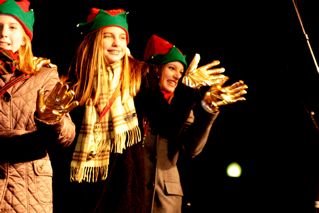
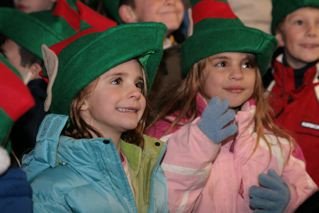
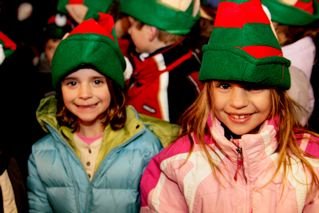
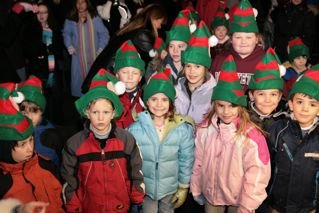
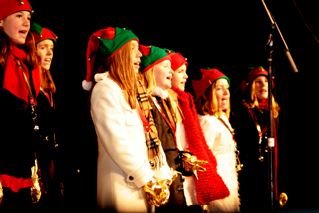
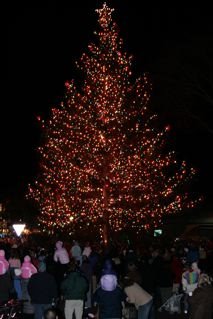
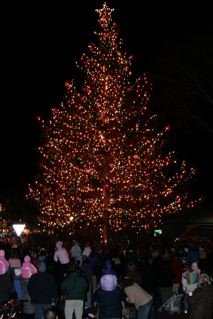
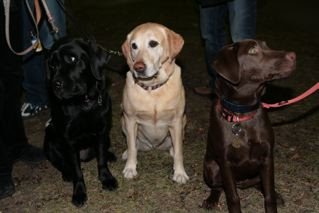
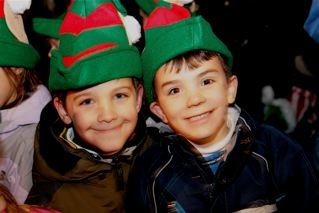
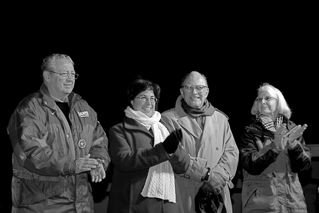
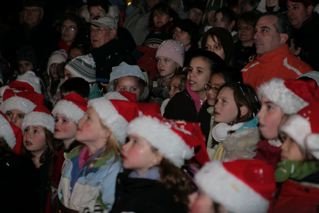
I was at the Ridgewood tree lighting on Saturday and had a wonderful time with family and friends.
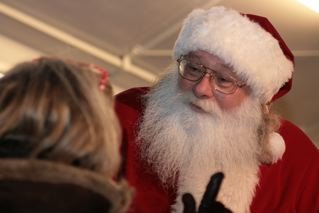
However, it is a disgrace that Santa wished everyone a “Happy Holiday” when he lit the Ridgewood Christmas Tree (or is it the official Ridgewood “Holiday Shrub” or some other such nonsense).
It is a bit much when even SANTA can’t wish everyone a Merry Christmas!
>
>This Afternoon: Periods of snow and sleet. High near 30. East wind between 3 and 5 mph. Chance of precipitation is 100%. Total daytime snow and sleet accumulation of 1 to 2 inches possible.
Tonight: Periods of freezing rain and sleet before 10pm, then periods of rain and sleet. Temperature rising to around 36 by 1am. Calm wind becoming south around 6 mph. Chance of precipitation is 100%. New ice accumulation of around a 0.1 of an inch possible. New sleet accumulation of less than a half inch possible.
Monday: A chance of rain, mainly before noon. Mostly cloudy, with a high near 40. Breezy, with a west wind 8 to 11 mph increasing to between 19 and 22 mph. Winds could gust as high as 46 mph. Chance of precipitation is 40%.
>
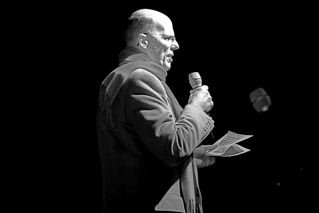
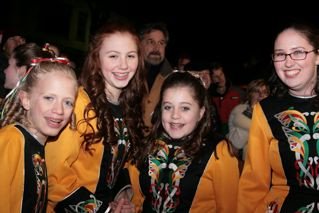
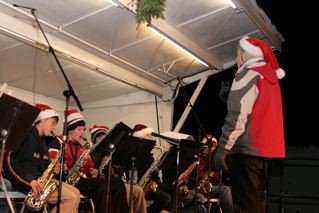
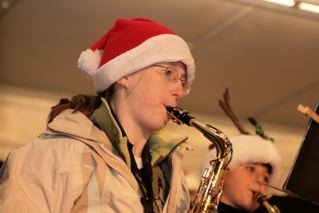
more photos to post….
>
>Dr. Brennen will discuss the progress report on math.
The Fly encourages any interested people to tune in and listen to what our illustrious administration has to say. Make sure to have an extra cup of coffee, this item is scheduled towards the very end of the meeting.
>
Presentation by Timothy Cronin, Director Parks and Recreation, on Village Parks and Fields in the Schooor DePalma Parks, Fields, Facilities and Recreation Master Plan.