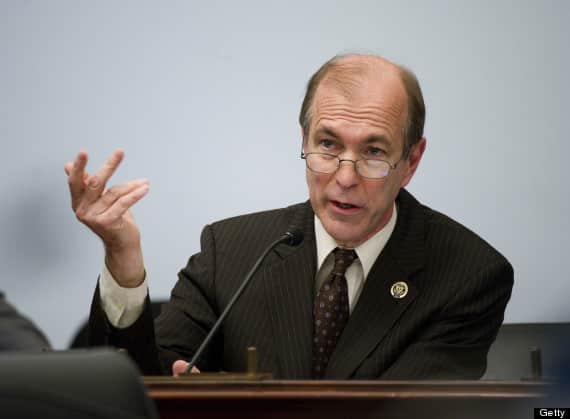
Washington DC, House Financial Services Committee Chairman Jeb Hensarling (R-TX) issued the following statement in response to President Trump’s call for the SEC to study the impact of reporting requirements on American companies.
Ridgewood NJ, Former Representative Scott Garrett, the New Jersey Republican whose bid to become chairman of the Export-Import Bank failed last year after the Senate Banking Committee rejected his nomination, to lead the agency that Garrett had criticized for corrupt practices and cronyism.
The former Representative has been tapped to work as a senior adviser to Securities and Exchange Commission Chairman Jay Clayton, according to unnamed sources at the SEC. While he was a lawmaker, Garrett was also a critic of the SEC after it dropped the ball in 2008 and served as chairman of the House Financial Services subcommittee on capital markets.
Ridgewood NJ, President-elect Donald J. Trump today announced he intends to nominate Jay Clayton Chairman of the Securities and Exchange Commission (SEC).
Clayton is currently a partner with Sullivan & Cromwell LLP and brings decades of experience helping companies navigate complex federal regulations to the position. Clayton will play an important role in unleashing the job-creating power of our economy by encouraging investment in American companies while providing strong oversight of Wall Street and related industries. Robust accountability will be a hallmark of his tenure atop the SEC, and the financial security of the American people will be his top priority.
“Jay Clayton is a highly talented expert on many aspects of financial and regulatory law, and he will ensure our financial institutions can thrive and create jobs while playing by the rules at the same time,” said President-elect Trump. “We need to undo many regulations which have stifled investment in American businesses, and restore oversight of the financial industry in a way that does not harm American workers.”
“I want to thank President-elect Trump for the opportunity to serve as SEC Chairman,” said Jay Clayton. “If confirmed, we are going to work together with key stakeholders in the financial system to make sure we provide investors and our companies with the confidence to invest together in America. We will carefully monitor our financial sector, as we set policy that encourages American companies to do what they do best: create jobs.”
Clayton has had a long and distinguished career advising on public and private mergers and acquisitions transactions, capital markets offerings, regulatory and enforcement proceedings, and other matters. In addition to numerous awards recognizing him as one of the top corporate lawyers in America, Clayton has also authored multiple publications on regulatory law, and has been an adjunct professor at the University of Pennsylvania School of Law. Clayton received a B.S. in engineering from the University of Pennsylvania in 1988 and a B.A. in economics from the University of Cambridge in 1990. He received his J.D. from the University of Pennsylvania School of Law in 1993.
Ridgewood NJ, Rep. Scott Garrett may get his revenge despite the conservative’s recent election loss.It’s being reported that Rep. Scott Garrett has met with the Trump Transition Team and he may get a job at the Federal Housing Finance Agency or the Securities and Exchange Commission (SEC) .
Scott Garrett, a veteran House Republican who lost his re-election bid last month, met with Trump transition officials in New York Thursday morning, as a sign he is under consideration for a top position in the Trump administration.
While New Jersey voters turned their backs to Garrett and instead elected Democrat Josh Gottheimer, a former Microsoft Corp. executive who tied his fortunes to Hillary Clinton trading a veteran policy wonk for a substanceless out of power Clintonista with no political clout.
The new Trump Administration has prioritized many of Scott Garretts main issues including the repeal of Dodd-Frank, repeal of Obamacare and removing the too big to fail provisions from virtually all Federal agencies.
Garrett showed up at Trump Tower in Manhattan at about 10 a.m., according to the press. Garret declined to say whom he was meeting with but told reporters it was neither President-elect Donald Trump nor Mike Pence, with whom Mr. Garrett is said to be close too.
Garrett a longtime critic of federal housing policy is reported interested in a role at the Federal Housing Finance Agency, which oversees the government mortgage giants, Fannie Mae and Freddie Mac, according to people familiar with the matter.
The National Association of Realtors Congressional Fund spent $1.3 million supporting Gottheimer, including $146,000 for online ads, $529,000 for mailings and $590,000 for TV ads .Garrett crossed the Realtors group by pushing a bill in 2013 that would have scaled back the role of Fannie Mae and Freddie Mac, the government-backed companies that buy mortgages from lenders.
photo SEC Chair Mary Jo White
December 14,2016
the staff of the Ridgewood blog
Ridgewood NJ, House Financial Services Committee Chairman Jeb Hensarling (R-TX) issued the following statement concerning SEC Chair Mary Jo White’s refusal to stop “midnight regulations” in the waning days of the Obama Administration:
“The press is characterizing Chair White’s decision to try to rush through a mountain of midnight regulations as ‘defying Republicans,’ but in reality she’s defying the will of the American people and good government. Such midnight rulemaking is neither conducive to sound policy nor consistent with the principles of democratic accountability. The American people chose a new direction for our country, and the incoming Trump Administration and Congress should have the opportunity to review pending regulations and fully assess their costs and benefits. As the clock runs down on the Obama Administration, Chair White and all other regulators who may be tempted to hastily impose another pile of complicated regulations on our economy should know that Congress will scrutinize their actions and – if appropriate – overturn them.”
Mary Jo White has already announced plans to step down as chair of the powerful Securities and Exchange Commission before President-elect Donald Trump takes office.White’s term at the helm of the SEC hadn’t been scheduled to expire until June 2019.
Ridgewood NJ, Capital Markets and Government-Sponsored Enterprises Subcommittee Chairman Scott Garrett (NJ-05), delivered the following remarks at a hearing entitled “Continued Oversight of the SEC’s Offices and Divisions”:
Congressman Scott Garrett’s opening remarks as prepared for delivery:
Today, the Subcommittee will continue its efforts to conduct vigorous oversight of the Securities and Exchange Commission, and in particular the individual offices which make up the SEC
In the last two years, our Subcommittee has heard testimony from the directors of the Trading and Markets, Corporations Finance, Enforcement, and Investment Management Divisions at the SEC
These hearings have allowed us to take a more thorough look at the agency’s operations, rulemaking agenda, and enforcement practices so that we can better understand whether the SEC is appropriately carrying out its three-fold mission to protect investors, maintain fair, orderly, and efficient markets, and (last but certainly not least!) facilitate capital formation
So I welcome our witnesses today and look forward to hearing their testimony – I hope that between the four of you, we are able to cover a lot of ground
Back in 2000, the SEC’s operating budget was about $369 million; today, the SEC has a budget authority for Fiscal Year 2016 of a little over $1.6 billion
And the SEC has recently submitted a request to bring its Fiscal Year 2017 budget up to nearly $1.8 billion
So during much of the time when Congress has been accused of starving the SEC of the funds it needs to fulfill its mission, its budget has actually quadrupled in the last fifteen years
It would be one thing if this four-fold increase in funding coincided with an agency that has become four times as effective
Instead, we are likely to look back at this period as a time when the SEC missed some of the greatest frauds in history, was ill-prepared for the financial crisis of 2008, failed to properly incorporate economic analysis into rulemakings, and, more recently, has often times been complicit in advancing the priorities of special interests
Unfortunately, instead of addressing some of the fundamental structural issues at the SEC, the Dodd-Frank Act created more offices within the agency – two of which we will hear from today
Dodd-Frank also granted the agency vast new rulemaking authority that the SEC has often times struggled to implement appropriately
For example, while the SEC has made strides towards improving the economic analysis that underlies its rulemakings, there is still much more work to be done in this area
It’s not acceptable for the SEC to simply say “Congress made us do it” and therefore assume that a rulemaking is beneficial, as the SEC did with its “pay-ratio” rule last year
It’s also incumbent upon the SEC to clearly articulate a problem or market failure that their rules are intended to address, which should be obvious but is still unfortunately lacking in many of the Dodd-Frank rules being implemented
So I’m eager to hear about some of the steps the SEC is taking to further improve its economic analysis
I also continue to have concerns over recent rulemakings related to credit rating agencies
While there is broad agreement that certain provisions in Dodd-Frank – such as the removal of references to credit ratings in regulations – were much needed and directly address one of the causes of the financial crisis, I worry that many of the other micro-managing rules included in Dodd-Frank have had the effect of further stifling competition in the credit rating agency industry.
Chairman Scott Garrett Opening Statement for Hearing Entitled
“The JOBS Act at Four: Examining Its Impact and Proposals to Further Enhance Capital Formation”
WASHINGTON, D.C. – Capital Markets and Government-Sponsored Enterprises Subcommittee Chairman Scott Garrett (NJ-05), delivered the following remarks at a hearing entitled “The JOBS Act at Four: Examining Its Impact and Proposals to Further Enhance Capital Formation”:
Congressman Scott Garrett’s opening remarks as prepared for delivery:
It’s not very often that Congress can look back at a major piece of legislation and be able to measure the tangible, positive impact it is having on peoples’ lives and on our economy
Too often, we find ourselves – particularly on this Committee – counting up the costs of misguided Washington mandates and comparing them with the phantom benefits promised by the bureaucratic class
Fortunately, that is not the case today
The Jumpstart our Business Startups – or “JOBS” Act – signed into law four years ago this month has by most measures been a resounding success for our economy and the future of innovation in America
The JOBS Act did this not by creating new federal mandates or spending taxpayer money on wasteful programs, but by empowering entrepreneurs and innovators who were struggling under a regulatory regime that was better suited for 1934 than it was for 2016
Just consider some of the following:
· The JOBS Act has led to a resurgence in the initial public offering (IPO) market, with some 85% of IPO’s since April 2012 coming from emerging growth companies
· Companies have raised some $50 billion under the new Reg D provision that allows business to solicit an offering to the general public
· While the newly modernized “Reg A+” is only a year old, business are already beginning to issue securities under this exemption
· And recent reports indicate that the SEC has already received up to 30 applications for portals under the new crowdfunding rules, which are set to go live next month
So while it’s clear that many parts of the JOBS Act are working as intended, the point of this hearing is not to pat ourselves on the back and say “job well done”
For starters, because the Senate tried its best back in 2012 to neuter the crowdfunding title and the SEC has taken some liberties with other rulemakings, the JOBS Act needs some “fixing”
So I want to thank the gentleman from North Carolina, Mr. McHenry, for putting forward the “Fix Crowdfunding Act” which makes some necessary changes to help ensure Title III reaches its full potential
Additionally, I have put forward a bill – the Private Placement Improvement Act – that will prohibit the SEC from implementing burdensome new rules for Reg D issuers that were uncalled for by the JOBS Act
We’ll also consider two other bills today
Mr. Emmer has introduced an innovative bill that would create a safe harbor for so-called “micro offerings”, and Mr. McHenry has another bill which would raise the threshold for when venture capital funds would have to register with the SEC
In addition to these targeted fixes, I’m also interested in hearing from our witnesses about further areas that Congress should be addressing in order to maintain the competitiveness of our capital markets
For example, we should be exploring the cumulative burdens that come with being a public company – including, unfortunately, some of the ridiculous disclosure requirements of Dodd-Frank as well as the outsized influence that proxy advisory firms have in the corporate governance arena
It’s also time to think more about the lack of research and liquidity that exists for certain public companies, and whether the equity research Global Settlement of 2003 swung the pendulum too far and has led to a dearth of research for small cap stocks
These are all important questions, and I look forward to hearing from our witnesses today.
Happy 75th anniversary to M&M’s! I’m proud to represent such an iconic American candy that is made right in Hackettstown! Such a source of New Jersey pride.
Financial Services Committee Passes Two Garrett-Sponsored Bills
Bills would enforce Constitutional rights and give Main Street businesses new tools to succeed
Mar 2, 2016
the staff of the Ridgewood blog
Ridgewood NJ, Today the Financial Services Committee passed two bills introduced by Congressman Scott Garrett (NJ-05), Chairman of the Financial Services Subcommittee on Capital Markets and Government-Sponsored Enterprises. The bills were H.R. 4638, The Main Street Growth Act, and H.R. 3798, The Due Process Restoration Act.
“One of the biggest concerns I hear from my constituents that the executive branch has run wild and Congress needs to regain control to protect the Constitutional rights of all Americans. For that reason, I’m pleased that today the Financial Services Committee passed my bill to restore the due process rights of all Americans by allowing them to have their case before the SEC heard by a federal court. I’m also happy to announce that my bill to allow Main Street businesses to raise capital by accessing public markets passed the committee. Because if we want to revive America’s economy, we need to give Main Street businesses the tools they needs to innovate and succeed.”
H.R. 3798, The Due Process Restoration Act Would:
Provide a mandatory right of removal allowing the defendant to request that the case be moved to a district court
Grant a right of removal to defendants who are subject to a cease and desist order and monetary penalty that the commission is seeking
Raise the burden of proof for cases that remain in the ALJ to a higher “clear and convincing evidence” standard
The Main Street Growth Act Would:
Authorize the creation of “venture exchanges” which would be registered as a national securities exchange with the SEC and be specifically tailored to list the shares of emerging growth companies and companies that issue shares under the newly finalized “Reg A+”
Exempt venture exchanges from Regulation NMS, Regulation ATS, and would be exempt from extending unlisted trading privileges to companies that list on them;
Subject venture exchanges to all of the existing anti-fraud and investor protection statutes administered by the SEC
Permit all investors— not just Silicon Valley billionaires or the well-connected—to invest in companies that list on venture exchanges.
Ridgewood NJ, Rep. Scott Garrett (NJ-05), Chairman of the Financial Services Subcommittee on Capital Markets and Government-Sponsored Enterprises, issued the following statement after a senior SEC enforcement official last week defended the Commission’s increased use of in-house administrative law judges.
“It’s extremely distressing to see a senior SEC enforcement official so callously disregard the Constitutional and due process concerns that have been raised over the SEC’s in-house tribunals. The Commission is missing the point that this isn’t about how many cases are won or lost – it’s about protecting every American’s due process rights and their ability to have a fair trial. The SEC has become more concerned about making headlines than executing an effective enforcement program, and these comments are reflective of that approach.”
Garrett continues to put pressure on the SEC unlike Garrett’s Democratic challenger Josh Gottheimer who is a big proponent of Dodd – Frank and the institutionalization of the “too big to fail ” policies for all financial institutions . Gottheimer would have the government continue to bail out poorly run banks and Wall Street firms .
Garrett is the author of the Due Process Restoration Act that would rein-in the Securities and Exchange Commission’s controversial overuse of in-house administrative law judges and ensure that all Americans are given due process by allowing defendants the option of having their case heard before a federal court.
In the wake of the 2010 Dodd-Frank Act, which granted the SEC expanded administrative enforcement powers, the SEC started trying an increasing number of alleged wrongdoers before its in-house administrative panels rather than in the federal courts established by Article III of the Constitution.
The SEC has heard repeated criticism of these in-house panels from defendants who feel they weren’t given due process, former SEC judges who felt pressure to rule in favor of the Commission, and U.S. District Judges who find the panels unconstitutional.
The Commission announced that it will be giving more legal safeguards to defendants that come before its in-house administrative panels. Unfortunately, the SEC’s proposed changes fall well short of addressing many of these concerns and its enforcement practices continue to violate the separation of powers guaranteed by the Constitution.
Company’s website removed from internet after Thursday report
BY: Alana Goodman
November 23, 2015 5:00 am
The Clinton Foundation’s Colombia-based investment company was not registered as a private equity fund in the country, which may have allowed it to avoid certain industry regulations and oversight from the Colombian government.
Although Fondo Acceso described itself as a “Private Equity Fund” in company promotional materials and business presentations, it is not listed in a database of current or previously registered private equity funds maintained by the Colombian government.
Colombian legal experts consulted by the Free Beacon said that Fondo Acceso did not appear to have violated any laws by calling itself a private equity fund, as long as it was not doing so while trying to raise capital.
According to its corporate records, Fondo Acceso is registered in Colombia as a “simplified stock corporation,” which legal experts said precludes it from doing business as a private equity fund.
Fondo Acceso’s website was also removed from the internet this week, shortly after the Washington Free Beacon reported that the $20 million investment firm was owned by the Clinton Foundation and was run out of the foundation’s office in Bogota.
The website had previously described Acceso as “a Private Equity Fund that seeks investment opportunities in small and medium Colombian compan[ies] with the purpose of obtaining economic and social returns.”
Its website also included a contract for companies seeking investment to fill out, which authorized the release of financial and other internal information to Fondo Acceso and the Clinton Foundation.
Scott Garrett with Franklin Lakes residents at their annual town fair.
Oct 22, 2015
the staff of the Ridgewood blog
WASHINGTON, D.C. – Rep. Scott Garrett (NJ-05), Chairman of the Financial Services Subcommittee on Capital Markets and Government-Sponsored Enterprises, today introduced H.R. 3798, the Due Process Restoration Act. This legislation will rein-in the Securities and Exchange Commission’s (SEC) controversial overuse of in-house administrative law judges (ALJs) and ensure that all Americans are given due process by allowing defendants the option of having their case heard before a federal court.
“Strong enforcement of the securities laws is an essential part of the SEC’s mission to protect investors and maintain a fair and efficient marketplace, but in recent years the agency has transformed into a veritable judge, jury, and executioner with its blatant overuse of their in-house courts,” said Garrett. “Every American has the constitutional right to defend themselves before a fair and impartial court, and the Due Process Restoration Act will go a long way towards protecting the rights of the innocent while maintaining the ability of the SEC to punish wrongdoers.”
The Due Process Restoration Act will:
Provide a mandatory right of removal allowing the defendant to request that the case be moved to a district court
Grant a right of removal to defendants who are subject to a cease and desist order and monetary penalty that the commission is seeking
Raise the burden of proof for cases that remain in the ALJ to a higher “clear and convincing evidence” standard
Background:
In the wake of the 2010 Dodd-Frank Act, which granted the SEC expanded administrative enforcement powers, the SEC started trying an increasing number of alleged wrongdoers before its in-house administrative panels rather than in the federal courts established by Article III of the Constitution.
The Wall Street Journal reported that from October 2010 through March of this year, the SEC won 90 percent of cases that came before SEC judges. In contrast, the SEC achieved less than a 70 percent outcome when the case is held in federal court. In addition to its success rate, the overall number of cases before the Commission’s in-house panels has increased nearly 75 percent over the past ten years.
The SEC has heard repeated criticism of these in-house panels from defendants who feel they weren’t given due process, former SEC judges who felt pressure to rule in favor of the Commission, and U.S. District Judges who find the panels unconstitutional.
The Commission recently announced that it will be giving more legal safeguards to defendants that come before its in-house administrative panels. Unfortunately, the SEC’s proposed changes fall well short of addressing many of these concerns and its enforcement practices continue to violate the separation of powers guaranteed by the Constitution.
By Jonathan D. Salant | NJ Advance Media for NJ.com
WASHINGTON — The U.S. House on Tuesday passed legislation designed to make annual reports and other disclosures by publicly traded companies easier to read.
The Disclosure Modernization and Simplification Act of 2015, sponsored by U.S. Rep. Scott Garrett (R-5th Dist.) passed on voice vote.
It requires the Securities and Exchange Commission to eliminate requirements for disclosures not needed by investors, and asks the SEC to study how to reduce such paperwork in the future, using technology to improve the delivery and presentation of such disclosures. In addition, annual reports could include summary pages that refer to materials provided in earlier filings.
“You just want to have clarity,” said Garrett, chairman of the House Financial Services subcommittee on capital markets and government sponsored enterprises, said on the House floor. “That’s what our bill does. It just makes it a little bit simpler.
Full Committee Moves 13 Bills from Cap Markets Subcommittee
WASHINGTON, D.C. – Rep. Scott Garrett (NJ-05), Chairman of the Financial Services Subcommittee on Capital Markets and Government-Sponsored Enterprises, issued the following statement after the Financial Services Committee passed his bill, H.R. 1525, the Disclosure Modernization and Simplification Act of 2015 with unanimous support.
“The Financial Services Committee continued its important work to help eliminate burdensome red tape and make our government more efficient, effective, and accountable to the American people,” said Garrett. “As part of the JOBS Act, Congress directed the SEC to review its existing disclosure requirements and identify ways to make our current disclosure regime less burdensome for issuers and more useful for investors, but the agency has yet to act. The Disclosure Modernization and Simplification Act of 2015 will fix that by eliminating the unnecessary bloat of our current disclosure regime, while at the same time ensuring that investors receive all of the material information they need in order to make informed investment and voting decisions.”
The Disclosure Modernization and Simplification Act would require the SEC to take steps to modernize the current disclosure regime in three ways:
1) Require the SEC to eliminate any outdated or duplicative disclosure requirements that are immaterial to investors and to further scale disclosures for emerging growth companies and small issuers.
2) Allow issuers to file a summary page of their annual report that would include cross references to material information included in their 10-k.
3) Require the SEC to produce a broad study on how best to utilize technology in order to improve delivery and presentation systems for disclosures.
In addition to Rep. Garrett’s Disclosure Modernization and Simplification Act of 2015, the Committee also passed a number of bills previously passed by the Capital Markets and Government-Sponsored Enterprises Subcommittee.
H.R. 432, the “SBIC Advisers Relief Act of 2015”
H.R. 686, the “Small Business Mergers, Acquisitions, Sales, and Brokerage Simplification Act of 2015”
H.R. 1334, the “Holding Company Registration Threshold Equalization Act of 2015”
H.R. 1525, the “Disclosure Modernization and Simplification Act of 2015”
H.R. 1675, the “Encouraging Employee Ownership Act of 2015”
H.R. 1723, the “Small Company Simple Registration Act of 2015”
H.R. 1847, the “Swap Data Repository and Clearinghouse Indemnification Correction Act of 2015”
H.R. 1965, the “Small Company Disclosure Simplification Act”
H.R. 1975, the “Securities and Exchange Commission Overpayment Credit Act”
H.R. 2064, the “Improving Access to Capital for Emerging Growth Companies Act”
H.R. 2354, the “Streamlining Excessive and Costly Regulations Review Act”
H.R. 2356, the ‘‘Fair Access to Investment Research Act of 2015”
H.R. 2357, the ‘‘Accelerating Access to Capital Act of 2015”
SEC Chair Refuses Garrett Request To Shift Money To Hike FA Exams
DECEMBER 17, 2014 • TED KNUTSON
Securities and Exchange Commission Chairman Mary Jo White has refused a request from House Financial Services Committee Chairman Jeb Hensarling and Capital Markets Subcommittee Chairman Scott Garrett to shift money within the agency to increase registered investment advisor exams.
On November 24, the two Republicans urged White to “immediately” reallocate resources to raise exams beyond the existing 9 percent per year and tell them how she was going to do it.
But in a December 16 reply, White refused.
Instead, she tried to focus their attention on the agency’s success at increasing exams with the same staff in the recent past.
The SEC chairman pointed out the agency increased the number of advisor exams by 20 percent in the last year. With roughly the same number of workers, the SEC did thousands of desk reviews of some advisors to find out if on-site exams, better examiner training and stronger data analysis of advisory companies are needed.
With the increases in efficiency, the percentage of advisor assets under management examined rose to 30 percent in 2014 from 25 percent in 2013. At the same time the number of advisor exams per examiner increased to 3.9 from 3.2, White said.
While Hensarling and Garrett didn’t specifically call for taking money and staff away from broker-dealer examinations and putting it into advisor exams, White said she was against it as a possible reallocation because the move could weaken broker oversight.
In their letter, the congressmen asked White to provide a timeline for considering a voluntary or mandatory program of third-party audits for advisors.
In her response, White said she has asked her staff to explore this option. However, she noted in the past advisors have objected it would be too costly.
She said they were also concerned about standards of third-party compliance reviewers and the possibility of conflicts of interest because outside firms could also be hired advisors for other functions.
Since the Hensarling and Garrett letter was sent, Congress raised the SEC’s budget by 11 percent for the current fiscal year. White and her two predecessors have said repeatedly the SEC needs more money to adequately regulate advisors.
Top Republicans to SEC: Shift Resources to ‘Immediately’ Boost Advisor Exams
Hensarling and Garrett tell SEC Chief White to inform them by Dec. 5 how the agency plans to reallocate resources, consider possible third-party exams
Two top Republicans on the House Financial Services Committee told Securities and Exchange Commission Chairwoman Mary Jo White in a recent letter to reallocate resources to “immediately” boost the number of investment advisor exams because allowing the SEC to collect user fees from advisors to achieve this same goal is too costly.
In their Nov. 24 letter to White, Committee Chairman Jeb Hensarling, R-Texas, and Rep. Scott Garrett, R-N.J., chairman of the committee’s Capital Markets Subcommittee, said that user fees “will impose significant new costs” on RIAs and that those “added costs will be passed along to their customers in the form of higher advisory fees.”
User fees, the two lawmakers say—who both will resume their current positions in the new Congress—could also have a “disproportionate impact on small and mid-sized” RIAs, making it more difficult to compete with larger firms.
“Increasing costs for small businesses and retail investors and curtailing access to investment advice will directly undermine the SEC’s statutory mission to protect investors, maintain fair, orderly, and efficient markets and facilitate capital formation,” the two lawmakers said.
What’s more, the two argue that authorizing the SEC to collect user fees would require the agency to hire “hundreds of additional examiners and enforcement lawyers, with six-figure salaries,” which will also increase costs.
The solution, Hensarling and Garrett write, is for the SEC to reallocate existing agency resources “to immediately increase the amount” of RIA exams. The two cite their Sept. 2013 request that the SEC redirect resources its using to protect “millionaire and billionaire” investors in private funds and to shift “more responsibility” for broker-dealer exams to the Financial Industry Regulatory Authority.