Posted on Leave a comment

Christie’s successor will face budget challenges

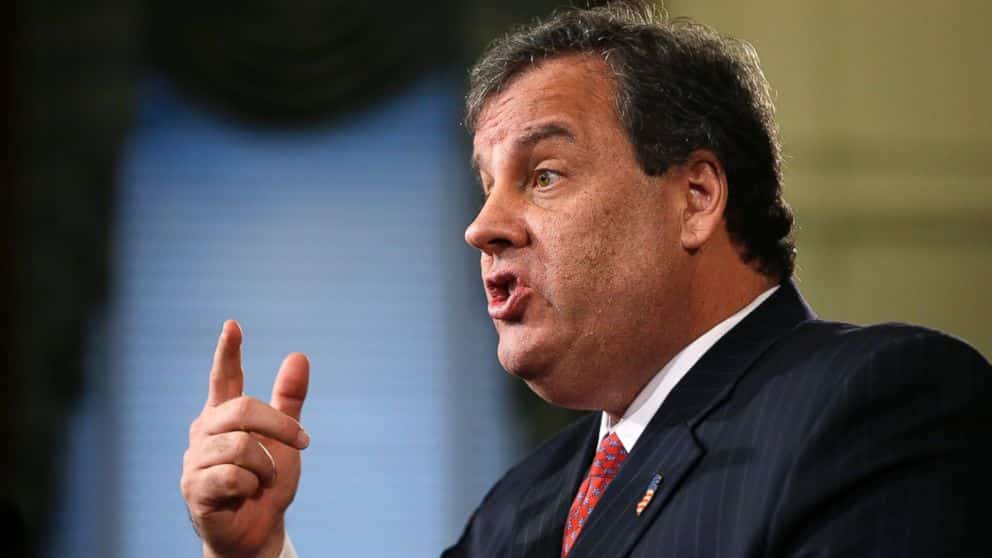
Chris_christie_theridgewoodblog

Christie’s successor will face budget challenges

Published March 04, 2017
Associated Press

TRENTON, N.J. –  Republican Chris Christie’s final budget as New Jersey governor has not yet passed through the Democrat-controlled Legislature, but already fiscal woes that could result in program cutbacks or higher taxes are on the horizon for whoever who succeeds him.

Christie unveiled a $35.5 billion 2018 spending blueprint on Tuesday without proposing tax increases or slashes to programs, but tax cuts enacted under his watch, a ballooning pension payment and mandated education spending will saddle his successor with challenging budget decisions.

Christie can’t run for re-election because of term limits. None of the leading Democratic and Republican candidates running to succeed him has unveiled his or her own prospective budget. While they’ve already begun to signal how they might approach the looming problems, it’s difficult to tell exactly how they would balance the budget.

A closer look at the issue:

WHAT’S THE PROBLEM?

Topping the list of issues is an estimated $1.1 billion hole from the reduction of the sales tax and phase-out of the estate tax that Christie and lawmakers agreed to last year as part of a deal on funding transportation.

Next year’s budget will also confront the prospect of a roughly $1.5 billion increase in the pension payment, if the current schedule is adhered to. And then there’s the school-spending formula approved by the Supreme Court that Christie failed to fund over seven years to the tune of about $1 billion a year.

There’s also significant uncertainty surrounding what could happen to federal aid the state gets, including more than $4 billion a year from the expansion of Medicaid as part of the Affordable Care Act. President Donald Trump and Republican-led Congress promise to repeal and replace the law.

https://www.foxnews.com/politics/2017/03/04/christies-successor-will-face-budget-challenges.html

Posted on Leave a comment

If your property tax bill is mind-blowingly high, just be thankful you don’t live in New Jersey, oh you do !

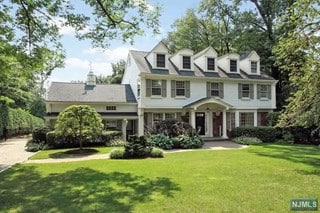
for sale Ridgewood_Real_Estate_theRodgewopodblog

file photo by Boyd Loving

Think Your Property Taxes Are High? See the Most—and Least—Expensive States

New Jersey is the state with the highest property taxes in the nation

By Clare Trapasso | Mar 2, 2017

If your property tax bill is mind-blowingly high, just be thankful you don’t live in New Jersey. And if you do, well, that’s got to hurt your bank account.

For the third year in a row, New Jersey is the state with the highest property taxes in the nation, according to a recent WalletHub report, with an effective real estate tax rate of 2.35%. This totals about $7,410 annually on a nearly $316,000 home, the median price in the state.

WalletHub analyzed U.S. Census Bureau data to figure out the real estate tax rates by dividing the median annual property tax payment for the state by the state’s median home price. Property taxes are typically levied at the county level, and go toward things like local schools, police and fire services, and parks.

https://www.realtor.com/news/trends/property-taxes-for-least-most-expensive-states/

Posted on 1 Comment

N.J.’s top pensions adviser: 5 ways to cut property taxes

money-growing-trees-10884441

Updated February 27, 2017
Posted February 27, 2017

Property taxes in New Jersey are the highest in the nation. Since 2000, they have doubled and have risen at over twice the rate of inflation. No wonder people are forced to move; no wonder we have the highest foreclosure rate in the nation.

Property taxpayers suffer because raising this tax is the path of least resistance. When the income tax goes up, people blame politicians in the Statehouse. For property taxes, it’s not clear who’s to blame: the state blames local governments. The towns who collect the taxes for school districts and counties blame those entities for not controlling costs. The towns, school districts and counties all blame the state for cutting state aid.

Everyone is to blame. No one is responsible.

The obvious way to control property taxes is to hold the line on expenses, but this is fraught with political consequences, especially for Democrats. Public-sector unions like the NJEA and the two police unions, whose members’ salaries and benefits are largely paid by property taxes, wield enormous influence in both general elections and, particularly, Democratic primaries.

https://www.nj.com/opinion/index.ssf/2017/02/njs_top_pensions_adviser_5_ways_to_cut_property_ta.html?utm_campaign=new-jersey-politics&utm_content=2017-28-02-8992448&utm_source=Sailthru&utm_medium=email&utm_term=New%20Jersey%20Politics#incart_river_index

Posted on 6 Comments

Airbnb: Why a fair tax plan for short-term home renters is good for N.J

Ridgewood Real-estate

file photo

Posted on February 25, 2017 at 10:37 AM

By Star-Ledger Guest Columnist

By Josh Meltzer

In the coming-of-age movie “Garden State,” Zach Braff’s character Andrew Largeman bemoans the disorienting feeling of lacking a home:

“You’ll see one day when you move out…You feel like you can never get it back. It’s like you feel homesick for a place that doesn’t even exist. Maybe it’s like this rite of passage…You won’t ever have this feeling again until you create a new idea of home for yourself.”

That feeling of home, of belonging, is at the heart of Airbnb’s mission. We seek to build a world in which people can belong anywhere — in over 34,000 big cities and small towns in 192 countries worldwide.

It is a sentiment rooted in the warm embrace of our host community — including 6,100 hosts right here in New Jersey who welcomed nearly 260,000 guests in 2016, double the number from 2015. These guests are coming from across the country and around the world, with 24 percent from outside North America.

The vast majority of Garden State hosts are middle class New Jerseyans who share their homes occasionally to pay for their mortgage, medicine, and student loans, or save money for retirement or a rainy day. In fact, last year, the typical host shared their home for fewer than 4 days a month, bringing in $6,200 to help make ends meet.

https://www.nj.com/opinion/index.ssf/2017/02/airbnb_why_a_fair_tax_plan_for_short-term_home_renters_is_good_for_nj_opinion.html

Posted on Leave a comment

NJ property tax appeals down more than half in 3 years

Ridgewood Realestate

file photo

By Michael Symons February 19, 2017 7:00 PM

Property tax appeals in New Jersey fell for the fourth straight year in 2016 to their lowest level since 2008, an indication people were less stressed about the value of their homes and, by extension, the condition of the overall economy.

However, the number of appeals, 49,286, remained higher than it had been in any of the dozen years leading up to the financial crisis of 2008.

“Better” doesn’t mean fully recovered.

“It’s a combination of the market value of properties appreciating over the last few years, since the downturn in the market, and also you’ve seen more reassessments or revaluations completed in municipalities, bringing the values back to market,” said Martin Lynch, president of the Association of Municipal Assessors of New Jersey

Read More: NJ property tax appeals down more than half in 3 years | https://nj1015.com/nj-property-tax-appeals-down-more-than-half-in-3-years/?trackback=tsmclip

Posted on 1 Comment

7 reasons why N.J.’s property taxes are highest in U.S. again

Ridgewood Real estate

Updated February 18, 2017
Posted February 18, 2017
By Susan K. Livio | NJ Advance Media for NJ.com

With the Governor and the entire Legislature on the ballot this election year, New Jerseyans will likely hear numerous politicians promise to reduce their especially high property tax bills.

We pay among the highest property taxes in the nation. Last year, the average homeowner paid $8,500 per home, a 2.35 percent increase over 2015, according to the most recent state calculations.

Both the Christie administration and the Legislature agree the annual increases would have been worse had they not passed a 2 percent spending cap on most local expenses.

As unpleasant as it is to admit, there are several facts about the Garden State that make bringing down property taxes very difficult, according to Marc Pfeiffer, assistant director for the Bloustein Local Government Research Center at Rutgers Center. (He previously helped manage six municipalities in central and north Jersey, then more than a quarter-century at the state office overseeing local government spending.)

“New Jersey has had property tax problem for roughly 140 years. We have been talking about this forever,” Pfeiffer said. “If we could have solved it easily, it would have been done.”

In no particular order, here are 7 reasons why they’re so high.

https://www.nj.com/politics/index.ssf/2017/02/7_reasons_why_njs_property_taxes_are_highest_in_us.html

Posted on 2 Comments

Corzine 2.0 Phil Murphy Goes Commie

Communism

Phil Murphy Hits NJ Campaign Stops Alongside Bernie’s Son, Levi Sanders

By PolitickerNJ Staff • 02/12/17 11:30am

“It is critical we elect progressives like Phil at all levels of government,” asserted Levi Sanders, the son of 2016 presidential candidate Bernie Sanders. The appearance of Sanders yesterday at a pair of campaign events, helped Phil Murphy accomplish two things as a candidate for the Democratic nomination for Governor of New Jersey.

First, it put a little space between him and Goldman Sachs. With Bernie Sanders, the independent-socialist senator from Vermont, still a hero to the populist wing of the Democratic Party despite his eventual fall to Hillary Clinton in the presidential primary, the embrace from his son makes it clear that Murphy isn’t a reincarnation of previous Goldman-Sachs-to-Governor tripper Jon Corzine. Levi Sanders said of the decision New Jersey faces: “It’s Wall St vs Main Street. It’s exciting.” By awarding Phil Murphy, who made his fortune at Goldman Sachs, a place on Main Street, Sanders is clearly signaling that Murphy can be trusted by the forces that created such energy around his father’s campaign.

https://observer.com/2017/02/phil-murphy-hits-nj-campaign-stops-alongside-bernies-son-levi-sanders/

Posted on 2 Comments

N.J. bill would fund sanctuary cities denied federal dollars by Trump

money-growing-on-tree-image-8

James — you should post this and then seek comment from the progressive Clinton/Gottheimer fans. How much are they willing to pay Hudson County over and beyond the Abbott money already going there?

By Steve Strunsky | NJ Advance Media for NJ.com
on February 07, 2017 at 8:06 PM, updated February 08, 2017 at 9:27 AM

UNION CITY — New Jersey lawmakers from immigrant-rich Hudson County on Tuesday announced a bill that would provide state aid to sanctuary cities denied federal funds for failing to comply with immigration rules.

The bill was introduced in both houses of the legislature on Tuesday by State Sen. Brian Stack, Assemblyman Raj Mukherji and Assemblywoman Annette Chaparro, all Democrats from the 33rd District.

The three held a press conference in the garage at City Hall in Union City, where Stack is also the mayor.

“Union City, technically, has always been a sanctuary city,” said Stack. “We have never turned away anybody, documented or undocumented, when they come in looking for help.”

The difference now is that President Donald Trump issued a Jan. 25 executive order intended to, “ensure that jurisdictions that fail to comply with applicable Federal law do not receive Federal funds, except as mandated by law,” specifically targeting sanctuary cities and states.

https://www.nj.com/hudson/index.ssf/2017/02/state_bill_would_fund_sanctuary_cities_denied_fede.html#incart_river_index

Posted on 3 Comments

New Jersey tax collections still struggling to reach pre-recession levels

14405_trenton_new_jersey_s_state_house_capitol_in_trenton

STEVE HUGHES Staff Writer

New Jersey is one of 23 states still trying to boost its tax revenue levels to pre-recession levels, according to a Pew Charitable Trust report.

At its peak, the fourth quarter of 2007, the state took in $8.7 billion in revenue. It hit a low point at the end of 2011, with only $7.1 billion in revenue that quarter.

As of the end of 2016, the state’s quarterly tax revenue was 10.9 percent lower than the third quarter of 2008, Pew found, as the state took in $7.8 billion.

https://www.pressofatlanticcity.com/news/new-jersey-tax-collections-still-struggling-to-reach-pre-recession/article_0333b0d0-03ee-58c3-b2b7-70f6ed8d8708.html

Posted on Leave a comment

Cigarette Taxes and Cigarette Smuggling by State, 2014

pirates

Tax policies sometimes have unintended consequences that outweigh their benefits.One consequence of high state cigarette taxes is increased smuggling. People procure discounted packs from low-tax states to sell in high-tax states.

January 17, 2017

Key Findings:

  • Excessive tax rates on cigarettes approach de facto prohibition in some states, inducing black and gray market movement of tobacco products into high tax states from low tax states or foreign sources.
  • New York has the highest inbound smuggling activity, with an estimated 55.4 percent of cigarettes consumed in the state deriving from smuggled sources in 2014. New York is followed by Arizona (49.6 percent of consumption smuggled), New Mexico (46.2 percent), Washington (45.2 percent), and Minnesota (35.5 percent).
  • New Hampshire has the highest level of outbound smuggling at 81.1 percent of consumption, likely due to its relatively low tax rates and close proximity to high tax states in the northeastern United States. Following New Hampshire is Idaho (24.8 percent outbound smuggling), Virginia (24.4 percent), Delaware (23.9 percent), and Wyoming (21.2 percent).
  • Following a cigarette tax increase from $2.51 to $3.51 in midyear of 2013, Massachusetts has seen a substantial increase in cigarette smuggling. Since the last year’s edition of this report, the state has jumped from 12 percent inbound smuggling to 29.3 percent inbound smuggling, the seventh highest in the country.
  • Cigarette tax rates increased in 31 states and the District of Columbia between 2006 and 2014.

Public policies often have unintended consequences that outweigh their benefits. One consequence of high state cigarette tax rates has been increased smuggling as people procure discounted packs from low-tax states to sell in high-tax states. Growing cigarette tax differentials have made cigarette smuggling both a national problem and in some cases, a lucrative criminal enterprise.

Each year, scholars at the Mackinac Center for Public Policy, a Michigan think tank, use a statistical analysis of available data to estimate smuggling rates for each state.[1] Their most recent report uses 2014 data and finds that smuggling rates generally rise in states after they adopt cigarette tax increases. Smuggling rates have dropped in some states, however, often where neighboring states have higher cigarette tax rates. Table 1 shows the data for each state, comparing 2014 and 2006 smuggling rates and tax changes.

New York is the highest net importer of smuggled cigarettes, totaling 55.4 percent of total cigarette consumption in the state. New York also has the highest state cigarette tax ($4.35 per pack), not counting the additional local New York City cigarette tax (an additional $1.50 per pack). Smuggling in New York has risen sharply since 2006 (+62 percent), as has the tax rate (+190 percent).

Smuggling in Massachusetts has notably increased since the last data release. The state implemented a tax increase from $2.51 to $3.51 per pack in midyear 2013, and smuggling rates increased from 12 percent to 29.3 percent between the 2013 data and 2014 data. Over the same period, outbound smuggling increased in nearby low-tax New Hampshire, from -28.6 percent to -81.1 percent, suggesting that many cartons of cigarettes are crossing the border from one state to the other.

Other peer-reviewed studies provide support for these findings.[2] Recently, a study in Tobacco Control examined littered packs of cigarettes in five Northeast cities, finding that 58.7 percent of packs did not have proper local stamps. The authors estimated 30.5 to 42.1 percent of packs were trafficked.[3]

The study’s authors, LaFaive and Nesbit, note that smuggling comes in different forms: “casual” smuggling, where smaller quantities of cigarettes are purchased in one area and then transported for personal consumption, and “commercial” smuggling, which is large-scale criminal activity that can involve counterfeit state tax stamps, counterfeit versions of legitimate brands, hijacked trucks, or officials turning a blind eye.[4]

The Mackinac Center has cited numerous examples over the many editions of this report, including stories of a Maryland police officer running illicit cigarettes while on duty, a Virginia man hiring a contract killer over a cigarette smuggling dispute, and prison guards caught smuggling cigarettes into prisons.

Policy responses in recent years have included banning common carrier delivery of cigarettes,[5] greater law enforcement activity on interstate roads,[6] differential tax rates near low-tax jurisdictions,[7] and cracking down on tribal reservations that sell tax-free cigarettes.[8] However, the underlying problem remains: high cigarette taxes amount to a “price prohibition” of the product in many U.S. states.[9]

https://taxfoundation.org/article/cigarette-taxes-and-cigarette-smuggling-state-2014?utm_source=Tax+Foundation+Newsletters&utm_campaign=45dd787461-EMAIL_CAMPAIGN_2017_01_18&utm_medium=email&utm_term=0_8387957ec9-45dd787461-427656697&mc_cid=45dd787461&mc_eid=c834f22e2e

Posted on Leave a comment

American Dream Meadowlands $1B bond sale still on hold

Xanadu_main_theridgewoodblog

Attorneys for Triple Five, the developer of American Dream Meadowlands, told the state Appellate Court in September that immediate dismissal of a lawsuit against the project must be made so as not to impede a complex financial sequence that must culminate on Nov. 4. The court dismissed the case the next day.

Yet more than nine weeks later, the project site looks as deserted as it has since before Christmas – and as it has many times over the past decade. The bond issuance plan – which has expanded to a planned $1.15 billion offering – was approved by the state for the first time in fall 2013.

https://www.northjersey.com/story/news/business/meadowlands-matters/2017/01/19/american-dream-meadowlands-1b-bond-sale-still-hold/96791274/?utm_campaign=Observer_NJ_Politics&utm_content=New%20Campaign&utm_source=Sailthru&utm_medium=email&utm_term=New%20Jersey%20Politics

Posted on Leave a comment

Financial Planning Association of New Jersey “Know Your Money” Series Talks Taxes

taxes_onlin-100006770-gallery

The second installment of a video series asks people about taxes, underscoring the importance of the role a CFP® and other professionals make.

January 19,2017

the staff of the Ridgewood blog

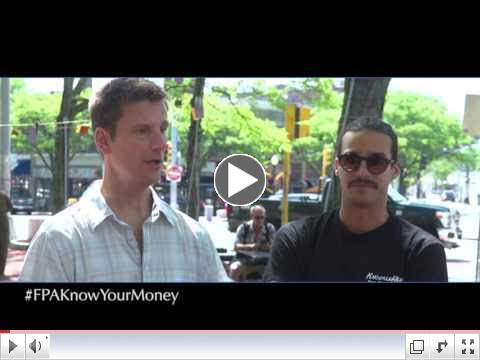
Ridgewood NJ,  The Financial Planning Association of New Jersey (FPANJ) continues its five-part video series to stress the importance of learning about your money, and how a Certified Financial Planner(TM) can play a role in reaching your financial goals.
After a launch in November covering estate planning, the latest subject is a timely one: Taxes.
The entire series features “man on the street” interviews with people, asking them questions based on topics that are important to know, yet many people can’t answer, even with a cash reward ($1) on the line.  Additional subjects will be released throughout the year and will include

College Planning, Social Security, and Health Care

 “Everyone is impacted by taxes,” said FPANJ President Rob Rafano. “It can be eye-opening for many who watch the video to realize what they don’t know. The purpose is to demonstrate all of the various issues that CFP®s help clients handle, and why not knowing what you don’t know can keep you from building wealth. The good news is that enlisting the help of professionals can help you reduce your tax liability, year in and year out.”
S
#FPAKnowYourMoney: Taxes
S #FPAKnowYourMoney: Taxes

The second installment of the Know Your Money on Taxes can be viewed on the FPANJ’s You Tube Channel. Additional videos can also be found there to help the public get to know FPANJ and learn more about their finances.

“We hope to continue the conversation among consumers on how to get started learning more about their finances, saving and investing more, and leaning on the expertise of financial professionals to get them there,” Rafano said, adding, “we are also relying on our local media to help educate the public, as there is always something happening in the news that these videos relate to.”


Posted on Leave a comment

New Jersey politicians should forget about Trump and Focus on NewJersey

Christine Todd Whitman

January 18,2017

the staff of the Ridgewood blog

Ridgewood NJ, As inauguration day approaches for president-elect Donald Trump, NJ politicians continue to make fools out of themselves. While some are sitting out the inauguration, others are protesting or criticizing Trumps cabinet picks.

Yesterday “environmental advocates” in New Jersey leveled scathing criticisms of Trump’s cabinet picks and issuing warnings that environmental protections stand to be significantly weakened under his administration. They were accompanied by former governors Jim Florio and Christine Todd Whitman who called on all sides in the state’s 2017 gubernatorial race to draw up plans to counteract environmental deregulation at the state level. State level , folks this is New Jersey who are you kidding?

This is the same Christine Todd Whitman who stole money from New Jersey Pensioners, and who initiated the Pension crisis we currently find ourselves in with her actions. This is also the same Christine Todd Whitman that as head of the EPA  and assured rescue workers that the air was fine at the World Trade Center site post 9/11.This is the same Jim Florio who looked to tax New Jersey out of business before it became fashionable.

New Jersey is by all negative measures, taxes, quality of life, cost of living, job growth leading the nation in failure.
Recent reports suggest 37% of people in N.J. are among the working poor and New Jersey leads the nation 5 years in a row for the state with the most people moving out of. New Jersey’s Pensions are in crisis, drug addiction is rampant, crime is on the rise, cities roads and bridges are dilapidated.  The reality is if you live in New Jersey you far bigger things to worry about than who gets sworn in on January 20th. Maybe politicians who do not attend the inauguration will donate their days pay to the state to help pay for some of their mistakes. Otherwise we suggest its time to get to work and do your job.

Posted on Leave a comment

PUBLIC HEARINGS — AS MANY AS 9 — PLANNED ON NJ SCHOOL FUNDING

RHS

file photo by Boyd Loving

JOHN MOONEY | JANUARY 17, 2017

Democrats Sweeney and Prieto will pursue individual approaches to funding reform

Get ready to hear a lot more about school funding in New Jersey.

This week will start what could amount to nine separate public hearings in the next month about the state of school funding for New Jersey’s public schools, all driven by the somewhat fractured Democratic leadership of the Legislature.

The first is scheduled for today before the Joint Committee for the Public Schools, a hearing that has long been on the docket.

The next day will be the initial hearing before the Assembly’s education committee at 10 a.m. on Wednesday in the State House. Another is planned before a new Senate select committee next week, on January 27, at Kingsway Regional High School in Woolwich at 11 a.m. The next three have yet to be scheduled.

And this is all before Gov. Chris Christie unveils his state budget for fiscal 2017, in which a third of state spending will be aid to schools. It’s anyone’s guess as to what he will put forward.

Christie has been pushing to scuttle the state’s current formula-driven funding plan, instead providing the same amount of state aid per pupil for every district, no matter the need.

https://www.njspotlight.com/stories/17/01/16/public-hearings-as-many-as-9-planned-on-school-funding/?utm_campaign=Observer_NJ_Politics&utm_content=New%20Campaign&utm_source=Sailthru&utm_medium=email&utm_term=New%20Jersey%20Politics

Posted on Leave a comment

Report: 25% of Morris households can’t afford to live in county

Sweeney & Prieto

Michael Izzo , @MIzzoDR4:40 p.m. ET Jan. 16, 2017

Rising costs are putting basic necessities out of reach for 37 percent or 1.2 million New Jersey households, according to the United Way ALICE Report released by United Way of Northern New Jersey.

“ALICE – Asset Limited, Income Constrained, Employed; Study of Financial Hardship” shows that the minimum costs to survive in New Jersey rose by 23 percent since 2007, outpacing the rate of inflation of 14 percent. The report finds that it costs a single adult $24,300 to survive annually and $64,176 for a family of four with two children under the age of five.

https://www.dailyrecord.com/story/news/local/new-jersey/2017/01/16/report-25-morris-households-cant-afford-live-county/96489638/?utm_campaign=Observer_NJ_Politics&utm_content=New+Campaign&utm_source=Sailthru&utm_medium=email&utm_term=New+Jersey+Politics