Posted on 8 Comments

Finances, design of Ridgewood garage are detailed

Hudson_street_parking_theridgewoodblog

Rich, thanks for the pointer to page 24.“Given that the new demand stream is not anticipated to cover debt service for the garage, the parking system will need to increase revenue on existing spaces if it is to be self-supporting.”

OCTOBER 9, 2015    LAST UPDATED: FRIDAY, OCTOBER 9, 2015, 9:09 AM
BY MARK KRULISH
STAFF WRITER |
THE RIDGEWOOD NEWS

Designs and architectural renderings for a potential parking garage on Hudson Street were presented on Wednesday, providing the public an opportunity to view different proposals for the deck. A financial review was also presented.

Representatives from Desman Design Management and S&L Architecture Studio offered three different options with varying degrees of size and parking efficiency, along with distinctive architectural structures.

All three design ideas were for a four-story building with five levels of parking, one of which included a building that stayed within the footprint of the site while the other two explored taking some of the right-of-way from Hudson Street.

The Hudson Street site does have some constraints, said Desman Design principal Tim Tracy. The first option for a garage did not explore any unique solutions and contained angled parking and side ramps at the western and eastern ends of the building, which resulted in a 124,000-square-foot building and a net gain of 236 parking spaces.

The second option tinkered with the footprint of the site on the western side and resulted in a slightly larger facility at 130,000 square feet and a net gain of 253 spaces.

A third design expanded further on the idea of extending the lot and building a cantilever over the sidewalk, which would give the village a net gain of 317 spaces and a building that is 139,000 square feet. This option enables the village to get 330 square feet per car, which Tracy said is within the industry standard and also allows the access easement on the eastern end to be retained.

https://www.northjersey.com/news/garage-finances-design-detailed-1.1429249

Posted on 1 Comment

Study: Government Workers Make 78 Percent More Than Private Sector

Obama-Golf

Average pay and benefits $52,688 higher than non-gov’t employees

BY: Elizabeth Harrington
October 8, 2015 2:45 pm

Employees for the federal government earn far more than their counterparts in the private sector, according to a new study by the Cato Institute.

Federal workers’ pay and benefits were 78 percent higher than private employees, who earned an average of $52,688 less than public sector workers last year.

The study found that federal government workers earned an average of $84,153 in 2014, compared to the private sector’s average of $56,350. Cato based its findings on figures from the U.S. Bureau of Economic Analysis (BEA).

But when adding in benefits pay for federal workers, the difference becomes more dramatic. Federal employees made $119,934 in total compensation last year, while private sector workers earned $67,246, a difference of over $52,000, or 78 percent.

https://freebeacon.com/issues/study-government-workers-make-78-percent-more-than-private-sector/

Posted on Leave a comment

Donald Trump: “I pay as little as possible” in taxes

11666103_10155814007500725_542686515271077962_n

By REBECCA KAPLAN FACE THE NATION August 2, 2015, 10:49 AM

Presidential candidate Donald Trump said Sunday that he pays as little in taxes as possible just like every other taxpayer in America.

“I fight like hell to pay as little as possible for two reasons. Number one, I’m a businessman. And that’s the way you’re supposed to do it,” Trump said in an interview with CBS’ “Face the Nation.” “The other reason is that I hate the way our government spends our taxes. I hate the way they waste our money. Trillions and trillions of dollars of waste and abuse. And I hate it.”

Trump has not yet released his tax returns, but said he has “no major problem” with doing it. And he said he may tie a release of his tax returns to a release of Democratic candidate Hillary Clinton’s emails from her time as secretary of state.

Trump: Patience for the presidency?

The State Department is in the process ofreviewing and releasing more than 55,000 pages of emails Clinton sent and received while in the Obama administration. Clinton has come under fire for using a private email server to conduct business rather than her official government account, and fresh questions emerged last month about whether Clinton used her personal email account to send classified information.

Trump predicted the questions over Clinton’s email practices will “be a devastating blow for Hillary,” and said she would be “in big trouble” if there is “an honorable prosecution” (something he said is unlikely because the prosecutors “are all Democrats”). He compared Clinton’s troubles as a far worse version of the scandal that engulfed former CIA Director David Petraeus, who pled guilty earlier this yearto giving classified information to his mistress and biographer.

https://www.cbsnews.com/news/donald-trump-i-pay-as-little-as-possible-in-taxes/

Posted on 4 Comments

Paramus has second thoughts about raising age for local cigarette purchases

bikeattheCigarshop theridgewoodblog.net 1

JULY 22, 2015, 9:28 PM    LAST UPDATED: WEDNESDAY, JULY 22, 2015, 9:46 PM
BY ALLISON PRIES
STAFF WRITER |
THE RECORD

PARAMUS — The Borough Council should abandon an ordinance to raise the tobacco buying age to 21, Paramus’ attorney recommended during a council work session Wednesday night.

Attorney Paul Kaufman told the council that the ordinance it introduced June 9 could make the borough vulnerable to costly litigation because of concerns over preemption by the state law and enforceability.

The way the law is written, Kaufman said, it’s silent on whether the tobacco buying age would be preempted by the state law, which puts the purchasing age at 19.

Related:  Paramus to discuss tobacco-buying age

“I don’t think the taxpayers here should have to pay $100,000 in legal expenses to find out the answer,” he said.

Kaufman also said that it “breeds disrespect for the law to enact an ordinance that’s not enforced.”

Instead, Kaufman suggested the council pass a resolution urging the state to amend the statute.

“I get the point that when you enact an ordinance like this that you’re sending a message to the state Legislature,” Kaufman said. “I think there’s another way … to get that point across.”

The resolution could be brought to the state by hometown Assemblyman, and former Councilman, Joe Lagana. Also, the Paramus clerk could share the resolution with the Bergen County Municipal Clerks’ Association of New Jersey to spread the word, Kaufman suggested.


https://www.northjersey.com/news/paramus-has-second-thoughts-about-raising-age-for-local-cigarette-purchases-1.1378601

Posted on 1 Comment

When is $100 worth $87.34 , only in New Jersey

$100 Map

July 16, 2015
By
Alan Cole,
Scott Drenkard

This week’s map shows the real value of $100 in each state. Prices for the same goods are often much cheaper in states like Missouri or Ohio than they are in states like New York or California. As a result, the same amount of cash can buy you comparatively more in a low-price state than in a high-price state.

The Bureau of Economic Analysis has been measuring this phenomenon for two years now; it recently published its data for prices in 2013. Using this data, we have adjusted the value of $100 to show how much it buys you in each state.

For example, Ohio is a low-price state. $100 there will buy you stuff that would cost $111.61 in a state closer to the national average. You could think of this as meaning that Ohioans are, for the purposes of day-to-day living, eleven percent richer than their incomes suggest.

The states where $100 is worth the most are Mississippi ($115.21) Arkansas ($114.29) South Dakota ($114.16) Alabama ($114.03) and West Virginia ($113.12). In contrast, $100 is effectively worth the least in the District of Columbia ($84.96) Hawaii ($86.06) New York ($86.73) New Jersey ($87.34) and California ($89.05.)

Regional price differences are strikingly large; real purchasing power is 36 percent greater in Mississippi than it is in the District of Columbia. In other words: by this measure, if you have $50,000 in after tax income in Mississippi, you would have to have after-tax earnings of $68,000 in the District of Columbia just to afford the same overall standard of living.

It’s generally the case that states with higher nominal incomes also have higher price levels. This is because there is a relationship between the two: in places with higher incomes, the prices of finite resources like land get bid up. But the causation also runs in the opposite direction. Places with high costs of living pay higher salaries for the same jobs. This is what labor economists call a compensating differential; the higher pay is offered in order to make up for the low purchasing power.

This relationship is important, though it is not the only thing that matters. Some states, like North Dakota, have high incomes without high prices. Adjusting incomes for price level can substantially change our perceptions of which states are truly poor or rich.

For example, Nebraskans and Californians earn approximately the same amount in dollars per capita, but after adjusting for regional price parity, Nebraskan incomes can buy more.

This has substantial implications for public policy, which is often progressive with respect to income.

Many policies – like minimum wage, public benefits, and tax brackets – are denominated in dollars. But with different price levels in each state, the amounts aren’t equivalent in purchasing power. This has some unexpected consequences; people in high-price-level states like New Jersey will often pay more in federal taxes without feeling particularly rich.

Posted on 7 Comments

Readers say Morristown Memorial Hospital Decision suggest Valley should be paying taxes in Ridgewood

valley_hospital_theridgewoodblog

Morristown Medical Center should pay property taxes on virtually all of its 40-acre property in town, a tax court judge ruled Friday in a decision closely watched by other hospitals across New Jersey. https://www.nj.com/morris/index.ssf/2015/06/morristown_medical_center_loses_tax_case_raising_f.html#incart_river

Based on the recent ruling by a tax judge regarding Morristown Memorial Hospital and paying taxes on the property they own in that town, why should Valley continue not paying taxes in Ridgewood ? How is Valley not paying taxes on all of their properties “serving Ridgewood?”

This is just what Valley did not want to hear…and what we’ve been clamoring about for years based on Valley’s behavior. Ridgewood should use this ruling as leverage to convince Valley to drop it’s current lawsuit and adjust it’s growth plans to something reasonable based on its footprint in a heavily residential area.

Can you imagine how much this town would have benefited from Valley paying even a quarter of what they could have over the years ? Instead, they’ve decided to bite the hand that has fed them and file suit.Two words: greed and arrogance.

Posted on 3 Comments

State government tax revenue is only 5 percent above its pre-recession level

Trenton_New_Jersey

The financial state of states: The truth may scare you

State government tax revenue is only 5 percent above its pre-recession level.

Eric Rosenbaum | @erprose

State finances across the U.S. have been described as stable but slow growing. Six years into the post-recession economic recovery, that statement may be accurate, but the full truth may be more troubling.

A handful of states are caught in a real pension fix. A few statehouse budget battles in recent months have been notable for their heightened drama—Kansas, where huge tax cuts backfired on Gov. Sam Brownback; and Louisiana, where a member of Gov. Bobby Jindal’s own party referred to his budget plan as “money laundering.”

But it’s not the extremes that have state budget experts concerned. More states have been unable to complete budgets so far this year than is typical, and the situation points to long-term spending problems—from K–12 education to Medicaid and infrastructure—that will persist.

“The picture is more gloomy than stable, and state fiscal conditions might be better described as stagnant,” said Lucy Dadayan, senior policy analyst at the Nelson A. Rockefeller Institute of Government.


https://www.cnbc.com/id/102773569

Posted on 15 Comments

Tired of high taxes? Maybe it’s time to move

Ridgewood_Real_estate_theridgewoodblog

file photo by Boyd Loving

CNBC data analysis shows outbound flow from high-tax states.

John W. Schoen | @johnwschoen

Everyone complains about taxes. But millions of American households apparently are doing something about it: Picking up and moving.

A CNBC analysis of tax data and figures provided by two major national moving companies shows that states with the highest per-capita taxes, for the most part, are also seeing the biggest net migration out of those states.

Take Connecticut, for example.

Earlier this week, the Nutmeg State’s legislature approved a collection of new taxes to close a two-year, $40 billion budget to help pay the multibillion-dollar tab to repair and replace the state’s dilapidated roads and bridges. The package includes a 50-cent-per-pack hike in cigarette taxes and a bump in tax rates on corporations and the state’s wealthiest earners.

The budget battle drew heated debate, along with threats from large employers like General Electric, which issued a rare statement that it might consider moving its Fairfield headquarters.

Republican opponents warned that the tax hikes would likely drive residents to flee to lower-tax states. One legislator suggested that a local moving-and-storage company up for sale should do a booming business moving households from the state.

“I think the best buy in Connecticut right now is a business for sale in Westport,” Michael A. McLachlan, R-Danbury, told the AP earlier this month as the debate wore on. “For $650,000, a sharp investor can get up and increase this business into a mega moving company, because that’s what people are going to be doing, starting today.”

https://www.cnbc.com/id/102748599

Posted on 1 Comment

Health Insurers Seek Hefty Rate Boosts

obamacare_theridgewoodblog

Proposals set the stage for debate over federal health law’s impact

By
LOUISE RADNOFSKY
May 21, 2015 5:34 p.m. ET

Major insurers in some states are proposing hefty rate boosts for plans sold under the federal health law, setting the stage for an intense debate this summer over the law’s impact.

In New Mexico, market leader Health Care Service Corp. is asking for an average jump of 51.6% in premiums for 2016. The biggest insurer in Tennessee, BlueCross BlueShield of Tennessee, has requested an average 36.3% increase. In Maryland, market leader CareFirst BlueCross BlueShield wants to raise rates 30.4% across its products. Moda Health, the largest insurer on the Oregon health exchange, seeks an average boost of around 25%.

All of them cite high medical costs incurred by people newly enrolled under the Affordable Care Act.

Under that law, insurers file proposed rates to their local regulator and, in most cases, to the federal government. Some states have begun making the filings public, as they prepare to review the requests in coming weeks. The federal government is due to release its rate filings in early June.

Insurance regulators in many states can force carriers to scale back requests they can’t justify. The Obama administration can ask insurers seeking increases of 10% or more to explain themselves, but cannot force them to cut rates. Rates will become final by the fall.

“After state and consumer rate review, final rates often decrease significantly,” said Aaron Albright, a spokesman for the Centers for Medicare and Medicaid Services, the federal agency overseeing the health law.

https://www.wsj.com/articles/health-insurers-seek-hefty-rate-boosts-1432244042

Posted on 2 Comments

For Many American States, It’s Like the Recession Never Ended

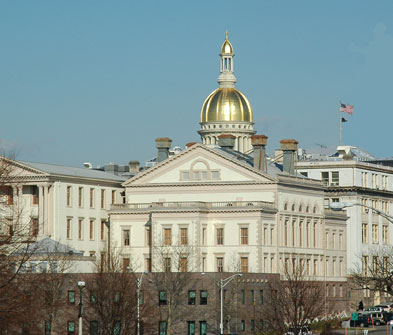
Chris_christie_theridgewoodblog

by Mark Niquette

Six years after the recession ended, many U.S. states are hard pressed to balance budgets because of a sluggish recovery and their own policy decisions. The fiscal fragility raises questions about how they will weather the next economic downturn.

A majority of states are making cuts, tapping reserves or facing shortfalls despite an improving national economy and stock markets at record levels, according to Standard & Poors and the Nelson A. Rockefeller Institute of Government. State revenue hasn’t rebounded to a prerecession peak adjusted for inflation, and other factors are putting pressure on budgets.

Alaska, Oklahoma and energy-producing states saw receipts fall with global oil prices. Kansas overestimated revenue after tax cuts, while New Jersey faces a shortfall thanks to unfunded pensions. Even some Republican governors have championed tax increases to avoid further diminishing services curtailed during the 18-month recession, the deepest downturn since the Great Depression.

“The extent of the weakness is really impressive,” said Donald Boyd, who tracks state finances at the Rockefeller Institute in Albany, New York. “There’s a lot of pressure on governors and legislators.”

Thirty-two states faced budget gaps in fiscal 2015 or 2016 or both, according to an April 27 report by Standard & Poors. The fiscal year ends June 30 in all but four states.

https://www.bloomberg.com/news/articles/2015-05-20/six-years-into-recovery-u-s-states-struggle-to-balance-budgets

Posted on 8 Comments

Reader says For the first time in 32 yrs. we are starting to question why we are staying here

Abraham-Godwin_theridgewoodblog

For the first time in 32 yrs. we are starting to question why we are staying here. High taxes, no kids in school, watching services go south( have you ever seen the corner of Linwood and Maple look that bad on Mothers Day, or Ben Franklin the morning after it is used by whoever the night before ?)the garbage political games, developers going nuts (along with a non profit), etc. It was once the positives far outweighed the negatives as this being a top notch town in which to live; unfortunately, that gap has narrowed substantially.

Posted on 1 Comment

Tax Freedom Day arrives in New Jersey, but it’s not good news

ArtChick_jump

photo by ArtChick

After crunching the numbers, the Tax Foundation has determined today marks Tax Freedom Day in the Garden State — the day when many New Jersey residents have finally earned enough money to pay all of their taxes for the year.

New Jersey and Connecticut have the latest Tax Freedom days of any state in

the nation. (Matthau/NJ101.5)

Tax Freedom Day arrived in New Jersey

Posted on 1 Comment

LIE CAMPAIGN: 11 THINGS THE MEDIA WON’T TELL YOU ABOUT AMTRAK

APTOPIX Amtrak Crash

by JOHN NOLTE13 May 2015

Before the dead were counted and the facts known, the craven, partisan ghouls in our mainstream media were already using a terrible domestic tragedy to call for more government spending.

The media’s politically-loaded word of the day is “infrastructure.” This comes as absolutely no surprise when you understand that the foundation of all media bias is to increase the size and power of our centralized government. And what better way to do that than to feast off the fresh corpses of those killed on a passenger train run by our bloated, incompetent federal government.

And what better way to distract from the fact that 6 innocent people died on a passenger train run by our bloated, incompetent federal government than to blame-shift to the selfish taxpayers and the evil Republican Party.

You see, Amtrak is like Baltimore: although government has had its fingers in everything for decades, the only solution is more government.

Heads up! This is the media’s game-plan for the rest of the week: At least through the Sunday shows, the media will exploit the Amtrak tragedy to call for more government spending and blame Republicans.

That makes this a perfect time to arm yourselves with the facts:

The Federal Government Owns and Operates Amtrak

Amtrak Loses Hundreds of Millions of Dollars a Year

American Taxpayers Subsidize a Service They Don’t Use

Very Small Percentage of the Population Use a Government Service We All Pay For

Amtrak Has Already Been Subsidized to the Tune of a Whopping $45 billion

Amtrak Is Set to Receive Another $7 Billion Over the Next 5 years

Amtrak Is Not Under-Funded, It Is Criminally Mismanaged

American People Subsidize $60 of Every Amtrak Ticket Sold

Taxpayers Subsidize Passengers Who Can Afford to Make Amtrak Profitable

There Is No Good Reason for The Government To Own Amtrak

The Amtrak Derailment Might Be Yet Another Failure of the Federal Government


https://www.breitbart.com/big-journalism/2015/05/13/11-things-the-media-wont-tell-you-about-amtrak/

Posted on 1 Comment

Washington Is Mismanaging Your Gas Tax Dollars. Here’s Why States Should Have Control.

gasprices_theridgewoodblog

Michael Sargent / May 12, 2015

Transportation funding could hit a dead-end at the end of the month. On May 31, the Highway Trust Fund’s authorization to pay for the nation’s highway and mass transit projects will expire.

Even worse, the fund is running a $13 billion cash flow deficit this year and is expected to exhaust all its money sometime in July unless lawmakers take action.

Here’s a snapshot from Heritage’s latest Backgrounder on what you need to know about the Highway Trust Fund:

What is the Highway Trust Fund?

The Highway Trust Fund was established in 1956 to pay for the construction of the Interstate Highway System. Although it was intended to be temporary, it is now the primary federal mechanism to finance transportation projects across the country.

The fund is financed mostly by the gas tax—an 18.3 cent tax on gasoline and a 24.3 cent tax on diesel fuels. It spends over $50 billion every year on roads and mass transit, which includes rail, buses, streetcars and other forms of public transportation.

What’s the problem?

Like most federal programs, the Highway Trust Fund consistently spends more than it receives in revenues. Congress has constantly had to bailout the fund with money from the Treasury in order to keep its balance in the black, and has spent $62 billion covering the fund’s shortfalls since 2008.

This year, the Congressional Budget Office projected the Highway Trust Fund’s spending will top its revenues by $13 billion.

Why is the fund in such bad shape?

Unable to relinquish the taxing and spending authority that should have expired when the Interstate Highway System was completed in the 1980s, Congress has expanded the Highway Trust Fund far beyond its intended scope.

The fund now spends more than ever and diverts billions from roadways to projects that should be left to states and localities. These boondoggles not only include unnecessary mass transit projects, but things like sidewalks, roadside landscaping and bike paths.

And spending increases have vastly outpaced fuel tax revenues, which have flattened as cars have become more fuel efficient. The result is a meandering, unsustainable fund that is plagued by special interests and unreliable for state transportation planning.

What should Congress do about it?

Some members of Congress are saying that they should just provide more money to the trust fund, either through a bailout or a gas tax hike, so that it can continue its profligate spending.

This is the wrong approach.

Congress needs to examine the inherent flaws in the way the nation invests in transportation infrastructure. The current system of taxing drivers and then redistributing their money through the federal government to projects unrelated to highways no longer makes sense.

Instead, Congress should end the top-down approach that breeds inefficiency and special interest handouts at the expense of prudent infrastructure investment.

The right approach would be to let states and localities—which are more in touch with the needs of their citizens—make their own decisions on transportation. Allowing them to tax and spend on infrastructure as they see fit without the interference of Washington would inject a much-needed degree of accountability and reliability into transportation investment.

For more information on the Highway Trust Fund and the upcoming deadline, see Highway Trust Fund Basics: A Primer on Federal Surface Transportation Spending.


https://dailysignal.com/2015/05/12/washington-is-mismanaging-your-gas-tax-dollars-heres-why-states-should-have-control/?utm_source=facebook&utm_medium=social&utm_campaign=thffacebook

Posted on 5 Comments

NJ’s long term jobless rate among highest in the nation

imgres-5

APRIL 27, 2015    LAST UPDATED: MONDAY, APRIL 27, 2015, 1:20 AM
BY HUGH R. MORLEY
STAFF WRITER |
THE RECORD

n 3.8% rate in 2014, a drop from the previous year, was higher than all but six states

New Jersey had one of the highest rates of long-term unemployment in the nation in 2014, even as the state job market slowly improved, figures released last week showed.

The percentage of the state’s workforce out of work for 15 weeks or more in 2014 — on average, 3.8 percent — was higher than all but six states, according to the U.S. Bureau of Labor Statistics. The national long-term jobless rate was 3 percent. New Jersey’s rate tumbled from an average of 5.1 percent in 2013.

Charles Steindel, former chief economist under Governor Christie and now a resident scholar at the Anisfield School of Business at Ramapo College, said the high rate of long-term unemployed reflects the sluggishness of the New Jersey economy, which has lagged behind the national revival.

“New Jersey has had a weak recovery, so it’s taking people longer to find a job,” he said.

He added that the state’s employment insurance payments are among the highest in the nation, and that may allow people to take longer to find the right job.

https://www.northjersey.com/news/nj-state-news/n-j-struggles-with-long-term-joblessness-1.1319422