Posted on 13 Comments

New Taxes to bail out Union Pension Plans , No thanks

-d171437cdc097890
April 26,2015
staff and readers of the Ridgewood blog
While I and many of us appreciate all the hard work work state and municipal workers do , the reality is that your union dues fund most of the politicians who mismanage your assets . The tax base has been so depleted in New Jersey by the anti business attitude and high taxes  current benefit packages are no longer viable .
New taxes are out of the question , so that leaves only significant budget cuts and changes to new hires contracts in order to preserve promises made to retirees .

“Time to reach deeper into your pocket thanks to the current and past governors and legislatures.” Wow, we have some public pensioners on this blog! How do you guys feel about the Pension Committee’s proposals to reduce the cost of NJ state entitlements without raising state taxes? Would be nice to see an honest debate about this instead of the hysterical rants above. I personally think we’re already taxed enough, state income and local property taxes plus commuting costs are already the highest of any state in the nation. So just raising taxes again without concessions changes nothing of the status quo that has ruined NJ state finances and caused the local economy to lag the national economic recovery. Here’s the plan. Why can’t we debate this?https://www.state.nj.us/treasury/pdf/FinalFebruaryCommissionReport.pdf

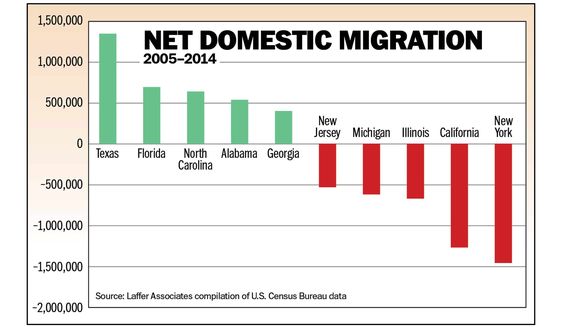
The proposed Millionaire’s tax won’t raise enough revenue to cover the $4bn required pension payment at the state level. To do that, we’d have raise state income taxes on any household making over $300k a year by +10%, raise NJ sales taxes by 20%, and raise the gas tax by 25c per gallon plus the already planned NJ Transit fare hike of +9%. That’s the Democrat/union plan to pay for the past. None of those tax revenues raised would go towards future investment in education, infrastructure, or economic development. That’s why NJ’s net emigration will continue to accelerate, it’s why businesses are leaving, and it’s why pension hogs like the socialist we’ve got here are willing to tell the rest of us to reach deeper still in our pockets to pay for his $100k pension and free healthcare. He doesn’t care about the future of NJ; he only cares about his pockets. That’s why no part of the status quo in NJ is sustainable.

Bergen County already has the 3rd highest property taxes in the USA, and NJ counties take 7 of the top ten spots nationwide (source: https://onforb.es/1IQKDic ), and yet blog posters here can only see further tax increases as the long term solution? You must be retired public sector workers.

Taxes should be cut, not raised. A new Zillow survey (https://www.forbes.com/fdc/welcome_mjx.shtml) puts Bergen County taxes at #3 in the nation, which means Ridgewood has one of the highest property tax bills in the USA. Surely we can find ways to operate more efficiently and reduce OT and other fixed expenses? Why aren’t higher paid employees in public safety and Village management contributing more (i.e. +50%) for the cost of their health care plans? Why aren’t we moving new Village hires to defined contribution pension plans instead of defined benefit plans like the BoE is doing?

The FACT is the actual cost for a N.J. public employee family plan is $19,488.00. The national average for same health care coverage for public and private health care family plan is $16,351.00 according to the September 25, 2014 – Status Report of the New Jersey Pension and Health Benefit Study Commission which can be found on page 8, (see link below).

https://www.state.nj.us/treasury/pdf/NJPHBSC.pdf

You claim N.J. retirees get $100,000.00 annual pensions. Partially correct but only if they are members of the Judicial Retirement System! Here are the average annual pensions for each pension system from page 11 of the same report.

Public Employees Retirement System – State – $30,769

Teachers Pension and Annuity Fund – $47,827

State Police Retirement System* – $60,297

Police and Fire Retirement System* – $57,764

Judicial Retirement System – $112,956

Posted on Leave a comment

Today is Tax Freedom Day 2015

incle_sam_wants_you_theridgewoodblog

America has earned enough to pay off its $4.8 trillion tax bill

Washington, DC (Apr 24, 2015)—Today, the nation as a whole has earned enough money to pay its federal, state, and local tax bill for the year, according to the annual report from the nonpartisan Tax Foundation. After 114 days into 2015, Tax Freedom Dayhas arrived!

Key takeaways from the report include:

Americans will pay $3.3 trillion in federal taxes and $1.5 trillion in state and local taxes, for a total bill of more than $4.8 trillion, or 31 percent of the nation’s income.
Tax Freedom Day is one day later than last year due mainly to the country’s continued steady economic growth, which is expected to boost tax revenue especially from the corporate, payroll, and individual income tax.
America will collectively spend more on taxes in 2015 than it will on food, clothing, and housing combined.
If you include annual federal borrowing, which represents future taxes owed, Tax Freedom Day would occur 14 days later on May 8.

“Tax Freedom Day gives us a vivid representation of how much we pay for the goods and services provided by governments at all levels,” said Tax Foundation Economist Kyle Pomerleau. “Arguments can be made that the tax bill is too high or too low, but in order to have an honest discussion, it’s important for taxpayers to understand cost of government. Tax Freedom Day helps people relate to that cost.”

Historically, the date for Tax Freedom Day has fluctuated significantly. The latest-ever Tax Freedom Day was May 1, 2000 – meaning that Americans paid 33% of their collective incomes towards taxes. A century earlier, in 1900, only 5.9% of national income was required to pay the tax bill, and Tax Freedom Day fell January 22.

While the national date arrives nine days after the tax filing deadline, each state’s total federal, state, and local tax burden varies greatly. Tax Freedom Day arrived earliest in Louisiana on April 2 and Mississippi on April 4. On May 13, Connecticut and New Jersey will be the last states to reach Tax Freedom Day this year.

Posted on 1 Comment

Report: IRS Deliberately Cut Its Own Customer Service Budget

article-2023151-039D73D20000044D-641_468x286

9:00 AM, APR 22, 2015 • BY JOHN MCCORMACK

If you tried to contact the IRS with a question about your taxes this year, chances are you didn’t get a response. The IRS estimated that it would only answer 17 million of the 49 million calls received this filing season. Taxpayers lucky enough to have the IRS answer their calls waited an average of 34.4 minutes for assistance–nearly double the wait time last year (18.7 minutes).

IRS Commissioner John Koskinen has blamed the IRS’s “abysmal” customer service on congressional budget cuts–funding is down $1.2 billion from its 2010 peak–but a new congressional report points the finger back at the IRS. While congressional funding for the IRS remained flat from 2014 to 2015, the IRS diverted $134 million away from customer service to other activities.

In addition to the $11 billion appropriated by Congress, the IRS takes in more than $400 million in user fees and may allocate that money as it sees fit. In 2014, the IRS allocated $183 million in user fees to its customer service budget, but allocated just $49 million in 2015–a 76 percent cut.

Commissioner Koskinen will appear before the House Ways and Means Committee this morning, one week after the federal tax filing deadline, and he can expect to be asked why the IRS cut its own customer service budget and continues to spend money on other questionable activities.

The report notes that Koskinen reinstated bonuses weeks after his appointment, has allowed IRS employees to spend roughly 500,000 work hours on union activities, and failed to collect delinquent taxes owed by federal employees. The tax agency has also been strained by Obamacare. According to the report, the IRS has spent “over $1.2 billion on the President’s health care law to date, with a planned expenditure this year of an additional $500 million.”

https://www.weeklystandard.com/blogs/report-irs-deliberately-cut-its-own-customer-service-budget_927141.html

Posted on 5 Comments

GREEDY: NJEA breaks with Christie on pension and benefits changes

A dunce's cap is no longer a reliable indication of a person's intelligence

APRIL 21, 2015, 1:45 PM    LAST UPDATED: TUESDAY, APRIL 21, 2015, 10:08 PM

BY MELISSA HAYES
STATE HOUSE BUREAU |
THE RECORD

The New Jersey Education Association will no longer work with Governor Christie on revamping pension and health benefits for public employees, ending what the governor had called an “unprecedented accord” at the heart of his plan to reform the system.

Instead, the NJEA said on Tuesday that it would focus on a lawsuit filed by more than a dozen unions that challenges Christie’s decision to significantly cut the state’s pension contributions. A Superior Court judge has sided with the unions, ruling Christie must make the larger payments, and the state Supreme Court will hear the governor’s appeal next month.

“If we had it to do over again, we would never have signed the memo describing concepts we discussed with the commission,” NJEA President Wendell Steinhauer said in his statement, referring to the panel the governor appointed to make recommendation shoring up the pension system. “It was misrepresented by the governor, and that distracted everyone from the real priority: requiring the state to fund the pensions for which our members have paid their share on each and every payday throughout their careers.”

Christie, who had trumpeted the deal with his biggest political foe, turned to social media to respond to the union and to attack Democrats who joined the unions’ lawsuit and called for him to make larger pension payments.

https://www.northjersey.com/news/njea-breaks-with-christie-on-pension-and-benefits-changes-1.1313853

Posted on 1 Comment

Kill the death tax

Grim-Reaper

By Thomas Fletcher – – Tuesday, April 14, 2015

With the federal budget debate underway in Washington, both political parties are certainly sparring over different fiscal visions for the country. There is, however, a chance for rare bi-partisan agreement: repealing the federal death tax.

This unpopular tax has long had an adverse impact on small, family business owners who want the next generation to continue the family legacy. Currently, the federal government seizes over 40 percent of an individual’s estate when they die. While the President wants to destroy so many of those legacies and raise taxes, Congress has the chance to go in a different direction.

Federal lawmakers should look to the states for guidance. While twenty-one of them carry an additional death tax on their books, many states have reformed and in some cases eliminated the death tax in recent years. States such as Oklahoma, Ohio, and North Carolina simply abolished their death taxes. Other states like New York have raised their exemption to match current federal law, although the New York exemption is a phase-in and will match the federal level by 2019.

Supporters often claim that the death tax is vital for revenue, but in reality it is a poor way for a state to raise revenue and has led people to leave a given state. According to a study by the Ocean State Research Institute, the death tax was the primary factor in residents leaving Rhode Island. The study found 107,086 or (one in ten) residents left the state between 1991 and 2009. While the state collected $341.3 million in estate tax receipts, it lost over $500 million in other taxes due to people migrating to other states.

Read more: https://www.washingtontimes.com/news/2015/apr/14/thomas-fletcher-kill-death-tax/?utm_campaign=sniply&utm_medium=sniply&utm_source=sniply#ixzz3XPFSfL4i

Posted on Leave a comment

10 Things Not To Do On Tax Day

uncle_sam_old_school_theridgewoodblog

Kelly Phillips Erb Contributor

Happy Tax Day! You’ve probably read a ton of lists by now advising you about last minute filing tips and how to reduce your tax bill. That’s all good stuff. But as you finish up the last minute scramble to get yourtaxes filed, here’s a quick list of what not to do:

1. Fib on your taxes and think you’ll pay later.Don’t cheat to get your money faster – or to avoid paying what you owe now. Lying on your return is wrong. It’s also criminal. Even assuming that you don’t get charged criminally for fraud, the IRS does track patterns of tax behaviors: if they notice a pattern of bad filing behavior (filing now to avoid paying, for example), you’ll eventually be flagged. In addition to slowing future refunds, causing delays in processing and potentially increasing your audit risk, you’ll also get socked with a pretty nasty tax bill. You’ll eventually have to pay what you owe plus penalty and interest.

2. Call your tax professional for anything other than an extension.Lean in closely for this one and listen very carefully. Your tax professional may be awesome. Your tax professional may love you as a client. Your tax professional may be thrilled to have your business. But – and this is important – your tax professional doesn’t want to hear from you today. Really. Unless you’re filing for an extension, put the phone down. It isn’t likely that you can bring in your tax information for the first time on Tax Day and expect to file a reasonably correct tax return on time: all you can do at this point in most circumstances is file for extension. And if you’ve found a mistake on your return? You’ll want to amend using good ol’ form 1040X… next week. Not today. It’s been a long, busy season. Cut your tax professional a break.

3. Spend your refund when it’s not in pocket. If your tax return says that Uncle Sam owes you money – and not the other way around – the temptation is to want to spend it. Right now. And why not? It’s good news, right? But don’t rush to the web to plan that dream vacation or plop a deposit down on a brand new car until you actually have cash in pocket. There could be a delay in processing your return or you could be subject to offset. You might have made a calculation error, overstated a deduction or understated your income. Your refund might be held due to concerns about a duplicate Social Security number or an injured spouse claim. Most of the time, IRS gets it right and statistically, refunds were processed fairly quickly this year. ButVisa V +0.37% doesn’t accept “I’m eventually getting a tax refund” for payment. So be smart, plan ahead and don’t spend your refund in advance.

4. Head out for the post office at 4:55pm. If you’re going to have a Murphy’s Law moment, it’s bound to be on Tax Day. According to a study in the Journal of the American Medical Association, deaths from traffic accidents rise 6% on Tax Day. Combine the rush with the extra stress – and in many parts of the country today (including mine), some pretty terrible weather and you’re bound to increase your odds of something bad happening. And even assuming that something terrible doesn’t happen (and I hope that it doesn’t), you don’t want to take a chance on missing that postmark. Check the post office website for post offices with extended hours today – or better yet, leave a few minutes early.

5. Call the IRS. On a routine day, the chances of the IRS actually picking up the phone are about 7 in 10. And if you are one of the lucky taxpayers to get through to IRS, you’re going to have to wait. On Tax Day, those statistics are even more dire. Don’t assume that you can camp out at your phone today and still meet your filing deadline. If you’re worried about timing, you need to file for an extension and figure it out later (but see #7).

6. Forget to sign your return. I know the feeling. You are so glad to be done that you swoop out of the office, tax return in hand on your way to have Tax Day done for good. Don’t be so glad to be done that you forget to sign your return. A tax return is not considered timely filed if you don’t sign it properly – and if you’re married, that means both spouses have to sign. So take a moment to look your return over and make sure that your signature is at the bottom.

https://www.forbes.com/sites/kellyphillipserb/2015/04/15/9-things-not-to-do-on-tax-day/

Posted on 4 Comments

New Jersey Makes the Top of the State Income Tax List

PIT-2015

April 15, 2015
By
Jared Walczak,
Richard Borean

This week’s tax map presents the highest individual income tax rates in each state for 2015 (full report on state income tax rates: here). Income taxes are a major, and often complicated, component of state revenues. Furthermore, unlike sales or excise taxes which individuals pay indirectly, income taxes are levied directly on individuals, meaning that income taxes are usually featured prominently in any discussion of tax burdens and public policies.

Income taxes are structured in many different ways throughout the states. Some are flat systems with one rate for all income, while other states offer progressive systems taxing different levels of income at different rates, and some states have no income tax at all.

These taxes are also subject to change: over the past two years, eight states (Illinois, Indiana, Kansas, Massachusetts, North Carolina, North Dakota, Ohio, and Wisconsin) and the District of Columbia reduced income taxes, and one state (Minnesota) increased income taxes.

For the most up-to-date data available on current state tax rates and brackets, standard deductions, and per-filer personal exemptions for individuals filing singly, see our report here.

Posted on Leave a comment

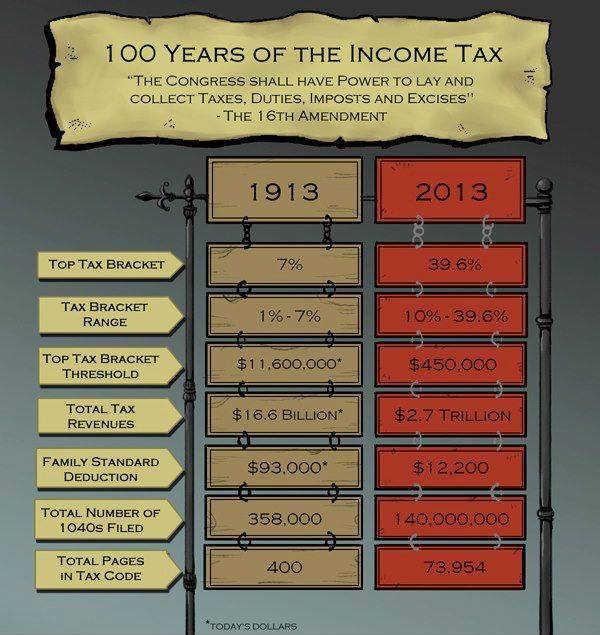
April 15th : Before 1913, federal income taxes were rare and short-lived

11149356_10153211182072726_3200348935727656232_n

Before 1913, federal income taxes were rare and short-lived. America became the most prosperous nation on earth. The U.S. Government did not try to police the world or play “nanny” to everyone from cradle to grave. People took responsibility for themselves, their families, and their communities. That is how the founders of America thought it should be. And it worked. It can again!

To read more on taxes:
https://www.lp.org/issues/taxes

Posted on Leave a comment

CBO: Feds Taxing More, Spending More, Running Bigger Deficit in 2015

TAXED MORE SPENT MORE-FY2014-FY2015-PHOTO

April 13, 2015 – 1:21 PM

By Terence P. Jeffrey

(CNSNews.com) – The federal government taxed away more money, spent more money and ran a bigger deficit in the first half of fiscal 2015 than it did in the first half of fiscal 2014, according to the Congressional Budget Office.

“The federal government ran a budget deficit of $430 billion for the first half of fiscal year 2015, CBO estimates–$17 billion more than the shortfall recorded in the same span last year,” the CBO said in itsMonthly Budget Review for March 2015, which was published April 8. “Both revenues and outlays were about 7 percent higher than the amounts recorded in the first six months of fiscal year 2014.”

The federal fiscal year begins on Oct. 1 and ends on Sept. 30.

In the first six months of fiscal 2014, the government took in approximately $1,323,000,000,000 in revenue, according to CBO. In the first six months of this fiscal year, it took in approximately $1,420,000,000,000—an increase of $98,000,000,000.

Meanwhile, the federal government spent approximately $1,736,000,000,000 in the first six months of fiscal 2014. It spent approximately $1,851,000,000,000 in the first six months of the fiscal year—an increase of $115,000,000,000 over last year.

Last year, the government ran a deficit of $413 billion in the first six months of the fiscal year. This year, it ran a deficit of $430 billion—a $17 billion increase over last year.

https://www.cnsnews.com/news/article/terence-p-jeffrey/cbo-feds-taxing-more-spending-more-running-bigger-deficit-2015

Posted on 3 Comments

The redistribution racket

4_122015_b3-moorechart0413208201_c0-0-2933-1710_s561x327

Residents of high-tax states are voting with their feet

By Stephen Moore – – Sunday, April 12, 2015

Massachusetts Sen. Elizabeth Warren appeared on one of the late night talk shows last week, beating the class warfare drum and arguing for billions of dollars in new social programs paid for with higher taxes on millionaires and billionaires. In recent years, though, blue states such as California, Illinois, Delaware, Connecticut, Hawaii, Maryland and Minnesota adopted this very strategy, and they raised taxes on their wealthy residents. How did it work out? Almost all of these states lag behind the national average in growth of jobs and incomes.

So, if income redistribution policies are the solution to shrinking the gap between rich and poor, why do they fail so miserably in the states?

The blue states that try to lift up the poor with high taxes, high welfare benefits, high minimum wages and other Robin Hood policies tend to be the places where the rich end up the richest and the poor the poorest.

California is the prototypical example. It has the highest tax rates of any state. It has very generous welfare benefits. Many of its cities have a high minimum wage. But day after day, the middle class keeps leaving. The wealthy areas such as San Francisco and the Silicon Valley boom. Yet the state has nearly the highest poverty rate in the nation. The Golden State, alas, has become the inequality state.

Read more: https://www.washingtontimes.com/news/2015/apr/12/stephen-moore-residents-fleeing-high-tax-states/#ixzz3XE3Tk060

Posted on Leave a comment

Tax Day extra difficult for many same-sex married couples

AAEAAQAAAAAAAAJzAAAAJGFhNDcwNjljLWY1NzUtNGY2NC04ZjVmLTNiNDQzNmYwZTc5ZQ

photo by ArChick
Tax Day gets complicated for same-sex couples in states that don’t recognize their marriages

By Stephen Ohlemacher, Associated Press

WASHINGTON (AP) — A necessary burden for most Americans, Tax Day is an accounting nightmare for thousands of gay and lesbian couples as they wrestle with the uneven legal status of same-sex marriage in the United States.

They live in a country that recognizes their marriages, but some reside in the 13 states that do not, an issue that will be argued before the Supreme Court later this month.

At tax time, and Wednesday is the filing deadline, it gets complicated because most state income tax returns use information from a taxpayer’s federal return.

Straight couples simply copy numbers from one form to another. But that doesn’t work for same-sex couples reporting combined incomes, deductions and exemptions on their federal tax returns. These couples must untangle their finances on their state returns, where they are still considered single.

“We’re adults, we’re contributing to the welfare of society and yet, here’s this one thing that just reaches up every year and kind of slaps us in the face,” said Brian Wilbert, an Episcopal priest who lives in Oberlin, a small college town in northern Ohio.

Wilbert married his husband, Yorki Encalada, in 2012, at a ceremony in upstate New York. He is filing a joint federal tax return for the second time this year. But Ohio, which doesn’t recognize same-sex marriages, requires the couple to file their state tax returns as if they were single.

“It may not be the most burning thing,” Wilbert said. “But as we think about equality and marriage equality, this is an important thing because it’s part of what couples do.”

https://finance.yahoo.com/news/tax-day-extra-difficult-many-130932026.html

Posted on 1 Comment

Top 20% of Earners Pay 84% of Income Tax

BF-AJ529A_11txr_16U_20150409185406

And the bottom 20%? They get paid by Uncle Sam. We compare tax burdens as Tax Day approaches.

By
LAURA SAUNDERS
April 10, 2015 9:59 a.m. ET

Who pays what in income taxes? With April 15 just around the corner, filers may be curious about where they fit into the system as a whole.

The individual income tax remains the most important levy in the U.S., providing nearly half of federal revenue. This is unusual: On average, developed nations get only one-third of their revenue from income taxes. Typically they also impose national consumption taxes, such as a value-added tax, that raise as much revenue as their income tax.

The pressure on the U.S. income tax has prompted lawmakers on both sides of the aisle to seriously consider a national consumption tax. But liberals worry that such a levy could unduly burden the poor, while conservatives fear it would be too easy to dial up the rate and collect more revenue.

As a result, experts say, there is little chance of tax overhaul this year.

Meanwhile, these two tables offer a snapshot of who is paying what for the 2014 tax year.

https://www.wsj.com/articles/top-20-of-earners-pay-84-of-income-tax-1428674384

Posted on 7 Comments

Court: Christie can’t use towns’ affordable housing trust fund

Chris_Christie_Governor_of_New_Jersey

APRIL 9, 2015, 1:30 PM    LAST UPDATED: THURSDAY, APRIL 9, 2015, 11:55 PM
BY SALVADOR RIZZO
STATE HOUSE BUREAU |
THE RECORD

A state appeals court on Thursday blocked Governor Christie’s efforts to take $160 million out of trust funds that towns use to build low-cost housing units for poor, disabled and elderly residents.

It was the latest setback for Christie in a legal battle brewing for years over New Jersey’s troubled housing program for poor residents. Last month, the state Supreme Court ruled that Christie’s inaction on affordable-housing matters had gone on too long and required an urgent fix.

As an end run around the Christie administration, the high court put judges in charge of setting rules and giving guidance to towns on how many low-cost housing units they should be building. With Thursday’s ruling by the appeals court, the judiciary is now set to take control of millions of dollars in housing funds to implement those plans.

Christie, a Republican, in 2012 tried to take the housing funds to help balance the state budget. The appeals court rejected his position and faulted his administration for ignoring previous court orders, declining to write statewide housing regulations and leaving New Jersey towns in the dark as to how many homes should be built for their lowest-income residents.

https://www.northjersey.com/news/court-christie-can-t-use-towns-affordable-housing-trust-funds-1.1306007

Posted on Leave a comment

Ways and Means Readies a Batch of Bills Targeting IRS

imgres-6

By Charles S. Clark
March 26, 2015

Now that they control both chambers of Congress, Republicans are wasting no time advancing pent-up bills intended to crack down on alleged political bias at the Internal Revenue Service, moving a batch of bills out of the Ways and Means Committee on Wednesday for coming floor action.

Though the most visible policy-oriented legislation would repeal the estate tax, the narrower set of bills was aimed at the tax agency’s Exempt Organizations division, where the imbroglio over mishandled applications from largely conservative groups revealed in 2013 set the course of the Republican bid to rein in the tax agency.

Designed to pressure IRS employees toward more transparency, the bills do not address the issue of how to define a social welfare organization that is not political—for which the IRS is working on revised regulations—and none appear to acknowledge the staffing, procedural and policy changes made at the Exempt Organizations division over the past two years.

Bills reported out Wednesday included:

H.R. 1058 by Rep. Peter Roskam, R-Ill., to “ensure that IRS employees are familiar with and act in accordance with taxpayer rights, including the right to be informed, to be assisted, to be heard, to pay no more than the correct amount of tax, to an appeal, to certainty, to privacy, to confidentiality, to representation, and to a fair and just tax system;”
H.R. 1152 by Rep. Kenny Marchant, R-Texas, to prohibit IRS employees from conducting official business using personal email;
H.R. 1026, by Rep. Mike Kelly, R-Pa., to “stop the IRS’ misuse of a provision designed to protect taxpayers to instead protect government employees who improperly look at or reveal taxpayer information;”
H.R. 1314, by Rep. Patrick Meehan, R-Pa., to codify the right for organizations denied tax exempt status to file an administrative appeal;
H.R. 1295, by Rep. George Holding, R-N.C., to streamline the “burdensome IRS process by allowing groups to declare their tax-exempt status rather than wait for endless amounts of time to gain approval;” and
H.R. 709 by Rep. James Renacci, R-Ohio, to authorize the IRS to terminate employees who target individuals based on their political beliefs.

“Though it’s been nearly two years since we learned of the IRS’ abuse of power, the American people’s distrust in the agency remains,” Renacci said. “If someone at the IRS targets taxpayers based on their political beliefs, he or she should be held accountable. It’s that simple.”

https://www.govexec.com/oversight/2015/03/ways-and-means-readies-batch-bills-targeting-irs/108547/?oref=relatedstories

Posted on 6 Comments

New Jersey lousy place to retire, study finds

2548274_orig

New Jersey lousy place to retire, study finds

New Jersey’s high taxes, cost of living and overall malaise are coming back to bite it among retirees, according to a survey released last week. • The Garden State ranks as the sixth-worst state to retire, Bankrate.com found. And it could have been worse if the personal finance website graded the states using only pocketbook issues.

“If it wasn’t for the family, I wouldn’t be here because the taxes are too high,” said Peggy Brocco, 68, of Manchester. “I’m in a senior development, and I pay $8,200 in (property) taxes.” (Diamond/Courier Post)

https://www.courierpostonline.com/story/news/2015/04/01/new-jersey-lousy-place-retire-study-finds/70758880/