Posted on Leave a comment

FINE PRINT: LONG-SOUGHT COMPROMISE WILL INCREASE NJ PROPERTY-TAX TRANSPARENCY

Ridgewood_Real_estate_theridgewoodblog

file photo by Boyd Loving

JOHN REITMEYER | MARCH 31, 2017

An investigation originally undertaken by NJ Spotlight pays off as new property tax data will be posted on state’s governmental services website

What is going on: High property taxes have long been a top complaint of New Jersey homeowners, and a new law enacted by Gov. Chris Christie earlier this month following a compromise with lawmakers aims to help residents gain a better understanding of how their bills come together — and how state property-tax relief programs may help to offset them.

Thanks to the compromise, information about the state’s most popular property-tax relief program, as well as others, will be added to the comparative property-tax figures that are published each year on the website of the state Division of Local Government Services.

How we got here: The origins of the bill that was signed into law by Christie following an initial conditional veto go back to 2014, when lawmakers grew upset that Christie’s administration decided to remove a column from the DLGS website that depicted “average net-property taxes” being paid by homeowners in every town in New Jersey. The change was made as Christie, a second-term Republican, was preparing to run for president, and as he faced criticism for not doing enough to combat the property-tax burden, especially for low-income homeowners and seniors and the disabled.

Lawmakers took action after NJ Spotlight first reported on the change. Earlier reporting also tracked increases in average net-property taxes that occurred during Christie’s tenure.

The issue with average net property taxes: The state for years had calculated average net-property taxes by subtracting the average property-tax rebate provided through the state’s popular Homestead benefit program from the average property-tax bill that was paid on an annual basis by homeowners in every town. The information was released for each year on the DLGS website along with reams of other data, including detailed tax rates and property valuations broken down by county and town.

But Christie’s administration argued that the average net-property tax category was based on faulty math, since not every homeowner in every community qualifies for the Homestead benefit, which was converted from a rebate into a direct credit on property taxes shortly after Christie took office in 2010. The net property-tax bill was also determined using the average property-tax bill for all homeowners in a given town, and not using an “apples-to-apples” comparison of just the average property taxes paid by recipients of the Homestead program.


https://www.njspotlight.com/stories/17/03/30/fine-print-long-sought-compromise-will-increase-nj-property-tax-transparency/

Posted on 1 Comment

Ask Away: Why Are New Jersey Property Taxes So High?

ridgewood real-estate

3-30-17

By Michael Aron
Chief Political Correspondent

New Jersey is famous for saddling its homeowners with high tax bills. That prompted Paul Waters from Brigantine to ask, “Why are New Jersey property taxes some of the highest in the nation?”

There is not one answer.

Most obvious is that New Jersey has 565 municipalities, down from 567 — that’s 565 mayors, councils, town governments.

New Jersey also has more than 600 school districts, 586 of which are operational, each with its own superintendent and administrative structure.

Then there are the 21 county governments and their bureaucracies.

Public worker salaries and benefits are relatively high in New Jersey thanks to aggressive public sector unions.

Throw in the generally high cost of goods and services in the New York-Philadelphia region and you begin to see why our property taxes have been the highest in the nation for years.

https://www.njtvonline.org/news/video/ask-away-new-jersey-property-taxes-high/

Posted on 7 Comments

ACCUMULATED SICK-DAY PAYOUTS: ‘LOCAL’ PROBLEM HITS $2 BILLION AND COUNTING

Sick Dog

COLLEEN O’DEA | MARCH 30, 2017

Pay for unused absences was capped at $15,000 in 2010, but public employees hired before that at school districts, towns, and counties across the state can still rack up six-figure payouts

Public workers in a majority of New Jersey’s municipalities, school districts, and all but two of its counties are due almost $1.9 billion in pay for unused absences when they retire, with at least one employee slated to receive as much as $500,000.

To put things in perspective: If this obligation were spread throughout the state, every New Jerseyan would have to chip in $207 to cover the public-employee version of Wall Street’s golden parachute — according to an NJ Spotlight analysis of local budgets.

Or think of it this way: In this state with the highest property taxes in the nation, the $929 million owed to municipal workers alone, if it were paid out immediately by property-tax payers, would lead to an increase of 11 percent over last year’s total local levy.

Part of the problem can be traced to the way benefits are typically negotiated by local officials, be it with a union or with individuals. According to Jon Moran, senior legislative analyst with the New Jersey State League of Municipalities, it can be difficult for elected officials to take a hard line when facing the realities of what neighboring towns give and a town’s own precedent.

Follow this link for an interactive table of sick-day payout liabilities for New Jersey’s school districts, towns, and counties.

https://www.njspotlight.com/stories/17/03/30/accumulated-sick-day-payouts-a-local-problem-hits-2-billion-and-counting/

Posted on 3 Comments

Election-cowed legislators rushing big payoff to public unions

Sweeney & Prieto

The Legislature is expediting a bill that would give state police and fire unions the power to reward themselves and their members at the expense of municipalities and taxpayers. Such fast-tracking of a law without public comment is an almost infallible sign state Senate and Assembly members know they’re serving their own interests and not those of their constituents.

The bill would remove management of the state Police and Firemen’s Retirement System from the Treasury Department’s Division of Investment and the State Investment Council, and give it to a new union-controlled board. That board would not only decide where to invest the system’s $26 billion in assets, it would be able to increase benefits to retirees. But if the return on investments was poor or the board handed out too much in benefits, the unions controlling it wouldn’t be responsible — the shortfalls would be made up by taxpayers and towns.

As the N.J. State League of Municipalities puts it, “The bill will allow public safety union members and retirees to enhance their own benefits, while forcing their public employers and New Jersey taxpayers to assume the risk.”

https://www.pressofatlanticcity.com/news/breaking/our-view-election-cowed-legislators-rushing-big-payoff-to-public/article_da625878-b3d8-5660-a3f3-35ee4d9b9408.html

Posted on 2 Comments

NJ Governors beginning with Whitman stole the pension money to buy votes

Christine Todd Whitman

March 26,2017

the staff of the Ridgewood blog with a little help from readers

Ridgewood NJ, The Status Report of the New Jersey Pension and Health Benefit Study Commission issued on September 25, 2014 all but said NJ Governors beginning with Whitman stole the pension money to buy votes with many pet projects with the following statements…..
.
Page 3) Both public employees and taxpayers as a whole, however, have been poorly served by a long-standing and bipartisan tradition of increasing benefit levels without adequate funding. Successive Governors and State Legislatures have committed the State to providing these benefits based on relatively optimistic financial assumptions without adequate consideration of the long-term costs to taxpayers if economic reality were to fall short of these assumptions.
.
Page 6) the failure of the State to make required pension contributions when they have been due has made a bad situation much worse. Local governments participate in the same plans but have made more of their required payments with greater regularity, resulting in the local government share of the funds having a funded ratio of 75%, compared to the State’s 54% funded ratio.11 Under-funding the State’s share of the plans has been consistent under the stewardship of both major parties, as shown by the chart on the following page:
.
Page 6) All that being said, however, the failure of the State to make required pension contributions when they have been due has made a bad situation much worse. Local governments participate in the same plans but have made more of their required payments with greater regularity, resulting in the local government share of the funds having a funded ratio of 75%, compared to the State’s 54% funded ratio.11 Under-funding the State’s share of the plans has been consistent under the stewardship of both major parties, as shown by the chart on the following page:
.
Page 15) As the table below indicates, largely due to the extremely high investment returns of the late 1990s, at the turn of the century the funded ratio of the plans based on actuarial values approached or exceeded 100%, even during the 2000-02 economic downturn. However, the apparent resiliency of the plans during that downturn is misleading. The actuarial asset values are rolling multi-year averages. For some time after the flush years of high returns, those averages continued to reflect high actuarial asset values for those years even though the market value of the assets was declining. Statutory changes also increased the expected rate of return from 7% to 8.75% and modified the actuarial funding method to allocate more costs to future years, thereby reducing the apparent value of the liabilities. This further reinforced the misperception that the plans were safely and permanently in surplus.
.
he reported asset values and statutory changes enabled the State, in full compliance with the standards then in place, to discontinue making contributions to the funds. While there were clear warnings then that this could lead to huge fiscal problems in the future, at the time it permitted hundreds of millions of dollars to be diverted to other purposes ranging from education to tax relief. Compounding the problem, during the years when the pension plans were apparently well-funded (but actually lapsing into deficits), the Legislature enacted a series of benefit enhancements, including a retroactive 9% increase in TPAF and PERS pensions in 2001, which increased State pension liabilities by $4.2 billion.35
.
https://www.state.nj.us/treasury/pdf/NJPHBSC.pdf

Posted on Leave a comment

HEADS THEY WIN, TAILS YOU LOSE

Village Council Meeting

ANDREW SIDAMON-ERISTOFF | MARCH 21, 2017

Police and fire unions’ power grab sticks New Jersey’s taxpayers with the pension bill

Andrew Sidamon-Eristoff

In 1866, Surrogate Gideon J. Tucker wrote that “[n]o man’s life, liberty or property are safe while the Legislature is in session.” Over a hundred years later, the New Jersey Legislature is doing its very best to keep Surrogate Tucker’s warning pertinent by once again advancing special-interest legislation that reaches for a new low in bad public policy and stunning indifference to taxpayers.

The issue at hand is the state Senate’s recent unanimous approval of S-3040, a bipartisan bill to transfer “management” of the $26 billion Police and Firemen’s Retirement System (PFRS) from the Department of the Treasury’s Division of Investment and the State Investment Council to a union-controlled board of trustees. The stated rationale includes giving PFRS’s beneficiaries more control over the investment of their retirement savings and insulating pension-asset investment decisions from nefarious political influence. That sounds benign, even reasonable. As the bill’s prime sponsor stated: “It’s a matter of enlightened self-interest for people who have skin in the game.”

“Self-interest”? Certainly. “Enlightened”? Not so much.

Here are only a few of the many reasons why this bill is a very, very bad idea:

Control without risk: sticking local taxpayers with the tab

Although it’s possible to make a straight-faced argument for giving PFRS and other pension-fund beneficiaries a greater role in making investment decisions, it makes absolutely no sense for government employers to turn over investment management while retaining all investment risk. And it’s demonstrably insane to give public employees unqualified power to set their own benefit levels and require that government employers (and taxpayers) pay the tab. Yet that’s exactly what this bill does.

https://www.njspotlight.com/stories/17/03/20/opinion-heads-they-win-tails-you-lose/

Posted on 1 Comment

Pension fund may soon be turned over to police, firefighters

Village Council Meeting

By Samantha Marcus | NJ Advance Media for NJ.com
on March 15, 2017 at 8:10 AM, updated March 15, 2017 at 4:46 PM

TRENTON — The state Senate has passed legislation that would give police and firefighters the right to manage their pension fund and its investment portfolio.

Under the bill, passed 37-0 on Monday, a newly expanded board of trustees would assume management of the Police and Firemen’s Retirement System, which has more than 85,000 members who are working or retired. The police and fire unions would also obtain broad discretion over both the size of members retirement benefits and the contributions needed to support them.

The State Investment Council currently directs the investments of the nearly $72 billion in assets belonging to seven pension funds, and the Division of Pensions and Benefits manages the system itself.

“Giving management to the pension beneficiaries removes political interest from the investments and places greater responsibility with the employees who will benefit from the pensions,” said Senate President Stephen Sweeney (D-Gloucester), who sponsored the bill. “It’s a matter of enlightened self-interest for people who have skin in the game.”

https://www.nj.com/politics/index.ssf/2017/03/nj_senate_passes_bill_turning_pension_fund_over_to.html#incart_most_shared-politics

Posted on 4 Comments

Lawmakers seek changes to TTF program, including transparency rollback

Senate President Sweeney_theridgewoodblog

By RYAN HUTCHINS

03/14/17 05:32 AM EDT

TRENTON — Democratic lawmakers in the Statehouse are considering major changes to New Jersey’s infrastructure spending program but are being met with resistance from their Republican colleagues.

The complex, 21-page bill (S3075) would enact broad amendments to the law passed last year authorizing the state’s Transportation Trust Fund to spend $2 billion per year on road, bridge and transit projects.

The new measure, sponsored by Senate President Stephen Sweeney, would strip a key transparency requirement, delay the creation of a panel to review the proposals and create a new system by which counties and towns could take over stalled projects. It would also allow the state to “bundle” several related projects, potentially speeding up environmental reviews and engineering work.

Introduced a week ago, the bill was quickly ushered through committee and was scheduled for a vote in the state Senate Monday, but never went on the board. Sweeney said he did not have enough support to call a vote without first sending the bill though a second reading. Such a predicament suggests fairly significant Republican opposition.

https://www.politico.com/states/new-jersey/story/2017/03/lawmakers-seek-changes-to-ttf-program-including-transparency-rollbacks-110344

Posted on 2 Comments

N.J. Supreme Court enters fray over pay hikes for public workers

14405_trenton_new_jersey_s_state_house_capitol_in_trenton

By Samantha Marcus | NJ Advance Media for NJ.com
on March 14, 2017 at 7:45 AM, updated March 14, 2017 at 8:32 AM

TRENTON — Public employee unions and government officials clashed Monday in a case before the state Supreme Court that could determine whether workers across New Jersey will get pay raises.

The state’s highest court heard oral arguments over the whether “step” increases — raises in pay when workers reach annual milestones in years of service — should be granted after a contract has expired.

Atlantic County, Bridgewater Township and the Public Employment Relations Commission asked the court to reverse an appellate court ruling, which found PERC overstepped its authority when it upended a four-decades-old doctrine that says step increases outlive the term of a contract.

The Fraternal Order of Police Lodge 34 and Policemen’s Benevolent Association Local 77 charged Atlantic County with unfair labor practices, alleging the county violated that “dynamic status quo” doctrine during contract negotiations and arbitration.

Police officers who were not yet at the top of the pay scale were due 5 percent or 6 percent step increases.

https://www.nj.com/politics/index.ssf/2017/03/nj_supreme_court_enters_fray_over_pay_hikes_for_pu.html#incart_river_home

Posted on Leave a comment

Reader says For New Jersey Pensions at the Current Cash Burn Rate, the Funds will be Insolvent in Less than a Decade

money-growing-on-tree-image-8

The math doesn’t work. The net asset value of the Pension Fund assets managed by the NJ State Investment Division was $72.9bn as of June 30, 2016. 41% of the 785,000 members in seven public pension systems are retired versus 51% of the members who are still working and contributing to the pension plans, while 8% are vested members no longer accruing benefits but not yet retired. That 41% of 785,000 = 321,850 retirees being supported by only 400,350 members still contributing to the plan, i.e. 1.24 workers per retiree. You need over 2 workers for every retiree to have a solvent plan, so already this is a mess with too few employees contributing to a system with too many retirees. Those 321,850 retirees draw annual pensions on average worth $31,070 but this number will explode as baby boomers retire through 2024. For example, note twelve of the fifteen +$100,000 a year public pension retirees in the Village of Ridgewood as of 2015 were police & fire, with only three from the BoE. But we just had seven more policemen retire in 2016. Once the baby boomers all retire, there are potentially less workers than retirees in NJ, which is the definition of a PONZI scheme with $10bn a year paid to plan beneficiaries vs. plan assets $72.9bn.

NJ pension funds cut checks to retirees worth over $10bn last year versus pension plan assets of $72bn. The problem is the benefits are too generous. At the current cash burn rate, the funds will be insolvent in less than a decade, with liabilities far in excess of plan assets. Think about that: we pay out over $10 billion per year in public pension benefits to retired public sector workers. So even with assets of over $70 billion, the system is fragile. Public pension plan and health care benefits need to be diminished before taxes can be raised further as we are already the highest taxed residents of any state in the nation. Start by lowering the assumed annual rate of return to 7%, use the updated actuarial mortality data to add 2-3 years of life expectancy to the liability. Then start moving all new hires to defined contribution pension plans like 401(k) plans to prevent politicians and unions from meddling with employee pension assets. If the pension assets are in the hands of the employees and not the state and municipalities, they will be protected. Then convert all current employees from Platinum to Bronze level health coverage, which is the equivalent of what is offered in the private sector. Only then can taxes be raised for funds specifically earmarked to close the pension liability gap.

Posted on 13 Comments

UNFUNDED LIABILITY OF PUBLIC-EMPLOYEE PENSION SYSTEM CLOSES IN ON $50 BILLION

money-growing-trees-10884441

JOHN REITMEYER | MARCH 6, 2017

Lowering rate of return on fund investments will help, but some experts argue full actuarial payments — not called for in Christie budget address — remain critical

New actuarial calculations for New Jersey’s beleaguered public-employee pension system show an unfunded liability of near $50 billion, a staggering number for a retirement plan that’s been set up to cover roughly 780,000 current and retired government workers.

But many financial experts believe the pension system’s funding problem is potentially much worse, because the state has for decades been using optimistic assumptions when it comes to projecting annual investment returns.

The $72 billion pension system’s assumed rate of return, or discount rate, for the past few years has been 7.9 percent, which is higher than the average returns of just over 7 percent that the pension system has realized over the past 20 years. Gov. Chris Christie, a Republican who has stressed pension reform during his two terms in office, announced last week that the rate will be lowered to a more realistic 7.65 percent.

While the difference seems subtle, pension experts say the downward adjustment is good for the retirement system’s overall long-term health because it will generate a more realistic assessment of the unfunded liability, and that in turn will require the state to make more robust annual contributions in the ongoing effort to maintain the fund’s solvency.

Christie’s efforts — the reduction is just the latest to occur during his tenure — also line up with calls for more realistic accounting that have come from Senate President Stephen Sweeney (D-Gloucester), the Legislature’s leading Democrat on issues related to pension funding and employee benefits

https://www.njspotlight.com/stories/17/03/05/unfunded-liability-of-public-employee-pension-system-closes-in-on-50-billion/

Posted on 7 Comments

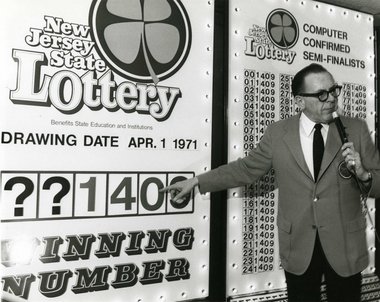
How the lottery can help fix N.J.’s ailing pensions system

Lottery_theridgewoodblog

By Samantha Marcus | NJ Advance Media for NJ.com
on March 01, 2017 at 9:31 AM, updated March 01, 2017 at 4:31 PM

TRENTON — Gov. Chris Christie used his budget address Tuesday to take a final stab at saving government worker pensions, proposing to dedicate revenues from lottery ticket sales to the distressed fund.

Christie suggested the state transfer the lottery to public pensions to provide a dedicated source of revenue and dramatically reduce the amount actuaries say the state owes.

Christie said pledging the lottery as an asset to the pension fund would have “the same effect as a cash infusion,” slashing $13 billion from the pension fund’s $66.2 billion in unfunded liabilities.

“This would also significantly reduce the amount we have to pay into the system every year out of the general fund,” he said. “If implemented correctly, this action would not only increase the value and stability of our pension funds immediately, but it would also please bond investors and credit rating agencies.”

https://www.nj.com/politics/index.ssf/2017/03/christie_wants_another_chance_to_fix_public_pensio.html#incart_2box_nj-homepage-featured

Posted on 3 Comments

N.J. pension debt soared to $49B last year

Person dumping money into a toilet bowl

N.J. pension crisis explained with popsicle sticks

Samantha Marcus | NJ Advance Media for NJ.comBy Samantha Marcus | NJ Advance Media for NJ.com
on February 28, 2017 at 7:30 AM, updated February 28, 2017 at 8:37 AM

TRENTON — New Jersey’s government worker pension funds lost a lot of ground last year, as the state’s pension debt rose from $43.8 billion to 49.1 billion, newly released actuarial reports reviewed by NJ Advance Media show.

Even as Gov. Chris Christie made a record-high contribution to the pension system, the state’s unfunded liabilities climbed ever higher, making the outlook for the weakest public pension system in the country appear worse still.

The pension fund lost nearly 1 percent on its investments last year, and the state still contributed far less than what’s recommended. And notably, the state winds up owing more because the treasurer reduced the funds’ long-term assumed rate of return on its investments.

The state’s unfunded liability is a portion of the overall debt. The local side of the system is in much better shape but still $17.1 billion short of what it would cost to pay for future retirement benefits. The combined unfunded liability rose from $59 billion in the 2015 fiscal year to $66.2 billion in the fiscal year that ended in June.

https://www.nj.com/politics/index.ssf/2017/02/njs_pension_deficit_reached_491_last_year.html#incart_2box_nj-homepage-featured

Posted on 2 Comments

Pension fury: N.J. cops, firefighters just rose up against Christie

Senate President Sweeney_theridgewoodblog

By Claude Brodesser-Akner | NJ Advance Media for NJ.com

on February 28, 2017 at 9:45 AM, updated February 28, 2017 at 10:46 AM

TRENTON — Furious after watching pension investment fees triple over the last three years even as their funds lost value, police and firefighter union leaders are seeking to wrest control of their underfunded pensions from the state.

As Gov. Chris Christie is set to deliver his final budget address, state Senate President Sweeney (D-Gloucester) on Monday introduced a bill (S3040) that would transfer management of the Police and Firefighters Retirement System to a newly expanded board of trustees.

“They’ve been screwing up pensions for decades now,” Ed Donnelly, president of the New Jersey State Firefighters’ Mutual Benevolent Association told NJ Advance Media, referring to the $11 billion that the state has yet to pay into his retirement system.

https://www.nj.com/politics/index.ssf/2017/02/dems_float_big_change_to_nj_cops_firefighter_pensi.html#incart_2box_nj-homepage-featured

Posted on 1 Comment

N.J.’s top pensions adviser: 5 ways to cut property taxes

money-growing-trees-10884441

Updated February 27, 2017
Posted February 27, 2017

Property taxes in New Jersey are the highest in the nation. Since 2000, they have doubled and have risen at over twice the rate of inflation. No wonder people are forced to move; no wonder we have the highest foreclosure rate in the nation.

Property taxpayers suffer because raising this tax is the path of least resistance. When the income tax goes up, people blame politicians in the Statehouse. For property taxes, it’s not clear who’s to blame: the state blames local governments. The towns who collect the taxes for school districts and counties blame those entities for not controlling costs. The towns, school districts and counties all blame the state for cutting state aid.

Everyone is to blame. No one is responsible.

The obvious way to control property taxes is to hold the line on expenses, but this is fraught with political consequences, especially for Democrats. Public-sector unions like the NJEA and the two police unions, whose members’ salaries and benefits are largely paid by property taxes, wield enormous influence in both general elections and, particularly, Democratic primaries.

https://www.nj.com/opinion/index.ssf/2017/02/njs_top_pensions_adviser_5_ways_to_cut_property_ta.html?utm_campaign=new-jersey-politics&utm_content=2017-28-02-8992448&utm_source=Sailthru&utm_medium=email&utm_term=New%20Jersey%20Politics#incart_river_index