

The “Smiling Army” That Broke a Nation: Remembering Cambodia’s Year Zero
the staff of the Ridgewood blog
Phnom Penh Cmbidia, on April 17, 1975, the gates of Phnom Penh swung open to a “smiling army.” After years of civil strife and the encroaching shadow of the Vietnam War, Cambodians cheered in the streets. They thought the nightmare of war was over.
In reality, a much darker chapter was just beginning.
Within hours, the Khmer Rouge turned the city into a ghost town. Hospitals were emptied, families were torn apart at gunpoint, and a nation was marched into the countryside to labor in the sun. The new regime had a name for this radical reset: Year Zero.
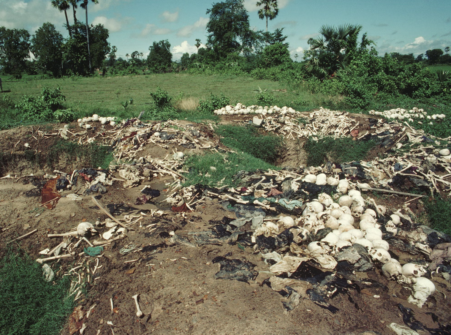
The Erasure of Humanity
The Khmer Rouge, led by the Paris-educated Pol Pot, didn’t just want to reform Cambodia; they wanted to “purify” it. In their quest to create a perfect agrarian collective, they systematically erased every pillar of modern civilization:
-
Money was abolished: Currency became worthless overnight.
-
Education was criminalized: Schools were closed; to wear glasses or speak a foreign language was considered a death sentence.
-
Family bonds were severed: Children were taken from parents to be indoctrinated by the state.
-
Religion was outlawed: Temples were desecrated and monks were targeted.
Anyone who represented the “old world”—the educated, the religious, or the urban—was marked for execution. Pol Pot set out to outdo every revolution in history, and in doing so, he authored one of the greatest catastrophes of the 20th century.
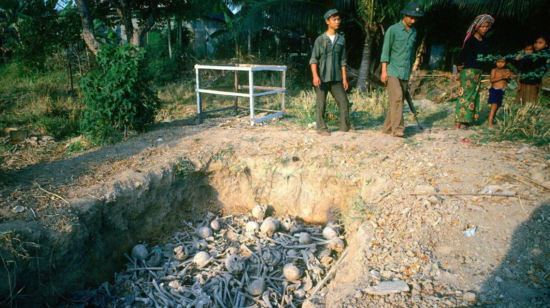
The Killing Fields and the Silence of Intellectuals
As the revolution turned inward, the results were devastating. Famine swept the country as unharvested fields rotted. Prisons like S-21 became factories for torture, filled with the regime’s own followers accused of imaginary betrayals.
By the time the regime fell in 1979, nearly 1.7 million people—roughly a quarter of Cambodia’s population—were dead.
Disturbingly, while this horror unfolded, some Western intellectuals remained skeptical of the atrocities. Figures like Noam Chomsky initially questioned refugee testimonies, suggesting that reports of mass murder were Western propaganda or exaggerations. It was a stark reminder that those far from the struggle often romanticize the “warmth of collectivism” while ignoring the cooling bodies it leaves behind.
The Legacy of Year Zero
The Khmer Rouge was finally toppled by a Vietnamese invasion in 1978. Pol Pot fled to the jungle, where he died decades later without ever facing a formal trial for his crimes against humanity.
The history of Cambodia serves as a chilling warning for the modern age. It proves that when leaders set out to “remake” human nature to fit a rigid design, they inevitably end up breaking people.
History shows us that the most dangerous ideologies are those that view human beings as clay to be molded, rather than lives to be protected.
Tell your story #TheRidgewoodblog , #Indpendentnews, #information, #advertise, #guestpost, #affiliatemarketing,#NorthJersey, #NJ , #News, #localnews, #bergencounty, #sponsoredpost, #SponsoredContent, #contentplacement , #linkplacement, Email: [email protected]
#History #Cambodia #KhmerRouge #PolPot #HumanRights #YearZero #WorldHistory #ColdWar





