
AI BOOM or BUST? 💧 NJ is the Next Data Center Hub—But Your Utility Bills Could Skyrocket!
the staff of the Ridgewood blog
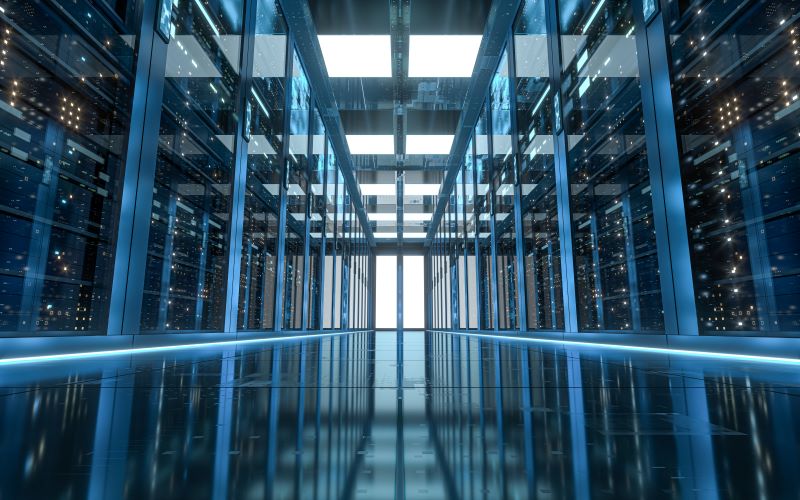
Ridgewood NJ, the Garden State Becomes the Data State.New Jersey is rapidly emerging as a critical hub for the Artificial Intelligence (AI) revolution. Driven by Governor Phil Murphy’s “AI moonshot” initiative and the need for proximity to Manhattan’s financial and tech powerhouses, data centers are cropping up across urban and suburban communities, adding a new element to the state’s landscape alongside warehouses and residential developments.
This surge in development—fueled by companies like CoreWeave (the “AI Hyperscaler”) planning a $1.2 billion center at the former Merck campus in Kenilworth, and CoreSite expanding its massive footprint in Secaucus—is exciting for proponents who see high-paying jobs and economic growth.
However, this growth comes with a massive environmental and financial cost, raising serious concerns among critics and leading to legislative proposals.
The Hidden Cost of AI: Energy and Water Guzzlers
The heart of the debate lies in the enormous resource demands of modern AI data centers.
High Electricity Usage
AI operates on GPUs (Graphics Processing Units)—far more powerful and energy-intensive than traditional CPUs. These high-density server banks require colossal amounts of electricity, straining the existing power grid.
-
PJM Warnings: PJM, the grid operator for New Jersey and large parts of North America, warns that data center development is the primary driver of increased energy use. Their Independent Market Monitor stated that demand from data centers accounted for about two-thirds of the 2025 capacity price surge.
-
Residential Rate Impact: This strain could necessitate extensive infrastructure upgrades, potentially costing $165 billion across the region. Lawmakers fear these costs could be subsidized by residential customers, potentially raising the average household’s monthly electricity bill by about $70.
Excessive Water Consumption
To prevent the banks of powerful GPUs from overheating, data centers require advanced cooling capabilities, often relying heavily on water.
-
Massive Consumption: One Microsoft data center outside of Phoenix reportedly uses 56 million gallons of potable water a year for cooling—enough to fill about 85 Olympic-sized swimming pools. New Jersey, despite being water-rich, must grapple with the sustainability of this usage.
Legislative Action: Study, Surcharge, and Tariffs
New Jersey lawmakers are moving to address these potential environmental and financial burdens:
-
Mandated Study: Governor Murphy signed legislation requiring the Board of Public Utilities (BPU) to study the exact impact data centers have on utility use and expenses. The study aims to determine if non-data center ratepayers are unfairly incurring rate increases.
-
Proposed Peak-Demand Surcharge (Assemblywoman Katz): A proposed bill would impose a surcharge on data centers during peak demand hours. This fund would be used to repair and upgrade the state’s electrical grid, forcing the high consumers to “contribute to the communities they are coming into.”
-
Data Center Tariff (Assembly Bill 5462): This bill would require electric utilities to develop a special tariff for data centers to ensure residential ratepayers are protected from cost increases caused by heightened electricity demand.
-
Transparency and Reporting (Senator Ruiz): A proposal requiring data center owners to submit and publish detailed water and energy usage reports was temporarily sidelined by the Governor but is expected to be pushed again in the 2026 session.
The Debate: Incentives vs. Accountability
The state’s approach is marked by tension between economic encouragement and environmental accountability.
-
Pro-Industry View: Advocates like the NJ State Chamber of Commerce argue that tax incentives (such as the $250 million tax break awarded to CoreWeave for its Kenilworth site) are essential for bringing in new industry and high-paying jobs, and that placing “hurdles” will simply drive development to neighboring states.
-
Progressive Critique: Think tanks like New Jersey Policy Perspective question the need for massive taxpayer subsidies, arguing that major tech companies already have ample funding for AI research.
Gov.-Elect Sherrill’s Stance
Gov.-elect Mikie Sherrill has acknowledged the problem, stating that AI data centers are “significantly increasing energy demand” and contributing to utility rate hikes. While she has not made specific pledges on data center legislation, she supports scrutiny of the utilities and the grid operator, asserting that “Companies with data centers, like every other user, must pay their fair share of the cost.”
As New Jersey seeks to be at the forefront of the AI economy, the challenge remains balancing technological ambition with sustainable resource management and affordable utility rates for its residents.
Gusto is a payroll and HR software that helps you pay your team, file taxes, offer benefits, and more. See how Gusto compares to other providers, get a free trial, and learn how to switch to Gusto in minutes.
https://gusto.com/i/james3539








This is not a sustainable technology, scaling in AI doesn’t function as scaling does in other industries like manufacturing; it is the inverse. Higher level processing using AI consumes more resources, not less. It’s a problem of hype and confirmation bias. People see what they want – the potential for wealth – while being blind to the costs which will impoverish our environment and ultimately ourselves.
You are 100% correct. What happened to all the wildlife in that area for farming? I guess it will be farming for clean water, because most likely everyone in nj will most likely be dying of some disease, due to the contaminated water their drinking. And try farming once they end the data center. And who will be paying the bills for this data center when everyone is dead from the contamination? Way to go nj, you solved nj’s food, homeless, and population problems.