
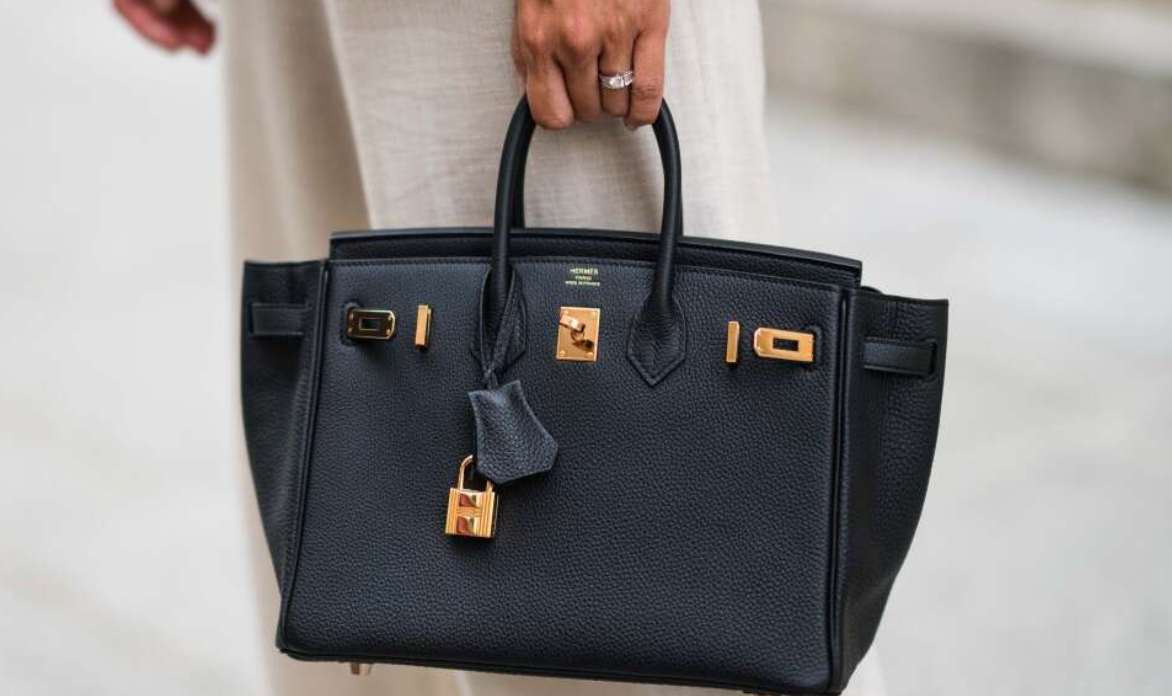
Most designer handbag owners worry about scratches, rain, and corner wear. Fewer think about the items sitting inside the bag: perfume, hand sanitizer, sunscreen, foundation, lip gloss, lotion, hair products, makeup wipes, and compact powders.
Yet for many luxury handbags, beauty products are becoming one of the most common hidden causes of staining, finish breakdown, and color change. The damage often begins invisibly. A small amount of lotion transfers from the hand to the handle. A perfume mist settles on leather. A sanitizer spill touches the lining. A foundation tube leaks into a pocket. Weeks later, the bag shows darkened grip areas, sticky residue, pigment loss, a cloudy finish, or stains that do not respond to ordinary cleaning.
That is where the conversation around premium handbag repair is changing. The issue is no longer only broken straps or scuffed corners. It is chemical exposure.
Luxury brands already warn owners about the problem
Major luxury houses are careful about handbag-care guidance because leather, coated canvas, exotic skins, delicate finishes, and dyed surfaces do not react like washable fabric.
CHANEL advises owners to avoid prolonged exposure to sunlight, artificial light, and humidity, and also warns against care products that may alter the finish of a handbag. Its care guidance also notes that overfilling can distort the bag’s lines and that light and dark materials can transfer color through prolonged contact.
Hermès states that leather is sensitive to water, intense heat, direct sunlight, excess humidity, and excess aridity. The brand also warns that ink, lipstick, fragrances, and repeated contact with dark textiles may leave permanent marks, and it specifically cautions that unsuitable products used by the owner can cause damage.
Louis Vuitton similarly advises owners to keep luxury leather goods dry, avoid chemicals, clean gently with a soft cloth, and store items away from sunlight and humidity. Its leather-care guidance warns against hand sanitizers, oils, mink oil, saddle soap, makeup, perfumes, creams, and commercial cleaners that may compromise the leather’s appearance and performance.
The pattern is clear: the modern beauty routine and the luxury handbag often occupy the same physical space, but they are not always compatible.
A handbag is not just “leather”
One reason these problems are misunderstood is that many owners think of a handbag as a single material. In reality, a premium bag is a layered object.
A leather panel may include a natural grain, pigment, finish coat, protective topcoat, edge coating, adhesive layers, reinforcement materials, lining, stitching, hardware plating, and sometimes coatings or embossing that behave differently from the leather beneath them.
That structure matters. Alcohol-based sanitizer can dry or disturb certain finishes. Oils from lotion or sunscreen can darken absorbent areas. Pigmented makeup can lodge into grain. Perfume can create halos or surface dullness. Heavy cleaning can lift color. Over-conditioning can soften areas that need structural firmness.
A scuff may be easy to see, but chemical contamination can be harder to diagnose because it often spreads below the visible surface.
Why at-home cleaning can make the damage worse
The first instinct after a spill is usually to wipe harder. That is often the mistake.
Rubbing can push pigment, oil, or alcohol deeper into the grain. Baby wipes, makeup wipes, dish soap, all-purpose cleaners, saddle soap, alcohol pads, and generic leather conditioners may leave residues that interfere with future restoration. Some products temporarily improve shine but destabilize the finish, attract dirt, or create a blotchy surface.
This is not just a luxury-brand concern. Conservation guidance for leather objects also emphasizes caution. The Canadian Conservation Institute notes that current museum practice minimizes dressings, lubricants, and cleaners because of their negative long-term effects on leather, and instead prioritizes correct storage conditions and support. It also identifies humidity extremes, heat, light, and mould risk as major deterioration factors for leather.
For designer handbags, the stakes are practical as well as aesthetic. A poorly cleaned bag can become harder to restore later. Residue can affect color matching. Oils can prevent pigment from bonding evenly. Aggressive cleaners can alter the sheen, remove the original finish, or make a localized stain turn into a larger refinishing problem.
The new role of handbag spa services
This is why handbag spa services have become more specialized. A proper service is not simply “cleaning.” It may involve staged surface cleaning, oil extraction, lining treatment, odor reduction, pigment correction, edge repair, color matching, and a flexible protective finish.
A premium handbag repair specialist will first identify the material and finish type. Lambskin, grained calfskin, vachetta, saffiano leather, coated canvas, suede, nubuck, exotic leather, patent leather, and metallic finishes cannot be treated the same way.
The goal is not to over-restore the bag. In many cases, the correct approach is controlled improvement: remove residue where possible, stabilize the affected area, correct color only where needed, and preserve the original character of the piece.
That level of judgment separates designer handbag restoration from ordinary leather cleaning.
A specialist example: LEREGA / Leather Repair Gallery
One independent studio operating in this space is LEREGA / Leather Repair Gallery, which provides leather handbag repair and designer purse restoration for luxury and designer bags. Its handbag service page describes work such as cleaning, color and texture matching, corner and piping repair, handle reinforcement, hardware care, lining care, leather bag refurbishment, insured shipping, and restoration methods focused on preserving brand integrity and original appearance.
For readers researching specialist options, LEREGA / Leather Repair Gallery’s premium handbag repair service is an example of the more technical direction the category is taking: assessment before treatment, professional-grade materials, controlled color matching, and restoration processes designed for high-value handbags rather than general leather goods.
The company’s approach also reflects a wider shift in purse repair services. Owners are no longer seeking only emergency fixes. Many are looking for preventive care, pre-resale cleaning, stain correction, and careful restoration that helps a bag remain usable without obvious repair marks.
What owners should do before seeking repair
The safest first step is restraint. If a luxury handbag is exposed to perfume, sanitizer, lotion, foundation, oil, or sunscreen, avoid aggressive rubbing. Blot liquid gently with a clean, light-colored, lint-free cloth. Do not apply conditioner, shoe polish, household cleaners, alcohol, or colored cream without knowing the leather type.
Keep the product that caused the stain, if known. That information can help a restorer understand whether the damage is oil-based, alcohol-based, pigment-based, waxy, acidic, or cosmetic.
Photos are also useful. Take clear images in natural light from multiple angles before attempting any treatment. A qualified restorer can often tell from the shape of a stain, the sheen change, or the location of the mark whether the issue is surface residue, oil absorption, dye transfer, finish damage, or pigment loss.
For ongoing prevention, store beauty products in sealed pouches inside the bag. Let hand sanitizer fully dry before touching handles. Avoid spraying perfume while holding or wearing a handbag. Keep sunscreen and lotion away from light-colored leather. Do not store bags in bathrooms, hot cars, damp closets, or direct sunlight.
The larger luxury lesson
The most expensive damage is not always dramatic. It may be a slow change in the handle, a faint cosmetic spill in the lining, a small area of softened finish, or a patch of leather that no longer reflects light the same way as the surrounding panel.
That is why premium handbag repair is becoming part of modern luxury ownership. Designer bags are carried in real life, near skin, beauty products, weather, clothing dye, and daily friction. They need care that understands both fashion and material science.
The future of handbag care may not be about making a bag look artificially new. It may be about preserving the object intelligently: its leather grain, finish, color, structure, and history.
For luxury owners, the simplest rule is also the most important: the products that protect skin, hair, and makeup are not automatically safe for leather. When the bag matters, treatment should begin with diagnosis, not a wipe.





