
A home welding setup lives or dies on what the welder can actually see. Cheap lenses flicker, lag behind the arc, or wash out the puddle in a green haze, and every one of those problems chips away at bead quality. As the blacksmith Samuel Yellin once put it, “the making of beautiful ironwork cannot be fully described and illustrated on paper; it is often necessary for the craftsman to make sketches in iron.” Good work at the bench starts with the eyes, and the eyes depend entirely on the lens in front of them.
Home and garage welders face a narrower set of trade-offs than production shops do. Space is limited, budgets are tighter, and most projects move between MIG, stick, and the occasional TIG pass rather than staying locked into one process all day.
That mix makes lens choice more important, not less, because a filter that performs well only in a narrow amperage range will leave gaps in a hobbyist’s toolkit. The three brands below approach that challenge in different ways, and understanding those differences is the fastest way to a lens that actually earns its spot on the bench.
Our Top Picks for Home Welders
1. Ridge Products Welding
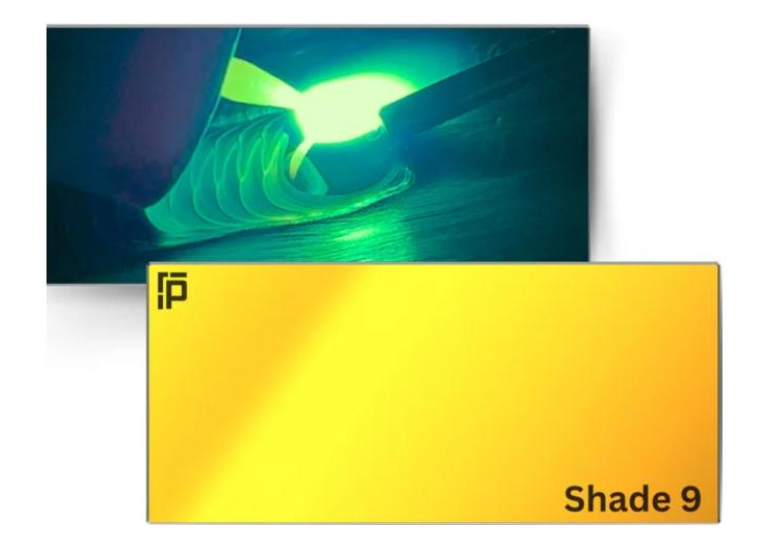
Try Ridge Products Welding for its lineup around the specific frustrations of mixed home welding work. It offers adjustable auto-darkening lenses in gold, silver, and cobalt blue, as well as clear and shade-specific options for shades 9 through 13. The brand grew out of founder Matthew Wood’s own background as a professional welder, which shows in details competitors often overlook.
Key Features:
- Wide Color Selection: The lineup includes gold, silver, and cobalt blue lenses so welders can pick a tint that matches their eyes and lighting conditions.
- Broad Shade Coverage: Adjustable shades from 9 to 13 accommodate everything from lighter MIG work to heavier stick and pipe passes.
- Any-Thickness Fit: Ridge helmets are designed to fit lenses of varying thicknesses, eliminating a common headache when swapping or upgrading a filter.
- Fiberglass Shell Construction: Helmets are built with a fiberglass shell, keeping them lightweight while adding fire resistance for extended sessions.
Best For:
Home welders and hobbyists who move between MIG, stick, and TIG and want a single adjustable lens system rather than a drawer full of fixed-shade cartridges.
Standout Quality:
The full-year warranty that backs every lens is a meaningful commitment in a category where fixed-shade filters rarely offer coverage beyond a basic return window. Combined with the any-thickness fit, it signals a brand built for welders who expect their gear to last.
As Lois McMaster Bujold wrote, “you may fool men. You will never fool the metal,” and Ridge Products Welding leans into that same standard of honest, tested performance rather than marketing claims alone. One tradeoff worth noting is that Ridge helmets currently do not accommodate cheater lenses, so welders who rely on magnifying inserts for vision correction should confirm compatibility before buying.
2. Lincoln Electric
Lincoln Electric is one of the most recognizable names in welding equipment, with an auto-darkening lineup built around its Viking helmet line and 2×4 cartridge lenses like the C-Series, which offers a variable shade range of 8 to 13. The brand’s 4C lens technology aims to broaden the visible color range and cut saturation.
Key Features:
- 4C Lens Technology: Lincoln’s proprietary filter broadens color visibility and reduces the eye strain associated with older green-tinted lenses.
- Variable Shade Range: The 8-13 range on models like the KP3775-1 covers MIG, stick, and TIG applications.
- Structured Product Line: Helmets and cartridges are standardized, suiting welders who value predictable performance.
Best For:
Welders who want a long-established brand name and do not mind a more generalized lens format over a niche fit.
3. Miller Electric
Miller Electric produces auto-darkening lenses that integrate closely with its broader helmet systems, with Shade 11 configurations commonly used across MIG and stick welding where stable arc response matters most. The brand emphasizes optical clarity and sensor responsiveness.
Key Features:
- Strong Sensor Response: Miller’s sensors darken quickly and hold a consistent shade through longer, sustained welds.
- Helmet System Integration: Lenses work as part of a complete helmet package rather than a standalone cartridge.
- Solid Optical Clarity: The brand has a reputation for clear, distortion-free viewing in its mid- to high-tier models.
Best For:
Welders who already use Miller welding machines and want a helmet system built to match that existing equipment.
What to Look for in an Auto-Darkening Welding Lens
Optical Clarity and True Color Performance
Optical clarity is usually rated on a four-number scale covering variation, light diffusion, luminance, and viewing angle, with 1/1/1/1 representing the top tier. A lens with poor ratings distorts the puddle just enough to make bead placement harder, especially on thin material where precision matters most. True color technology, which reduces the traditional green tint of older filters, has become a meaningful upgrade because it lets the welder judge heat and penetration by sight rather than guesswork.
Shade Range and Sensor Reliability
A fixed-shade lens works fine if a welder only ever runs one process at one amperage, but most home shops do not operate that way. A variable shade range, commonly from 9 to 13, covers everything from light-gauge MIG work to heavier stick passes. Multiple arc sensors, usually two or four, also matter because a single sensor can miss an arc strike at an odd angle and leave the eyes briefly unprotected.
Fit, Durability, and Power Source
A lens is only as good as the hood it sits in. Thickness compatibility, cartridge size, and shell material all affect whether a filter seats properly and holds up over the years. Solar-assisted power with a battery backup tends to outlast solar-only designs, since it keeps the lens functional even after long stretches in a dim garage.
Choosing the Right Fit for Your Bench
The right welding lens matches the mix of work a welder actually does at home. A hobbyist running MIG, stick, and the occasional TIG pass benefits most from a wide, adjustable shade range and a lens designed to fit multiple hood configurations. A quick test on scrap material confirms that shade and sensitivity settings feel right for the process and amperage in use.
Reliability, clarity, and a warranty that backs the claims on the box matter as much as the shade number on the filter. Whichever lens ends up on the bench, the goal stays the same: see the puddle clearly and let the work speak for itself.





